

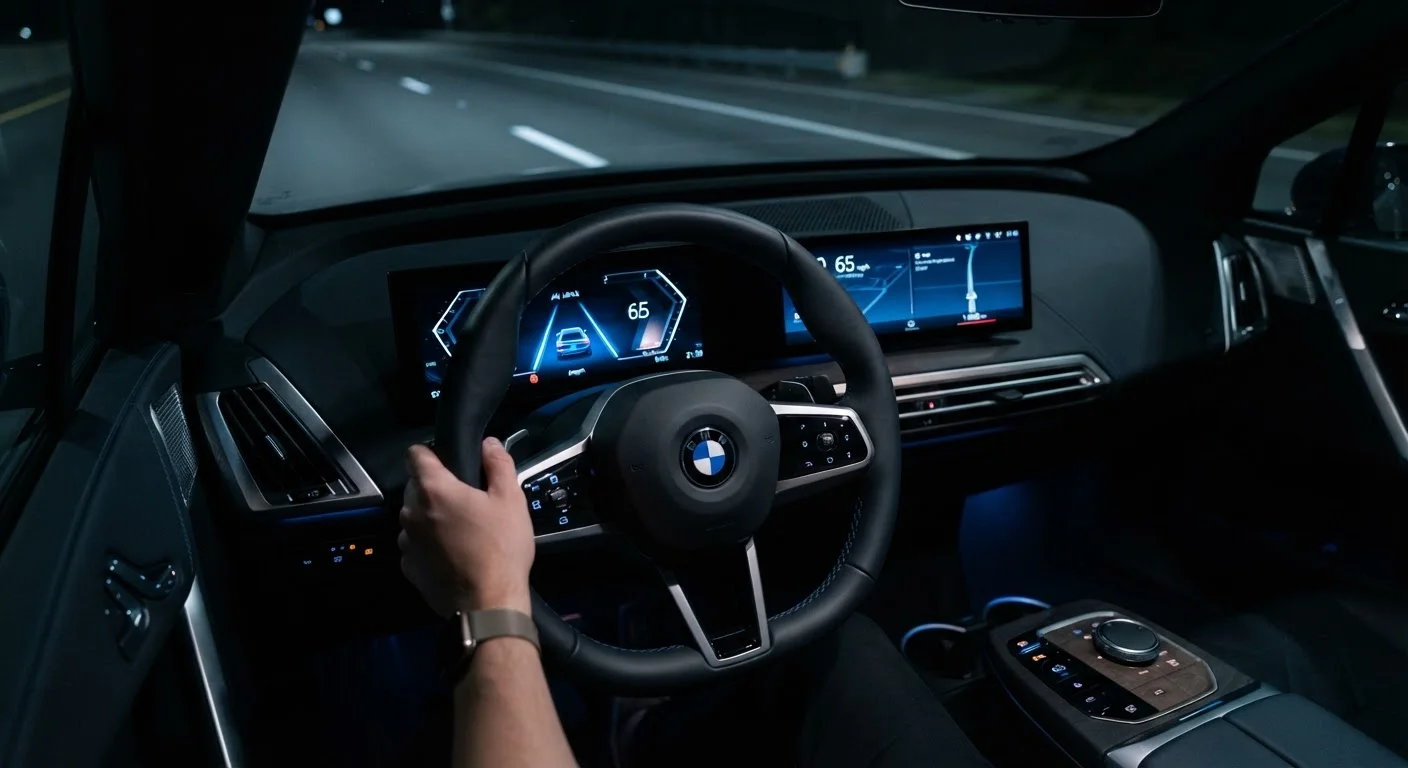
Option A
Lane Departure Warning (LDW)
The alert-only system that tells you when you're drifting.
Best for: Drivers who want an early heads-up about lane drift but prefer to remain fully in control of steering corrections.
Option B
Lane-Keeping Assist (LKA)
The active system that steers you back into your lane.
Best for: Drivers who want the car to take a corrective role when an unintended lane drift is detected.
How Each System Works
Both Lane Departure Warning (LDW) and Lane-Keeping Assist (LKA) use forward-facing cameras to monitor lane markings on the road. The critical difference lies in what each system does once it detects that the vehicle is drifting toward or across a lane line without a turn signal active.
Lane Departure Warning is a passive alert system. When it senses unintended drift, it notifies the driver through one or more cues — a chime, a visual icon on the dashboard, or a vibration in the steering wheel or seat. The car does not steer itself. The driver is expected to respond and correct the vehicle's path.
Lane-Keeping Assist goes a step further. It detects the same drift situation but then applies a small steering input — or in some implementations, selective braking on individual wheels — to guide the vehicle back toward the center of the lane. The intervention is typically gentle and can be overridden by the driver at any time by turning the wheel intentionally.
For a broader look at how these systems fit within the larger landscape of driver-assist technology, see our plain-language guide to driver-assist features.
| Criterion | Lane Departure Warning | Lane-Keeping Assist |
|---|---|---|
| Primary action | Alerts the driver | Steers or brakes to correct drift |
| Driver intervention required | Yes — driver must respond | No — system acts automatically |
| Type of system | Passive alert | Active correction |
| Alert methods | Sound, visual, or haptic cue | Steering input or selective braking |
| Can be overridden | N/A (advisory only) | Yes — by deliberate steering input |
| Depends on lane markings | Yes | Yes |
| Useful when reaction time is slower | Less so | More so |
Why the Distinction Matters for Senior Drivers
As we age, certain driving challenges can become more pronounced — slower reaction times, reduced peripheral vision, or occasional lapses in sustained attention during long trips. Lane-safety systems address these concerns in meaningfully different ways.
LDW relies entirely on the driver noticing the alert and reacting quickly. If reaction time is delayed, the warning alone may not prevent a lane departure from progressing. LKA, by contrast, begins correcting the drift automatically, which can be valuable in those split-second situations where the driver hasn't yet responded.
That said, some drivers find automated steering corrections startling or difficult to interpret, particularly those who haven't encountered LKA before. It's important to read the owner's manual for any vehicle you drive or purchase so you understand when and how the system intervenes.
~50%
Of fatal crashes involve lane departure
The National Highway Traffic Safety Administration (NHTSA) has reported that lane departure events are a factor in roughly half of fatal traffic crashes in the United States.
11%
Reduction in injury lane-departure crashes with LKA
According to the Insurance Institute for Highway Safety (IIHS), lane-keeping assist systems have been associated with measurable reductions in certain lane-departure crash categories.
It's also worth understanding that LKA is classified as an active safety feature, while LDW functions more like a passive alert. Our article on active vs. passive safety features explains this distinction in more depth.
Limitations Both Systems Share
Neither LDW nor LKA is infallible. Both depend heavily on the camera being able to clearly read lane markings. Common conditions that can reduce system effectiveness include:
- Faded, worn, or missing lane markings
- Heavy rain, snow, or glare obscuring road lines
- Tight curves where lane markings move rapidly across the camera's field of view
- Construction zones with temporary or conflicting lane markers
When these conditions are present, most systems will display a warning indicator and suspend operation. Drivers should not assume the systems are active during such conditions.
System Names Vary by Manufacturer
Automakers use different branded names for these technologies — terms like 'Lane Trace Assist,' 'Lane Centering,' or 'Road Departure Mitigation' may describe variations of LKA or LDW. When evaluating a vehicle, look beyond the name and check the owner's manual or manufacturer's description to confirm whether the system alerts only or also applies corrective input.
These systems are also similar in concept to how Forward Collision Warning compares to Automatic Emergency Braking — one alerts, one acts. For more on that parallel, see our piece on Forward Collision Warning vs. Automatic Emergency Braking.
For a comprehensive look at the full range of systems available on modern vehicles, our guide to driver-assist technologies every senior should know about covers them all in plain language.
This article provides general educational information about vehicle safety technologies. System behavior, availability, and names vary by manufacturer and model year. Always consult your vehicle's owner's manual and, where relevant, speak with a qualified automotive professional for guidance specific to your vehicle.
The content on this site is for informational purposes only and is not a substitute for professional advice. Always consult a qualified professional for guidance specific to your situation.