

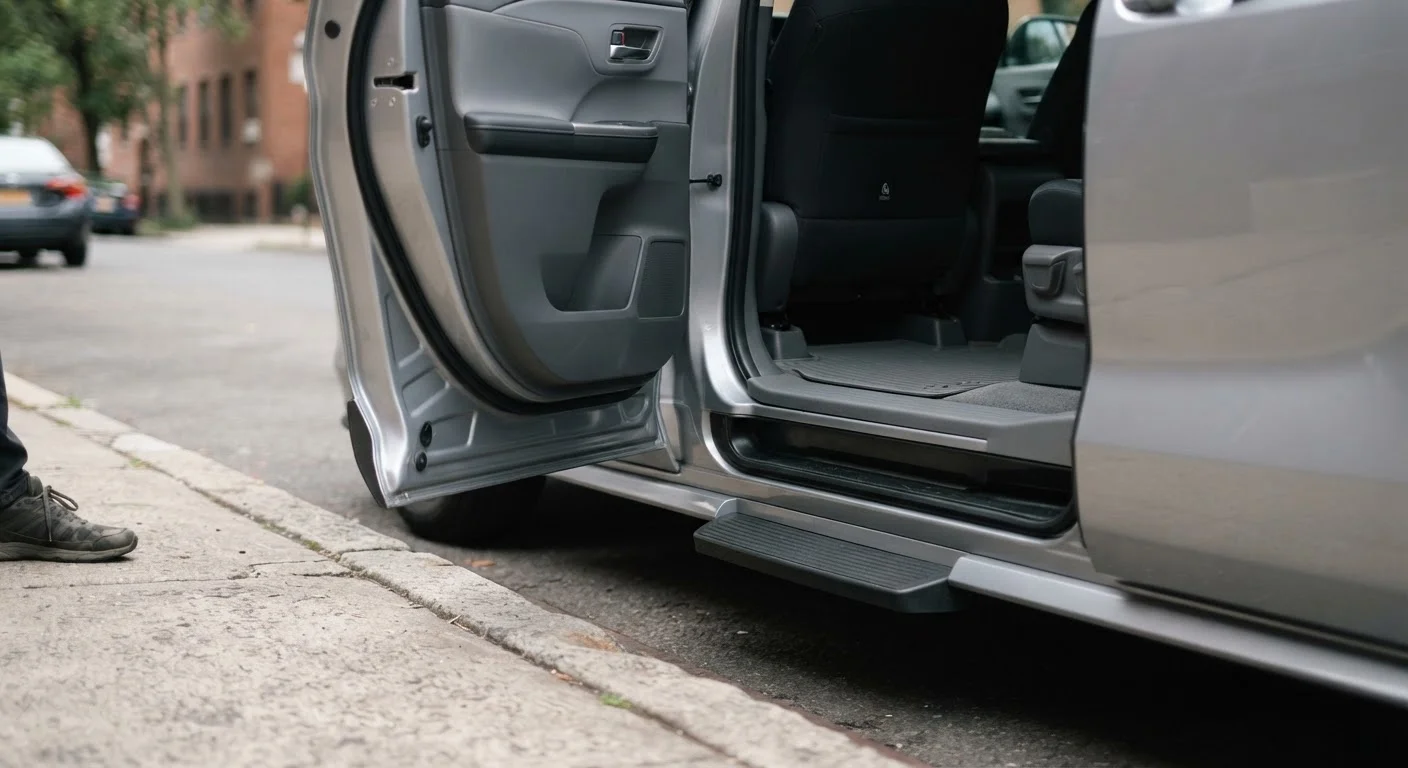
Why This Number Matters More Than It Looks
Most vehicle shoppers focus on cargo space, fuel economy, or technology features. Step-in height rarely makes the brochure. But for older adults — particularly those managing hip or knee pain, reduced flexibility, or balance concerns — it may be one of the most consequential measurements on any spec sheet.
Every time you enter or exit a vehicle, you are essentially performing a single-leg step-up or step-down under load. The higher the threshold, the greater the demand on the muscles, tendons, and joints involved. Over years of daily use, a vehicle that requires excessive leg lift can quietly contribute to fatigue and discomfort — or make entry and exit feel genuinely difficult.
Understanding step-in height gives you a concrete, measurable factor to weigh when evaluating whether a particular vehicle will serve your needs comfortably for years to come.
Step-In Height vs. Ground Clearance
These two measurements are often confused but measure different things. Ground clearance is the distance from the road surface to the lowest point of the vehicle's undercarriage. Step-in height is the distance from the ground to the cabin floor where you place your foot. A vehicle can have high ground clearance and a high step-in height — or, in some cases, relatively high clearance with a surprisingly accessible threshold depending on body design.
How Step-In Height Varies Across Vehicle Types
Vehicle category is one of the strongest predictors of step-in height, though there is meaningful variation within each segment.
- Sedans and hatchbacks typically have the lowest step-in heights, often between 12 and 17 inches. The lower roofline means the cabin floor sits close to the ground. The trade-off is that the seating position itself tends to be low, which can make sitting down and standing up more demanding on the hips.
- Crossovers and mid-size SUVs often land in the 16 to 21-inch range for step-in height while offering a raised seat that requires less deep bending to reach. Many older drivers find this combination the most accessible overall.
- Full-size trucks and body-on-frame SUVs can have step-in heights exceeding 24 inches. Without running boards or grab handles, boarding these vehicles requires a significant leg lift that many people find impractical or painful.
- Minivans are frequently overlooked but worth noting — their sliding rear doors and comparatively low step-in heights can make them highly accessible, especially for passengers.
For a side-by-side look at how compact cars and crossovers compare on access features, see how new models compare on ease of entry.
The Relationship Between Step-In Height and Seat Height
Step-in height and seat height work together, and evaluating one without the other gives an incomplete picture. A vehicle might have a low cabin threshold but a very low seat — requiring you to sink down significantly before you are fully seated. Conversely, a slightly higher threshold paired with a well-positioned seat may feel easier overall because the two movements are more balanced.
The most accessible entry-and-exit experience generally involves a step-in height and seat height that align closely, so that stepping in and lowering onto the seat are smooth, continuous actions rather than two distinct physical challenges.
Test Both Entry and Exit at the Dealership
When evaluating a vehicle in person, exit the car at least twice — once slowly, once at a more natural pace. Discomfort during exit is often more pronounced than during entry because the knee extensors must control your weight on the way down. If either direction feels strained or awkward in a showroom, that sensation will likely be more pronounced after a long drive.
Our article on seat height and getting in without the struggle explores how seating position affects daily comfort in greater depth.
Evaluating Step-In Height Before You Buy
Published specifications are a useful starting point, but there is no substitute for a hands-on assessment. When evaluating a vehicle in person, pay attention to these practical cues:
- Step through the doorway naturally — notice whether your raised foot clears the sill without an awkward hitch or hip rotation.
- Observe the transition onto the seat — after stepping in, does sitting down feel controlled, or do you drop a significant distance?
- Try the exit — getting out often requires more effort than getting in, particularly for the knees. Both directions matter equally.
- Note door opening width — a wide door opening gives you more room to position your body before stepping, which reduces the angle of stress on the joints.
If step-in height is a concern in your current vehicle, mobility aids that make entry and exit easier can help reduce strain without requiring a new vehicle. For structured guidance on technique, practical techniques for limited mobility offers step-by-step approaches suited to different physical challenges.
~17–19 in
Typical crossover step-in height range
Many crossover models fall in this range, offering a middle ground between low sedans and high-riding trucks.
24+ in
Step-in height of many full-size trucks
Full-size pickup trucks and body-on-frame SUVs often exceed this threshold, requiring significant leg lift without a running board.
~13–16 in
Common sedan step-in height range
Sedans sit lowest to the ground, though the low seat that follows can present its own entry challenges.
Frequently Asked Questions
There is no single ideal number, but many older adults find step-in heights in the range of 14 to 20 inches manageable. Heights above 22 to 24 inches — common in full-size trucks and body-on-frame SUVs — tend to demand significant leg lift that can strain hip and knee joints.
No. Step-in height is the distance from the ground to the vehicle's door sill or cabin floor. Seat height measures from the ground to the top of the seat cushion. Both matter for ease of access, but they affect the body differently. Our article on <a href="/best-cars-for-seniors/comfort-easy-access/seat-height-and-getting-in-without-the-struggle">seat height and entry comfort</a> explains the distinction in detail.
Generally, yes. Crossovers are built on car-based platforms and typically sit lower to the ground than traditional truck-based SUVs. This usually results in a more accessible step-in height, though specific measurements vary by model.
Running boards and external steps create an intermediate surface to step onto, which can reduce the effective reach needed in one motion. However, they introduce their own considerations around stability and foot placement. A balanced look at this option is covered in our guide on <a href="/car-accessories/comfort-mobility-aids/portable-car-steps-and-running-boards-weighing-the-trade-offs-for-older-drivers">portable car steps and running boards</a>.
Manufacturer specification sheets and automotive research databases often list door sill height or step-in height. Consumer publications that focus on accessibility testing also measure and publish these figures. If the spec is not listed, it's worth asking a dealer to measure it for you before committing.
The content on this site is for informational purposes only and is not a substitute for professional advice. Always consult a qualified professional for guidance specific to your situation.