

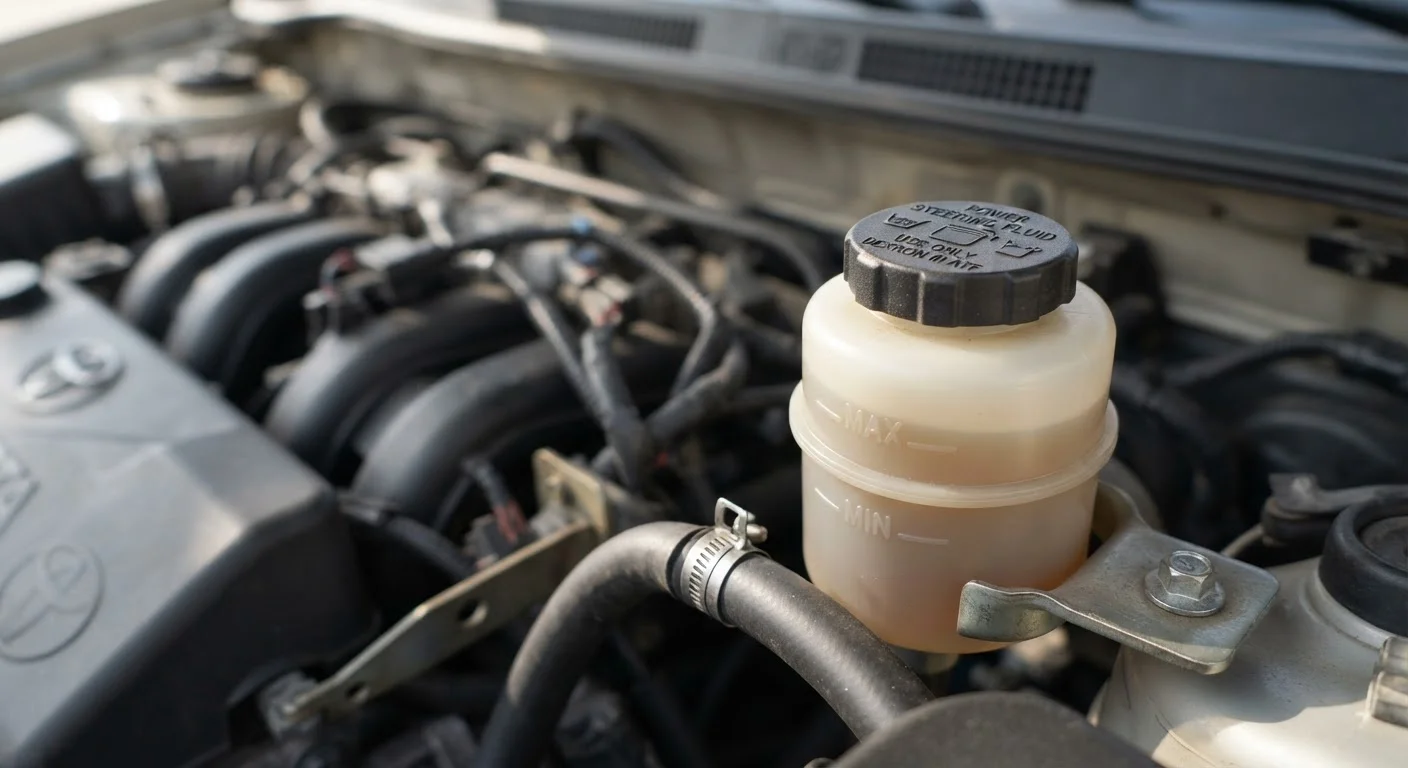
How Power Steering Fluid Works
When you turn your steering wheel, hydraulic power steering systems use pressurized fluid to multiply your effort and move the front wheels with minimal strain. A pump — driven by the engine — circulates the fluid through hoses to a steering gear or rack, amplifying the force you apply. This is why parking and low-speed maneuvering feel manageable even for drivers with reduced hand strength.
The fluid also lubricates and cools the pump and other components, preventing premature wear. Over time, it can degrade, absorb moisture, or become contaminated with debris — reducing its effectiveness. For a broader look at how this fits into your car's overall fluid picture, see Your Car's Fluids at a Glance.
50,000 mi
Typical power steering fluid flush interval
Many automotive service guides suggest flushing power steering fluid around every 50,000 miles, though intervals vary by manufacturer and vehicle.
~2 min
Time needed to check fluid level
A basic power steering fluid level check requires no tools and takes roughly two minutes, making it a practical part of any monthly under-hood inspection.
Signs That Something Is Off
Power steering problems rarely appear without warning. The most common early signal is a whining or groaning sound when you turn the wheel, particularly when the car is stationary or moving slowly. You might also notice:
- The wheel feels unusually stiff or heavy to turn
- Steering response feels delayed or sluggish
- A slight vibration in the wheel during turns
Because this fluid level rarely drops on its own without a reason, noticeably low fluid almost always points to a leak somewhere in the system. If you spot fluid under your car — typically a light amber to reddish color — or notice any of the symptoms above, have a mechanic inspect the system. Do not ignore these signs, as continued use can damage the pump and make steering less predictable.
Build It Into Your Monthly Routine
Pair your power steering fluid check with your monthly tire pressure check. Both take only a few minutes, require no special tools, and together can prevent two of the most common — and avoidable — causes of steering difficulty. Keeping a simple log in your glove box helps you track any gradual changes in fluid level over time.
How to Check the Fluid Level
Checking power steering fluid takes about two minutes and requires no tools. Follow these steps:
- Park on level ground and turn off the engine. Let it cool briefly if you have been driving.
- Open the hood and locate the power steering reservoir — a small translucent bottle, usually with a steering wheel symbol on the cap.
- Look at the side of the reservoir. Most have MIN and MAX markings visible from outside. The fluid should sit between those lines.
- If the markings are hard to read, wipe the dipstick cap clean, reinsert it, and check the level that way — some reservoirs include a built-in dipstick.
Also look at the fluid's color. Fresh fluid is typically clear, light amber, or pink. Dark brown or black fluid, or fluid that smells burnt, suggests it has degraded and may need flushing. For context on how power steering fluid compares to other hydraulic fluids, learn about brake fluid — another hydraulic fluid with its own maintenance needs.
If you drive a vehicle with a grip aid or hand control, keeping steering effort low through proper fluid maintenance is especially important. Adaptive steering aids for seniors can also help reduce physical strain at the wheel.
Electric Power Steering Requires No Fluid
Many vehicles manufactured after roughly 2010 use electric power steering (EPS), which is powered by the car's electrical system rather than hydraulic fluid. If you look under the hood and find no power steering reservoir, your vehicle likely has an EPS system. Consult your owner's manual to confirm which type your car uses before spending time searching for a reservoir that does not exist.
When to Have a Professional Take a Look
While checking fluid level is a safe DIY task, adding fluid or diagnosing a leak should be approached carefully. Using the wrong type of fluid can damage seals and the pump, so always confirm the correct specification in your owner's manual before adding anything.
Schedule a mechanic visit if:
- The reservoir is significantly low with no obvious explanation
- You spot reddish or oily fluid pooling under the front of your car
- Steering feels consistently heavy despite a normal fluid level
- You hear persistent noise even after the engine warms up
A qualified technician can pressure-test the system to find leaks and assess pump condition — repairs best left to professionals. For more on separating maintenance facts from fiction, common fluid maintenance myths are worth reviewing before your next service appointment.
Frequently Asked Questions
Common signs include a whining or groaning noise when you turn the wheel, steering that feels stiff or heavy, and a wheel that responds slowly. If you notice any of these, check the fluid level in the reservoir as soon as it is safe to do so.
It is usually a small, translucent plastic bottle in the engine bay, often near the front or side. The cap is typically marked with a steering wheel icon or the letters 'PS'. Your owner's manual will show its exact location for your specific vehicle.
Many manufacturers do not specify a strict interval, but some recommend flushing the fluid every two to three years or around every 50,000 miles. Always check your owner's manual for guidance specific to your vehicle.
Driving with low fluid can damage the power steering pump, which is a costly repair. Continued use can also make the vehicle harder to steer safely, raising the risk of an accident.
Only hydraulic power steering systems use this fluid. Many vehicles made after roughly 2010 use electric power steering, which requires no fluid. Check your owner's manual or look under the hood — if there is no reservoir, your car likely has an electric system.
The content on this site is for informational purposes only and is not a substitute for professional advice. Always consult a qualified professional for guidance specific to your situation.