

Why Washer Fluid Deserves Your Attention
It's easy to treat windshield washer fluid as an afterthought — a minor detail compared to oil, brakes, or tires. But consider what happens when you need it most: a truck passes and coats your windshield with muddy spray on a busy highway, or morning sun hits a greasy smear at just the wrong angle. In those moments, an empty reservoir isn't an inconvenience — it's a safety problem.
Good visibility is non-negotiable when driving. Your wiper blades can only do so much on their own; washer fluid is what allows them to actually clean rather than just smear. For a broader look at how this fits into your car's overall maintenance picture, see our guide on wipers and washer fluid.
Washer Fluid Is Not Coolant
Both fluids live under the hood in similar-looking plastic reservoirs, which can cause confusion. Washer fluid goes only into the reservoir marked with the windshield symbol. Never pour washer fluid into the coolant overflow tank — and never use coolant in the washer system. For more on coolant's role, see Coolant and Antifreeze Explained.
What's Actually in Washer Fluid — and Why It Matters
Commercial washer fluid is a blend of water, cleaning surfactants, and a freeze-depressant such as methanol. This combination lets it do things plain tap water cannot: cut through greasy road film, resist freezing in winter, and stay clean in the reservoir without promoting bacterial growth.
Tap water seems like a convenient substitute, but it introduces real problems. In cold climates, it can freeze solid inside the reservoir, pump, or spray nozzles — potentially cracking components. Hard water also leaves behind mineral deposits that can gradually clog the fine nozzle openings. The small cost of proper washer fluid is far less than a repair bill.
When choosing a fluid, match it to your climate. Formulas rated to 0°F are suitable for mild winters, while areas with sustained freezing temperatures call for fluid rated to -20°F or lower. For a full picture of how seasonal temperature changes affect your car's fluids, seasonal fluid checks covers what to look for throughout the year.
Match Your Fluid to the Season
Keep a bottle of winter-formula washer fluid in your trunk before cold weather arrives. If temperatures are expected to drop significantly, drain any remaining summer formula and refill with a fluid rated for the lowest temperatures in your area. This one step prevents frozen lines and cracked reservoirs.
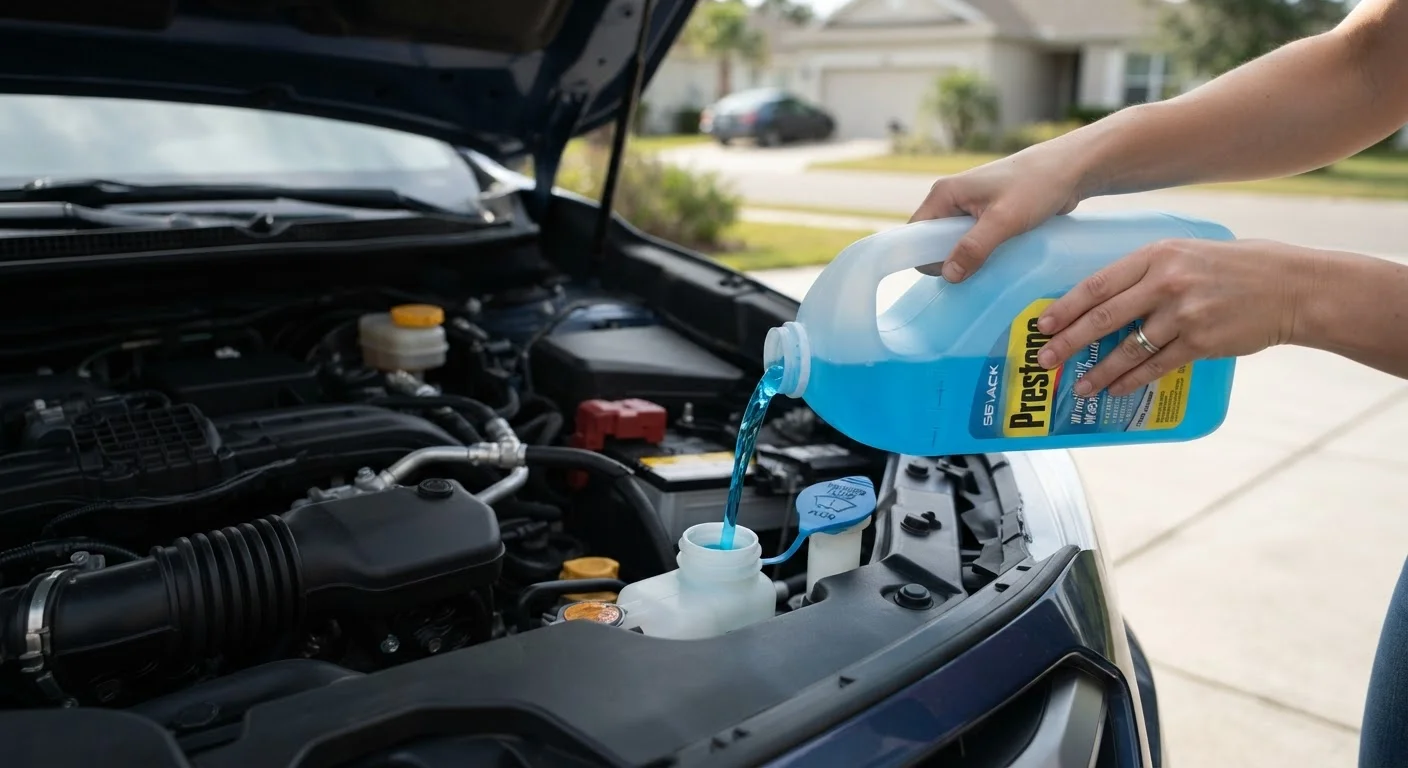
How to Check and Refill the Reservoir Yourself
Checking and refilling washer fluid is one of the simplest car maintenance tasks there is — no tools required, and it takes under two minutes.
- Park safely and turn off the engine. Open the hood and prop it securely.
- Find the washer fluid reservoir. It's usually a translucent plastic tank with a cap marked by a windshield-and-water symbol. Most reservoirs let you see the fluid level without removing the cap.
- Check the level. If fluid is at or below the minimum line — or the tank looks empty — it's time to refill.
- Pour in the washer fluid. Fill slowly to avoid spilling. Leave a small gap at the top; fluid expands slightly when it freezes.
- Replace the cap firmly and lower the hood.
If the reservoir is full but the system still isn't spraying, a clogged nozzle or a faulty pump may be to blame. Clogged nozzles can sometimes be cleared with a fine pin, but a pump that doesn't run needs professional attention. For context on the wider range of fluids your car depends on, Your Car's Fluids at a Glance is a useful quick reference.
~90%
Of driving information taken in visually
The U.S. Department of Transportation estimates that the vast majority of the information drivers use while operating a vehicle comes through their vision, underscoring why windshield clarity is a safety priority.
0°F to -20°F
Freeze protection range of common washer fluids
Washer fluid formulas are rated for different temperature thresholds; selecting the right rating for your region is the key factor in preventing frozen lines in winter.
Overlooked but Connected: The Rest of Your Fluid System
Washer fluid is often lumped in with the fluids drivers forget — alongside cabin air filters, power steering fluid, and transmission fluid. The common thread is that none of these cause immediate, dramatic symptoms when they run low, so they tend to slip off the maintenance radar until something goes wrong.
Making washer fluid part of a monthly walkaround — alongside tire pressure and a quick look under the hood — keeps it from becoming a problem. The fluids and filters drivers forget is worth a read if you want to cover the other commonly neglected items in one go.
Remember: washer fluid is the one fluid on your car that directly affects what you can see while driving. Keeping it topped up costs very little and takes almost no effort — a worthwhile trade for the safety it provides.
Frequently Asked Questions
Plain water is not recommended as a long-term substitute. It can freeze in cold weather, block the lines, and encourage bacterial growth in the reservoir. It also lacks the cleaning agents that remove bugs, road film, and greasy residue effectively.
A quick check once a month takes only seconds and is a good habit to build into your routine. You may need to top up more frequently during winter, bug season, or whenever you're driving on dusty or salty roads.
Mixing most commercially available washer fluids is generally not harmful, but it can dilute freeze protection. If you're unsure what's in the reservoir, draining and refilling with a single product appropriate for your climate is the safest approach.
A clogged nozzle, frozen line, or faulty pump motor are the most common causes. Try clearing a clogged nozzle gently with a fine pin. If the fluid is frozen or the pump isn't working, have a mechanic take a look before driving in poor-visibility conditions.
No — these are completely different fluids with separate reservoirs. Coolant circulates through your engine to regulate temperature, while washer fluid is used only for cleaning the windshield. Never pour washer fluid into the coolant reservoir or vice versa.
The content on this site is for informational purposes only and is not a substitute for professional advice. Always consult a qualified professional for guidance specific to your situation.