

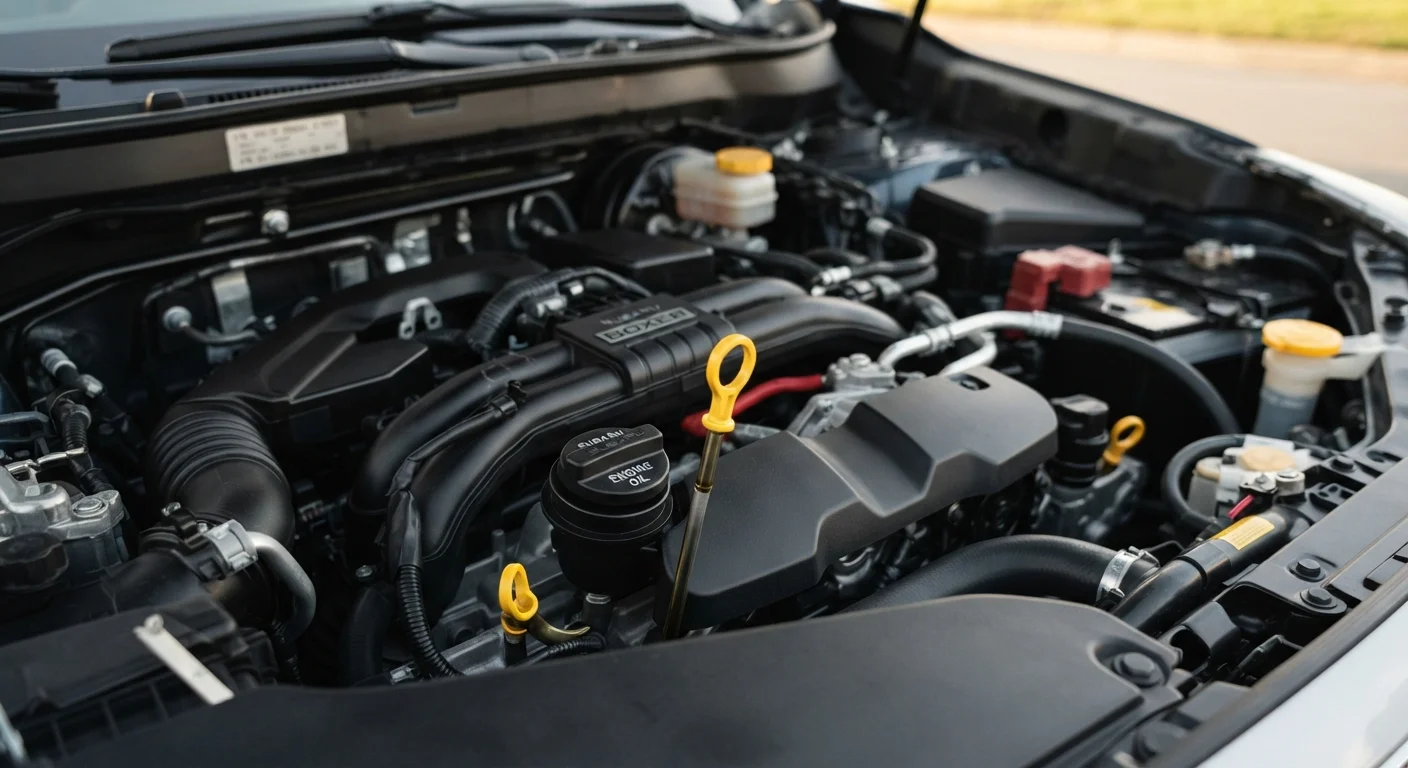
What Engine Oil Actually Does
Engine oil performs several critical jobs at once. Its most visible role is lubrication — it forms a thin protective film between metal components like pistons, crankshafts, and camshafts so they move freely without grinding against each other. But lubrication is only part of the story.
Oil also acts as a heat transfer agent, absorbing warmth from engine parts and carrying it away. It works as a cleaning agent too, picking up microscopic metal particles, soot, and combustion byproducts and suspending them until they are trapped by the oil filter. Finally, oil contains additives that resist corrosion and keep rubber seals supple.
For a broader look at how engine oil fits alongside your car's other fluids, see Your Car's Fluids at a Glance.
~40%
Engine wear attributed to inadequate lubrication
Industry maintenance data consistently identifies lubrication failure as one of the leading contributors to premature engine wear and failure.
3,000–10,000 miles
Typical oil change interval range
Recommended intervals vary widely by oil type and vehicle design; always follow your owner's manual rather than a universal rule.
Why Oil Degrades and Needs Replacing
Oil doesn't last forever. Heat, oxygen exposure, and the contaminants it collects all break down its chemical structure over time. The additive package — the blend of protective chemicals mixed into the base oil — depletes first, reducing the oil's ability to fight corrosion and control oxidation.
Importantly, oil can degrade even if you drive very few miles. A car that sits mostly idle will still experience moisture condensation and chemical breakdown inside the engine. This is why oil change recommendations are expressed in both mileage and time intervals, such as "every 5,000 miles or six months, whichever comes first."
Use Your Owner's Manual, Not Guesswork
Your vehicle's owner's manual is the single most reliable source for oil type, viscosity grade, and change interval. Using the wrong viscosity — even if it's close — can reduce oil pressure at startup and affect fuel economy. If you've misplaced your manual, most manufacturers make digital versions available through their websites.
When oil is heavily contaminated, the filter can become saturated and bypass dirty oil back into the engine. This is why oil filter replacement is always paired with an oil change — changing one without the other defeats much of the purpose.
How to Stay on Top of Oil Maintenance
Keeping up with engine oil doesn't require mechanical expertise — it requires consistency. Start with two habits:
- Check your oil level regularly. Once a month or before any long drive is a reasonable rhythm. The dipstick is your main tool here. Our guide on reading your dipstick walks through this process step by step.
- Follow your owner's manual interval. The manual specifies the correct oil type and change interval for your exact engine. Ignore generic rules of thumb that don't account for your vehicle's design or your driving patterns.
If you drive mainly short trips — under 10 miles each way — or in very hot or cold climates, you may fall into the "severe service" category that calls for more frequent changes. Check your manual's severe-service schedule if this applies to you.
Building oil checks into a broader maintenance habit is easier than treating each task in isolation. Our article on building a fluid and filter maintenance routine offers a practical framework for doing exactly that.
When to Have a Mechanic Take a Look
Most oil checks and routine changes are straightforward. But certain signs warrant a visit to a qualified mechanic rather than a DIY response:
- The oil warning light stays on after you've confirmed adequate oil level — this may signal an oil pressure problem.
- You notice a burning oil smell from the engine compartment, which can indicate a leak onto hot surfaces.
- Oil consumption is unusually high — needing to add more than a quart between changes may point to a seal issue or internal engine wear.
- The oil appears milky or foamy, suggesting coolant may have entered the oil system.
These symptoms go beyond routine maintenance and can progress to serious engine damage if ignored. A qualified mechanic can diagnose the underlying cause safely.
For more routine checks you can handle yourself, see the Routine Car Checks hub, which covers essential inspections every driver should know.
This article provides general educational information about engine oil and vehicle maintenance. It is not a substitute for advice from a qualified mechanic. Always consult your vehicle's owner's manual and a licensed automotive professional for guidance specific to your vehicle.
Frequently Asked Questions
Most vehicles need an oil change every 3,000 to 7,500 miles, though some modern engines using full synthetic oil can go up to 10,000 miles. Always check your owner's manual for the manufacturer's recommended interval, since driving habits and climate also affect how quickly oil degrades.
Driving with low oil increases friction between engine parts, which generates excessive heat and accelerates wear. Over time, this can cause serious and costly engine damage. If your oil warning light comes on, pull over safely and check your oil level before driving further.
Topping off can restore the level if oil is low, but it does not address degraded oil quality. Old oil that has broken down or become contaminated with debris still needs to be fully drained and replaced. Topping off is a temporary measure, not a substitute for a proper oil change.
Fresh oil is typically amber or golden in color. As it ages and collects engine byproducts, it darkens toward brown or black. Very dark, gritty oil is a sign it is overdue for a change. Milky or frothy oil can indicate a coolant leak and warrants prompt inspection by a mechanic.
Synthetic oil generally offers better performance at temperature extremes and lasts longer between changes, but it is not necessary for every vehicle. Your owner's manual specifies what type your engine requires. For a deeper comparison, see our dedicated guide on conventional versus synthetic oil.
The content on this site is for informational purposes only and is not a substitute for professional advice. Always consult a qualified professional for guidance specific to your situation.