

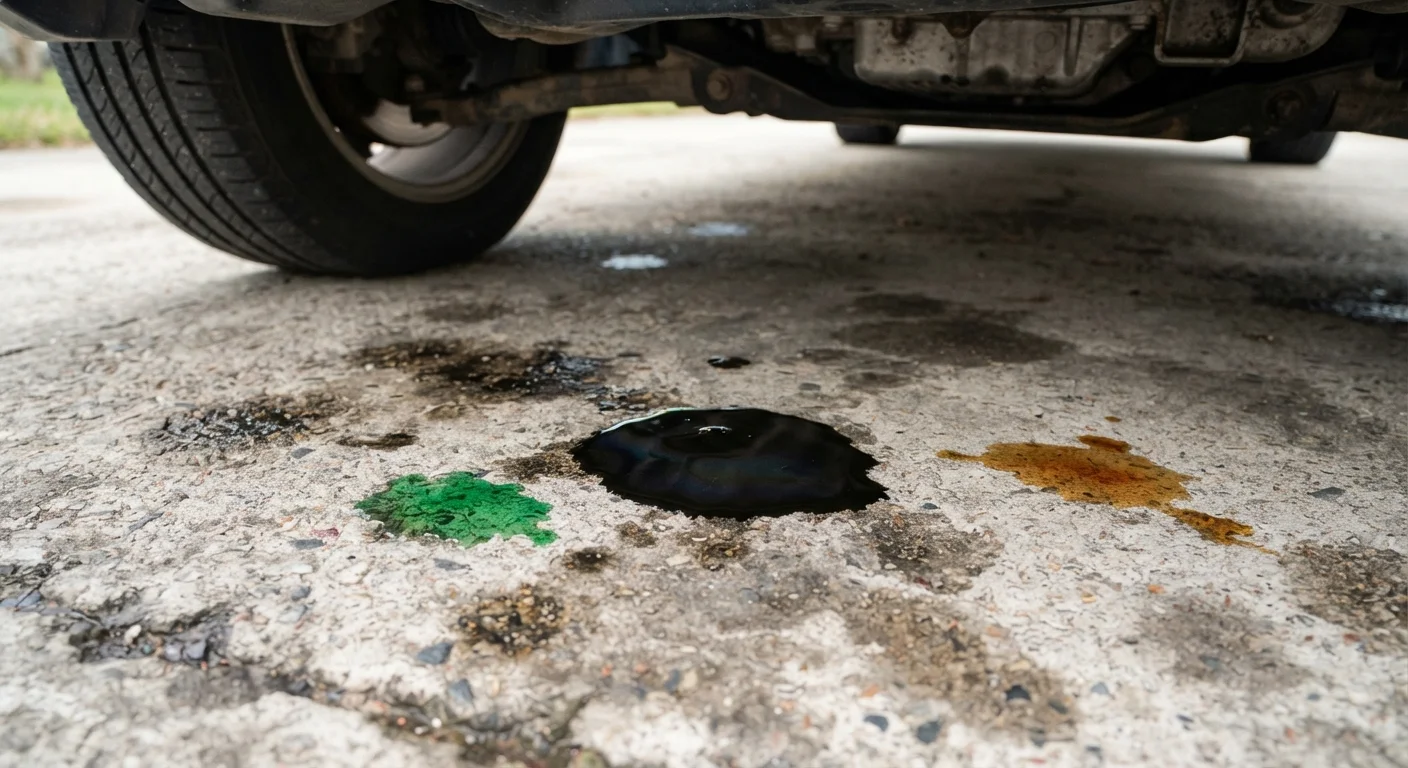
Why the Color and Location Both Matter
Finding a puddle under your car is understandably alarming, but not every drip signals a crisis. The key is knowing what you're looking at. Two clues — the color of the fluid and where it sits under the car — can tell you a great deal about which system is involved and how serious the situation might be.
Before assuming the worst, park on a clean, flat surface (concrete works better than asphalt for spotting color) and let the car sit for 15–20 minutes. Then check the spot carefully. Is it a smear or a puddle? Light drip or steady pool? Note the general area — front, middle, or rear of the vehicle. These details are worth sharing with a mechanic if you need one.
For a broader look at all the fluids in your vehicle, see Your Car's Fluids at a Glance — a plain-language reference guide covering what each fluid looks like and where it lives.
| Safest surface for spotting leaks | Light-colored concrete |
| Time to let car sit before checking | 15–20 minutes |
| Most urgent leak type | Brake fluid (safety-critical system) |
| Leak that is usually harmless | Clear water — AC condensation on warm days |
| Coolant toxicity risk | Toxic to pets and children; clean spills promptly |
| Key details to tell your mechanic | Color, texture, smell, and location under car |
Fluid Color Guide: What Each Shade Typically Means
Use this as a starting reference. Keep in mind that fluid colors can shift over time as they degrade, so a fluid that was bright pink may look brown after years of use.
Coolant (Antifreeze)
A liquid that circulates through the engine and radiator to regulate temperature. It prevents overheating in summer and freezing in winter. Most coolants are brightly colored — green, orange, or pink — and have a slightly sweet smell.
Transmission Fluid
Oil-like fluid that lubricates and cools the moving parts inside your transmission. It is typically red or dark red and helps your car shift gears smoothly.
Brake Fluid
A hydraulic fluid that transfers force from the brake pedal to the brake components at each wheel. It is usually clear to light yellow when fresh and darkens with age. A brake fluid leak is a safety concern.
Power Steering Fluid
Fluid that helps make turning your steering wheel easier. It is typically clear, light brown, or reddish and is found in a reservoir near the front of the engine bay.
AC Condensation
Water that drips from the underside of a car when the air conditioning is running. It forms as warm cabin air meets the cold evaporator coil, and is completely normal — not a fluid leak.
Water or Clear Fluid
A clear, odorless puddle near the front passenger area in summer is almost always condensation from the air conditioning system — completely normal and nothing to worry about.
Light Brown to Black (Oily Texture)
This is most likely engine oil. Fresh oil is amber; older, degraded oil turns dark brown or black. Oily leaks near the front or center of the car warrant prompt attention. Learn more about reading your oil's condition in our guide on engine oil dipstick checks.
Bright Green, Orange, or Pink (Slippery, Sweet-Smelling)
This is likely coolant (also called antifreeze). It's often found near the front of the car. Coolant leaks should be addressed promptly — low coolant can lead to engine overheating. Importantly, coolant is toxic to pets and children; clean up any spills carefully.
Clear to Light Brown (Thin, Slippery)
Located near the front wheels or under the hood, this could be brake fluid or power steering fluid. Brake fluid leaks are a safety concern and should be assessed by a qualified mechanic without delay.
Red or Dark Red (Oily)
Reddish fluid, especially under the center or front of the vehicle, often points to transmission fluid or power steering fluid. Transmission fluid is critical to smooth gear changes; a leak here warrants a professional inspection.
Fluid Colors Can Change Over Time
Many fluids look different when fresh versus when they've been in use for months or years. Engine oil starts amber and turns dark brown or black. Transmission fluid may darken from red to brown. Coolant can fade from bright green to a dull rust color. When in doubt, describe both the color and the texture (oily, watery, slippery) to your mechanic — that combination is often more diagnostic than color alone.
When to Act Immediately vs. When to Monitor
Not every drip requires an emergency tow. Here's a practical way to assess urgency:
- Act immediately: Any suspected brake fluid leak, a large or growing puddle of any fluid, coolant leaks paired with a temperature warning light, or oily fluid near your exhaust (fire risk).
- Schedule a mechanic visit soon: Small oil drips, reddish transmission fluid spots, or power steering fluid near the front wheels.
- Monitor and confirm: Clear water under the car on a warm day after running the air conditioner — this is almost always condensation.
If you're unsure whether a task is safe to assess yourself or needs a professional, our guide on when to trust a mechanic can help you decide. Some fluid checks are straightforward; others genuinely require trained eyes and tools.
Also worth reviewing: the fluids and filters drivers most often overlook — because some leaks start in systems that rarely get a second thought until the repair bill arrives.
This article is for general informational and educational purposes only. It is not a substitute for a qualified mechanic's inspection. If you are uncertain about a fluid leak or notice warning lights, have your vehicle assessed by a licensed automotive professional before driving.
The content on this site is for informational purposes only and is not a substitute for professional advice. Always consult a qualified professional for guidance specific to your situation.