

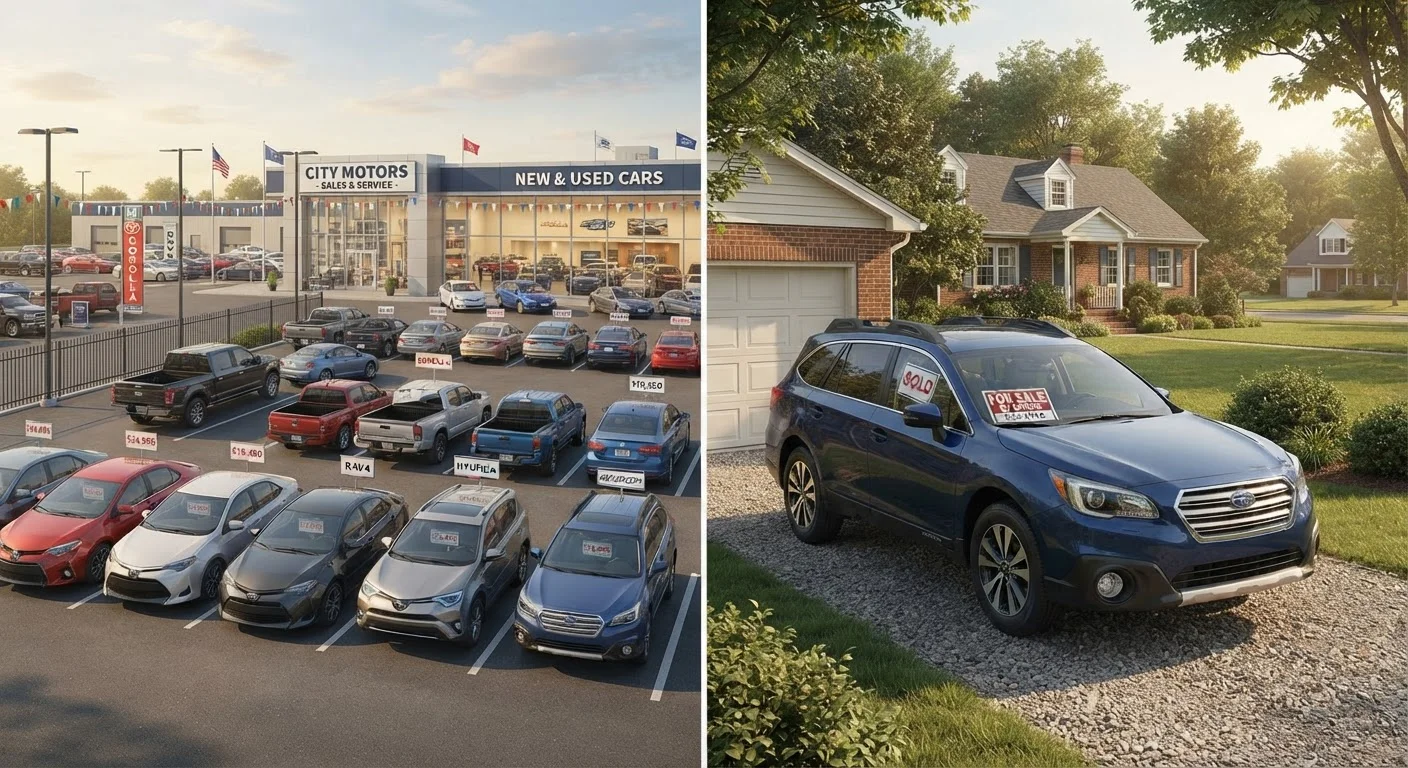
Option A
Dealership
The structured, service-backed option.
Best for: Buyers who want financing options, trade-in convenience, and some form of post-sale protection.
Option B
Private Seller
The leaner, more negotiable alternative.
Best for: Buyers who are comfortable doing their own homework and want to avoid dealer markups and fees.
How Each Source Sets Its Price
Understanding why prices differ starts with understanding how each seller arrives at a number. Dealerships factor in several layers of cost before a car ever hits the lot. They pay to acquire the vehicle at auction or through trade-ins, then spend money on reconditioning — repairs, cleaning, safety checks — before adding a profit margin. On top of that, they charge fees: documentation fees, dealer prep charges, and sometimes add-ons like paint protection or extended warranties bundled into the sale price.
Private sellers, by contrast, typically price based on online valuation tools and what comparable cars are listed for in their area. They have no overhead to recover and no sales process to fund. That leaner cost structure often translates directly into a lower asking price — though not always. Some private sellers overprice out of inexperience or emotional attachment to the vehicle.
Understanding the main places to find a used car can help you set realistic expectations before you start comparing listings.
Breaking Down the Real Cost Difference
The sticker price is only one part of what you pay at a dealership. Documentation fees — sometimes called "doc fees" — are charged by most US dealerships and can legally vary by state. Some states cap these fees; others do not, and they can run from under $100 to over $500. Add dealer prep, any bundled extras, and sales tax calculated on the full sale price, and the total cost can run meaningfully higher than the advertised number.
With a private seller, you typically negotiate on the listed price alone. You'll still pay sales tax when you register the vehicle, but you're not paying for reconditioning markups or administrative fees. That said, the absence of a warranty means any mechanical issue discovered after purchase comes entirely out of your pocket. A pre-purchase inspection from an independent mechanic — which you should arrange regardless of source — typically costs $100–$200 and can save you from expensive surprises.
Reading a used car price listing without getting confused is a practical next step once you understand where those costs originate.
| Criterion | Dealership | Private Seller |
|---|---|---|
| Typical asking price | Higher (overhead built in) | Often closer to market value |
| Documentation/dealer fees | Yes — $100 to $500+ | None |
| Reconditioning markup | Usually included | Not applicable |
| Negotiation flexibility | Moderate — set sales process | Often more flexible |
| Warranty or guarantee | Limited warranty common | Typically sold as-is |
| Financing available on-site | Yes | No — must arrange separately |
| Consumer protection recourse | State regulations apply | Limited — private transaction |
| Vehicle history transparency | Often provided | Buyer must request/obtain |
Protections, Financing, and What You're Actually Buying
Price is only part of the equation. Dealerships are regulated businesses subject to state consumer protection laws. Many offer limited warranties — even on used vehicles — and some participate in certified pre-owned programs that include inspection records and powertrain coverage. If something goes seriously wrong, you have a business to contact and, in some cases, legal recourse.
Private sales are generally sold "as-is" in most US states. Once money changes hands, the seller has no legal obligation to make repairs. That doesn't make private sales risky by definition, but it does mean your due diligence before purchase matters more. Getting a vehicle history report and paying for an independent inspection are essential steps, not optional ones. See how to adjust your inspection approach for each source for a detailed breakdown.
On financing: dealerships can arrange a loan on the spot, which is convenient — but convenience has a cost. Dealer financing is not always the least expensive option. If you're considering a loan, comparing dealer-arranged financing with what your bank or credit union offers is worth doing before you sit down at the finance desk. Understanding the difference between dealer financing and direct lending can help you ask the right questions.
$1,000–$3,000+
Typical dealership markup over private sale price
Industry analysts and consumer research consistently estimate dealership retail prices run significantly above comparable private-party listings for the same vehicle year and condition.
$100–$500+
Range of dealer documentation fees in the US
Doc fees vary widely by state; some states cap them by law while others place no limit, making it important to check your state's rules before signing.
This article provides general educational information about used car purchasing and is not personalized financial or legal advice. Pricing, fees, and consumer protections vary by state and by seller. Consult a licensed professional for guidance specific to your situation.
The content on this site is for informational purposes only and is not a substitute for professional advice. Always consult a qualified professional for guidance specific to your situation.