

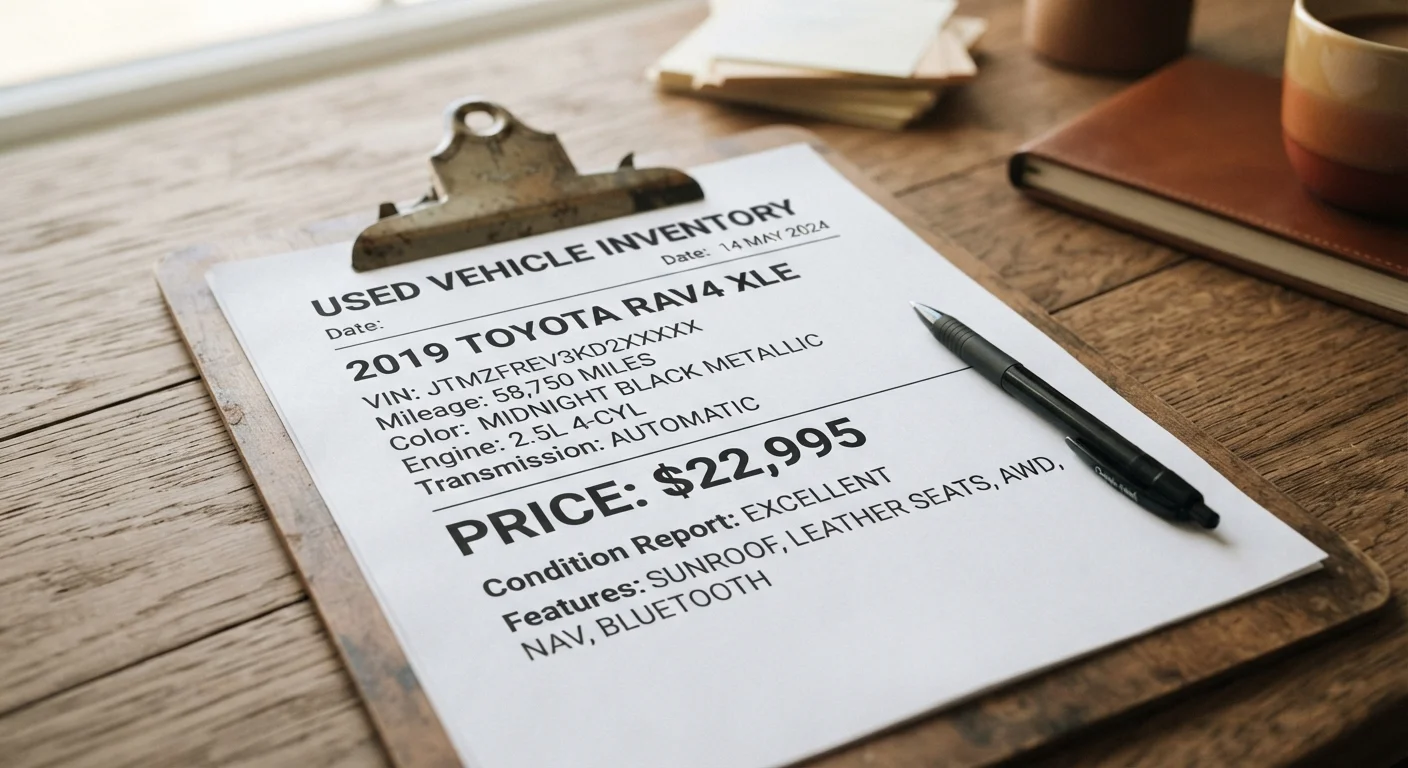
Why the Listed Price Is Just the Starting Point
When you spot a used car advertised for a particular price online or on a dealer's lot, that number represents the vehicle's asking price — nothing more. It does not account for sales tax, government fees, or the various dealer charges that get added before you sign anything. For a full picture of what factors drive that asking price in the first place, see our article on what goes into the price of a used car.
The gap between the listed price and what you actually pay can range from a few hundred dollars to well over a thousand, depending on your state's tax rate and the dealer's fee structure. Going in with this awareness helps you budget accurately and avoid surprises at the signing table.
Request the Out-the-Door Price in Writing
Before visiting a dealership, contact them by email or phone and ask for a complete out-the-door price breakdown in writing. This gives you a documented figure to compare across dealers and prevents fees from appearing unexpectedly at the signing table.
Breaking Down the Common Line Items
Most used car transactions involve several standard cost categories. Here is what each one typically means:
- Asking price (sticker price): The vehicle's advertised cost. This is the figure you negotiate from.
- Sales tax: A state- and sometimes county-level tax calculated as a percentage of the sale price. Rates vary significantly across the US.
- Title and registration fees: Government charges to transfer ownership of the vehicle into your name and register it in your state.
- Documentation fee (doc fee): A dealer charge for processing the sale's paperwork. Some states cap this fee; others do not. It can range from under $100 to several hundred dollars.
- Dealer prep or reconditioning fee: Some dealers charge for cleaning and preparing the car for sale. This is worth questioning, since preparation costs are often already reflected in the asking price.
For a deeper look at charges that appear only after you agree on a price, see our guide to fees that appear after you agree on a price.
$1,000–$2,000+
Typical fees added above sticker price
Consumer finance educators commonly note that taxes, title, registration, and dealer fees routinely add this range to a vehicle's advertised price, though the exact amount varies by state and dealer.
Varies by state
Documentation fee cap enforcement
Some US states set a legal maximum on dealer documentation fees, while others impose no cap at all, leading to significant variation in what buyers are charged across the country.
How to Find the True Out-the-Door Price
The single most useful question you can ask a dealer is: "What is the out-the-door price?" This figure includes the vehicle price, all taxes, all government fees, and all required dealer charges. It is the number that matters for your budget. Our article on what 'out-the-door price' actually means walks through its components in detail.
When comparing two vehicles, always compare out-the-door prices — not sticker prices. A car listed $500 cheaper than another may end up costing more once dealer fees are factored in.
You can request an out-the-door price breakdown in writing before visiting the dealership. Reputable dealers will provide this without hesitation. If a dealer is reluctant to share a full breakdown, that itself is useful information.
Dealer Add-Ons: Recognising Optional Extras
Beyond taxes and standard fees, many dealers present optional products at signing — things like extended service contracts, paint protection packages, GAP coverage (which covers the difference between what you owe and the car's actual value if it's totaled), and roadside assistance plans. These are not part of the base vehicle price and are generally negotiable or declinable.
Add-ons are sometimes bundled into a single monthly payment figure, which can obscure how much each item costs. Ask for each charge to be itemized separately before you agree to anything. For guidance on evaluating these extras, see our article on dealer add-ons — which to keep and which to decline.
GAP Coverage: Worth Understanding Before You Decide
GAP (Guaranteed Asset Protection) coverage pays the difference between what you owe on a car loan and the car's actual cash value if the vehicle is totaled or stolen. It is generally only relevant if you are financing the vehicle with a small down payment. If you purchase the car outright, GAP coverage has no practical benefit. This is general information — consult your insurance provider or a licensed agent to determine what coverage is appropriate for your situation.
CPO Listings and What That Label Adds to the Price
Listings marked Certified Pre-Owned (CPO) indicate that the vehicle has gone through an inspection process and typically includes some form of warranty coverage. The exact standards vary — manufacturer CPO programs differ from dealer-run programs — but both tend to add to the asking price.
Whether that premium is worth it depends on the specific warranty terms, the vehicle's age and mileage, and your comfort with the added protection. It is worth reading the CPO warranty documentation carefully to understand what is actually covered before assuming the label alone justifies the higher price.
Before finalizing any vehicle decision, use our used car cost checklist to make sure you have accounted for every expense — including costs that often surface after the sale, which are covered in our guide to hidden costs that catch used car buyers off guard.
Frequently Asked Questions
The listed price covers only the vehicle itself. It does not include sales tax, title and registration fees, or dealer documentation charges. Always ask for the out-the-door price to understand your true total cost.
The out-the-door price is the complete amount you will pay, including all taxes, fees, and any required dealer charges. It is the most reliable number to use when comparing vehicles or planning your budget. You can request this figure from any dealer before committing.
Most dealer add-ons — such as paint protection, extended warranties, or rustproofing — are optional. Dealers are required to disclose these separately. You have the right to decline or negotiate them before signing any paperwork.
Certified Pre-Owned (CPO) vehicles have passed a manufacturer- or dealer-defined inspection process and typically include some form of warranty. This extra vetting is reflected in a higher asking price compared to non-certified used cars of similar age and mileage.
A documentation fee — sometimes called a 'doc fee' — is a charge dealers add to cover the administrative cost of processing paperwork. The amount varies widely by dealer and by state. Some states cap this fee, while others do not.
Yes, the listed price is typically a starting point for negotiation, not a fixed amount. Understanding what the listing includes — and what it excludes — puts you in a stronger position to negotiate a fair deal.
The content on this site is for informational purposes only and is not a substitute for professional advice. Always consult a qualified professional for guidance specific to your situation.