

Why Inspection Mistakes Are So Easy to Make
Buying a used car involves juggling a lot at once — negotiating a price, evaluating the seller, and trying to assess a vehicle you may have only just seen. Under that pressure, it's easy to cut corners that seem minor in the moment but lead to expensive repairs down the road.
The mistakes covered here aren't rare slip-ups made by careless buyers. They're the oversights that happen to careful, well-intentioned people who simply didn't know what to look for — or felt pressured to move quickly. Our plain-language inspection preparation guide walks through what to bring and what to ask before you even arrive. This article focuses on what goes wrong during the viewing itself.
The Most Common Inspection Mistakes — and How to Avoid Them
Each of the following mistakes is avoidable with a bit of preparation and a willingness to slow down. Take them seriously: a single overlooked issue can easily cost hundreds — or thousands — of dollars after purchase.
Viewing the car in poor lighting or bad weather.
Why it happens: Sellers sometimes schedule viewings in the evening or on overcast days, and buyers go along to avoid seeming difficult or to accommodate a tight schedule.
Skipping the vehicle history report.
Why it happens: Buyers assume that a seller who seems honest has nothing to hide, or they don't know that history reports are readily available and relatively inexpensive.
Taking a test drive that's too short or too familiar.
Why it happens: Buyers feel awkward asking for more time, or they stick to slow neighborhood streets where mechanical problems rarely show up.
Not arranging an independent pre-purchase inspection.
Why it happens: Buyers worry about the cost of a mechanic's inspection or fear the seller will walk away if asked. Some assume that a running engine means a car is mechanically sound.
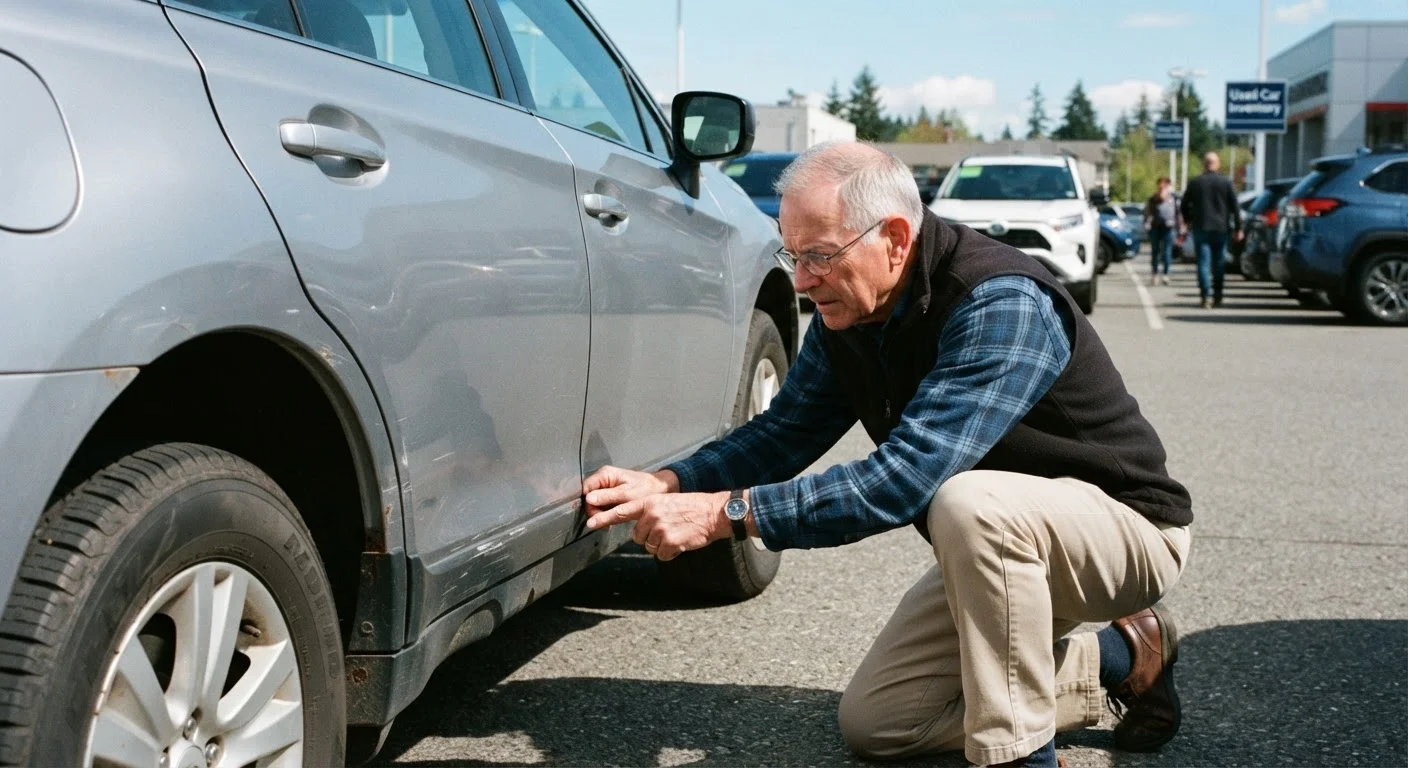
Overlooking the exterior walkaround entirely.
Why it happens: Buyers are often eager to get inside, start the engine, or move quickly toward a decision — and the exterior check gets rushed or skipped.
Failing to check all the lights, controls, and basic electronics.
Why it happens: Buyers focus on the engine and bodywork and assume that small features like lights, window switches, or the air conditioning will all be working.
For a structured walkthrough of every area to check, the pre-purchase inspection checklist is worth printing and taking with you on every viewing.
The Numbers Don't Lie: What Buyers Often Skip
1 in 3
Used cars listed with undisclosed prior damage
Industry data from vehicle history reporting services has consistently found that a significant proportion of used vehicles have accident or damage history not disclosed in seller listings.
$1,200+
Average cost of post-purchase surprise repairs
Consumer research in the US used car market suggests buyers who skip pre-purchase inspections face repair bills averaging over a thousand dollars within the first year of ownership.
Under 15 min
Typical test drive length for most buyers
Surveys of used car buyers indicate most test drives are shorter than 15 minutes, which is often insufficient to surface transmission, braking, or suspension issues.
These figures reflect a broader pattern: buyers who feel rushed or unfamiliar with the process are more likely to skip steps that would have protected them. Seller claims deserve scrutiny too — see common seller claims that deserve a closer look for help evaluating what you're told.
What Happens After the Inspection: Hidden Costs and Financing Traps
Don't Let a Clean Interior Distract You
A freshly detailed interior can make even a poorly maintained car feel trustworthy. Sellers know this, and a spotless cabin is not evidence of mechanical soundness. Always look past the presentation and focus on what a visual inspection and history report actually tell you. Assumptions based on appearances are a common reason buyers end up with problems they could have caught.
Even a thorough inspection doesn't eliminate all financial risk. Deferred maintenance, registration fees, and emissions testing costs often catch buyers off guard after the sale. Our article on hidden costs that catch used car buyers off guard breaks these down in detail.
If you're financing the purchase, it's worth reading about car loan pitfalls that catch senior buyers off guard before you sign anything. An affordable-looking monthly payment can mask a much higher total cost if the loan terms aren't carefully reviewed.
This article is for general informational and educational purposes only. It does not constitute financial, legal, or mechanical advice. Always consult a qualified mechanic before purchasing a used vehicle, and seek professional advice for financing or legal matters specific to your situation.
The content on this site is for informational purposes only and is not a substitute for professional advice. Always consult a qualified professional for guidance specific to your situation.