

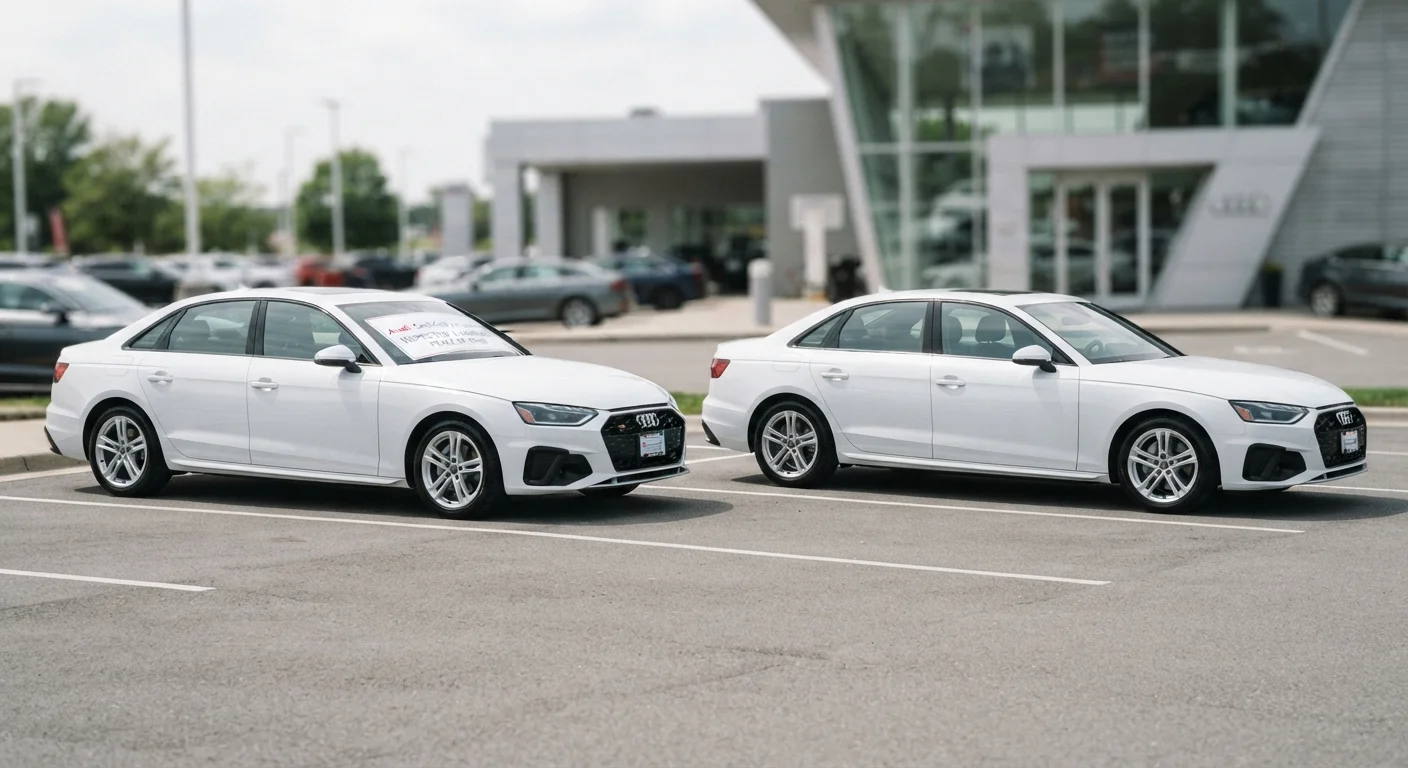
Option A
Certified Pre-Owned (CPO)
The manufacturer-backed, inspection-verified option.
Best for: Buyers who want documented inspection history and added warranty coverage with fewer unknowns.
Option B
Standard Used
The flexible, often lower-cost alternative.
Best for: Buyers comfortable doing their own due diligence and prioritizing a lower purchase price.
What Each Label Actually Means
When you see a car listed as Certified Pre-Owned, it means the vehicle has gone through a multi-point inspection defined by the manufacturer and has met specific age, mileage, and condition criteria. Only franchised dealerships authorized by the manufacturer can sell true CPO vehicles. The inspection checklist — which can range from roughly 100 to over 170 points depending on the brand — covers mechanical systems, safety components, and cosmetic condition. Vehicles that don't pass are either repaired to standard or sold as regular used cars.
A standard used car, by contrast, carries no such mandatory inspection requirement. It may have been inspected and reconditioned by the dealer, or it may be sold exactly as traded in. When a car is sold "as-is," the buyer accepts full responsibility for any issues discovered after purchase. This applies whether you're buying from a franchise dealer's non-CPO inventory, an independent lot, or a private seller.
The word "certified" is also used loosely in the market. Some dealers apply their own certification labels that are unrelated to a manufacturer programme. These dealer-certified vehicles may come with a limited warranty, but the inspection standards are set internally and not independently verified. It pays to ask specifically: Is this a manufacturer CPO programme or a dealer certification? The answer changes what protections you actually have. See key checks when evaluating any pre-owned vehicle before you commit to either type.
How the Warranties Compare
Warranty coverage is the most practical difference between CPO and standard used. A manufacturer CPO vehicle typically comes with two layers of warranty protection. First, if the original factory warranty has not yet expired, it transfers to the new owner. Second, the manufacturer adds an extended limited warranty — often covering the powertrain (engine, transmission, drivetrain) for a defined period beyond the original warranty's end date.
| Criterion | Certified Pre-Owned | Standard Used |
|---|---|---|
| Inspection requirement | Mandatory multi-point manufacturer checklist | No standardised requirement |
| Warranty included | Extended limited warranty (manufacturer-backed) | Often none; sold as-is |
| Who can sell it | Franchised dealerships only | Any dealer or private seller |
| Typical price | Higher (premium for coverage) | Lower on average |
| Vehicle age/mileage limits | Yes — set by manufacturer | No restrictions |
| Roadside assistance | Often included in programme | Rarely included |
Standard used vehicles sold as-is come with no warranty at all. Even dealer-sold used cars that aren't CPO are frequently sold without coverage unless the dealer voluntarily adds a limited dealer warranty. If any remaining factory warranty exists on a standard used car, it may or may not be transferable — that depends on the manufacturer's terms, and you should verify it in writing before purchasing.
For a deeper look at how these warranty structures work across different purchase types, see warranty coverage on new vs. used vehicles.
CPO Programmes Vary Significantly by Brand
There is no universal CPO standard. One manufacturer's programme may include a 7-year/100,000-mile powertrain warranty; another may offer only 12 months of additional coverage. Before assuming what a CPO label covers, ask the dealer for the specific programme's written terms. Compare what is and isn't covered — exclusions for wear items like brakes and tires are common across most programmes.
Price, Value, and What You're Really Paying For
CPO vehicles carry a price premium over equivalent standard used cars. That premium reflects the cost of reconditioning, the inspection process, and the warranty coverage being bundled in. Whether that premium makes financial sense depends on several factors: the remaining factory warranty, the vehicle's age and mileage, and how long you plan to own it.
$1,000–$3,500
Typical CPO price premium over comparable standard used
Industry analysts and consumer automotive publications have generally estimated the CPO premium in this range, though it varies by vehicle segment and market conditions.
$100–$200
Cost of an independent pre-purchase inspection
A pre-purchase inspection by a qualified independent mechanic is a widely recommended step when buying any standard used vehicle.
A standard used car at a lower price may represent equal or better value — particularly if you arrange an independent pre-purchase inspection (typically $100–$200 at a trusted mechanic) and negotiate based on what it reveals. For buyers comfortable with that process, the savings from skipping the CPO premium can be substantial.
If you're weighing this trade-off carefully, whether the CPO price difference makes sense walks through the financial considerations in more detail. And for a broader perspective on the new-vs-used decision itself, weighing new vs. used for senior buyers covers depreciation, reliability, and peace of mind side by side.
This article provides general educational information about used car purchasing options. It is not financial, legal, or personalised buying advice. Terms, warranty coverage, and inspection standards vary by manufacturer, dealer, and individual vehicle. Always review programme documentation directly with the selling dealer and consider consulting a qualified mechanic before any purchase.
The content on this site is for informational purposes only and is not a substitute for professional advice. Always consult a qualified professional for guidance specific to your situation.