

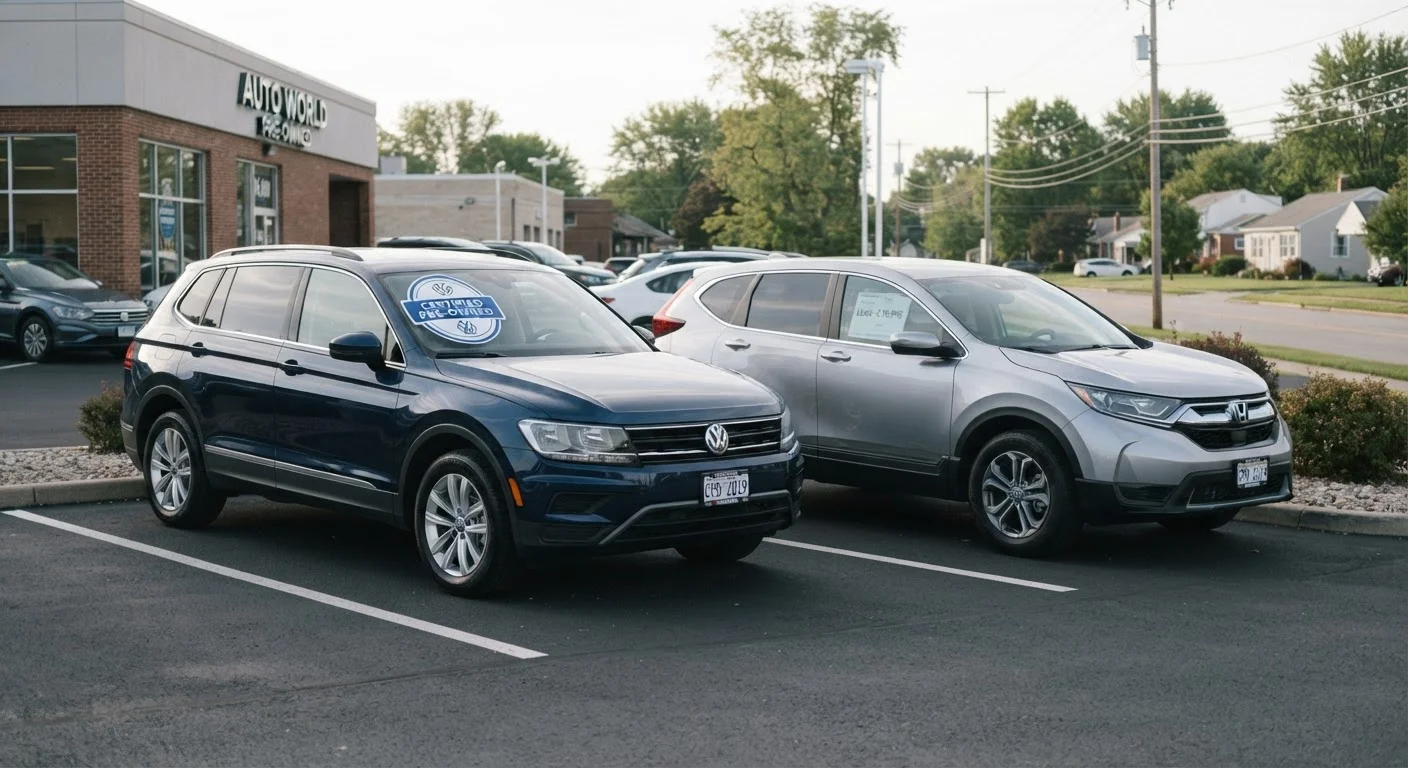
Our Verdict
A CPO vehicle offers genuine peace of mind through its inspection process and extended warranty, but that protection comes at a measurable upfront cost. For buyers who want predictable expenses and reduced repair risk, the premium may be reasonable. For those with a tight budget or access to a trusted mechanic, a well-inspected standard used car can deliver similar reliability at lower cost.
CPO is worth considering for seniors who prioritize warranty coverage and want to minimize surprise repair bills; standard used is worth pursuing for budget-conscious buyers willing to do due diligence upfront.
What Exactly Are You Paying More For?
When a dealership sells a certified pre-owned (CPO) vehicle, it's selling a used car that has passed a manufacturer-approved multi-point inspection — typically 100 to 150 checkpoints — and comes backed by an extended warranty. That warranty usually adds anywhere from one to several years of powertrain coverage beyond what remains on the original factory warranty.
The price premium for CPO vehicles in the US market generally runs between $1,000 and $3,000 compared to similar non-certified used cars, though it can be higher for newer models or luxury brands. That gap reflects the dealer's inspection costs, any reconditioning work performed, and the cost of administering the warranty program.
What it does not automatically mean is that the car is trouble-free. Inspections catch existing problems but can't predict future ones. Before relying on a CPO badge, it pays to understand exactly what the program covers — and what it excludes. Our companion article explains what CPO labels typically cover and what they don't.
Pros and Cons of Certified Pre-Owned
CPO programs exist across most major manufacturers, but the specifics differ considerably. Here's an honest look at both sides.
Manufacturer-backed inspection reduces hidden problem risk
CPO vehicles must pass a structured multi-point inspection before certification, which means major mechanical issues are typically addressed before sale. This provides more baseline assurance than a standard used car sold as-is.
Extended warranty adds predictable repair cost coverage
Most CPO programs include an extended powertrain warranty, and some add limited bumper-to-bumper coverage. This can reduce out-of-pocket repair expenses during the coverage period.
Roadside assistance often included
Many CPO programs bundle in roadside assistance for the warranty period — useful for seniors who drive alone and want a safety net for breakdowns.
May qualify for manufacturer financing incentives
Some automakers offer lower-rate financing on CPO vehicles through their captive finance arms, which can partially offset the higher purchase price depending on your credit profile and the specific offer.
Cleaner vehicle history requirements
CPO programs typically require the vehicle to have a clean title and no significant accident history, reducing the chance of buying a car with undisclosed structural damage.
Higher upfront cost than comparable standard used
The CPO premium typically adds $1,000–$3,000 to the purchase price. For buyers on fixed incomes, that difference is meaningful and may outweigh the warranty benefit.
CPO warranty coverage varies widely between brands
Not all CPO programs are equal — some offer comprehensive coverage while others are narrow powertrain-only plans with significant exclusions. Assuming broad coverage without reading the contract is a common and costly mistake.
Limited to franchised dealerships only
CPO vehicles can only be sold through authorized dealers, which removes the option to buy from private sellers or independent lots where prices are often lower.
Inspection quality depends on the dealer performing it
While the inspection checklist is manufacturer-defined, the thoroughness of execution is done by dealership technicians. Independent verification is still advisable.
Older or high-mileage vehicles are ineligible
Most CPO programs cap eligibility at five to six years of age and around 60,000–80,000 miles, which excludes the most affordable end of the used car market.
One factor seniors sometimes overlook: CPO vehicles are almost always sold through franchised dealerships, which limits where you can shop. Standard used cars, by contrast, are available through private sellers, independent dealers, and auctions — giving you more negotiating leverage and a wider price range.
When a Standard Used Car Makes More Financial Sense
A standard used car isn't a gamble by definition — it's simply a vehicle sold without the manufacturer's certification layer. Millions are bought and sold reliably every year. The key is replacing the CPO inspection process with your own due diligence.
That means ordering a vehicle history report, arranging a pre-purchase inspection by an independent mechanic (typically $100–$150), and researching the model's known reliability record. For guidance on what to look for, see the inspecting used cars hub.
Check Remaining Factory Warranty First
Before paying a CPO premium, verify whether the standard used car you're considering still has factory warranty time remaining. Original new-car warranties vary by manufacturer but commonly include three-year bumper-to-bumper and five-year powertrain coverage. A two-year-old car with low mileage may already carry meaningful protection at no extra cost. Ask the dealer or check the manufacturer's website using the vehicle identification number (VIN).
If the standard used vehicle you're considering is within its original factory warranty period — many new-car warranties run three years or 36,000 miles on the bumper-to-bumper side — you may already have meaningful protection without paying the CPO premium. Check the remaining coverage before assuming you need a certified program.
Also worth factoring in: insurance costs often differ between vehicle types and ages. The article on insurance costs for new vs. used cars walks through how premiums and required coverage can shift depending on the vehicle you choose.
Running the Numbers: A Simple Framework
Rather than deciding on CPO versus standard used in the abstract, try comparing two specific vehicles side by side:
- Price gap: What is the actual dollar difference between the CPO unit and a comparable non-certified car of the same year, mileage, and trim?
- Warranty value: How many months and miles of powertrain coverage does the CPO program add? What does it cover and exclude?
- Inspection cost: Budget $100–$150 for an independent pre-purchase inspection on any standard used car you seriously consider.
- Reserve fund: Could you set aside a portion of the savings from buying standard used to cover a potential repair? Many financial planners suggest a $1,000–$2,000 vehicle maintenance reserve as a baseline.
If the CPO premium is $2,500 and the warranty coverage is thin or full of exclusions, the math often favors a carefully vetted standard used car. If the premium is $1,200 and the warranty adds two years of broad powertrain coverage, it may well be worth it — particularly for buyers who want predictable monthly budgeting. For a broader look at the trade-offs between vehicle types, see New vs. Used: Real Trade-Offs for Senior Car Buyers.
$1,000–$3,000
Typical CPO price premium over standard used
Industry estimates from automotive market analysts consistently place the CPO markup in this range, though luxury vehicles can command a higher premium.
~$125
Average cost of a pre-purchase inspection
Independent mechanic inspections typically run $100–$150 in the US, a modest upfront cost that can reveal issues worth far more than the inspection fee.
The content on this site is for informational purposes only and is not a substitute for professional advice. Always consult a qualified professional for guidance specific to your situation.