

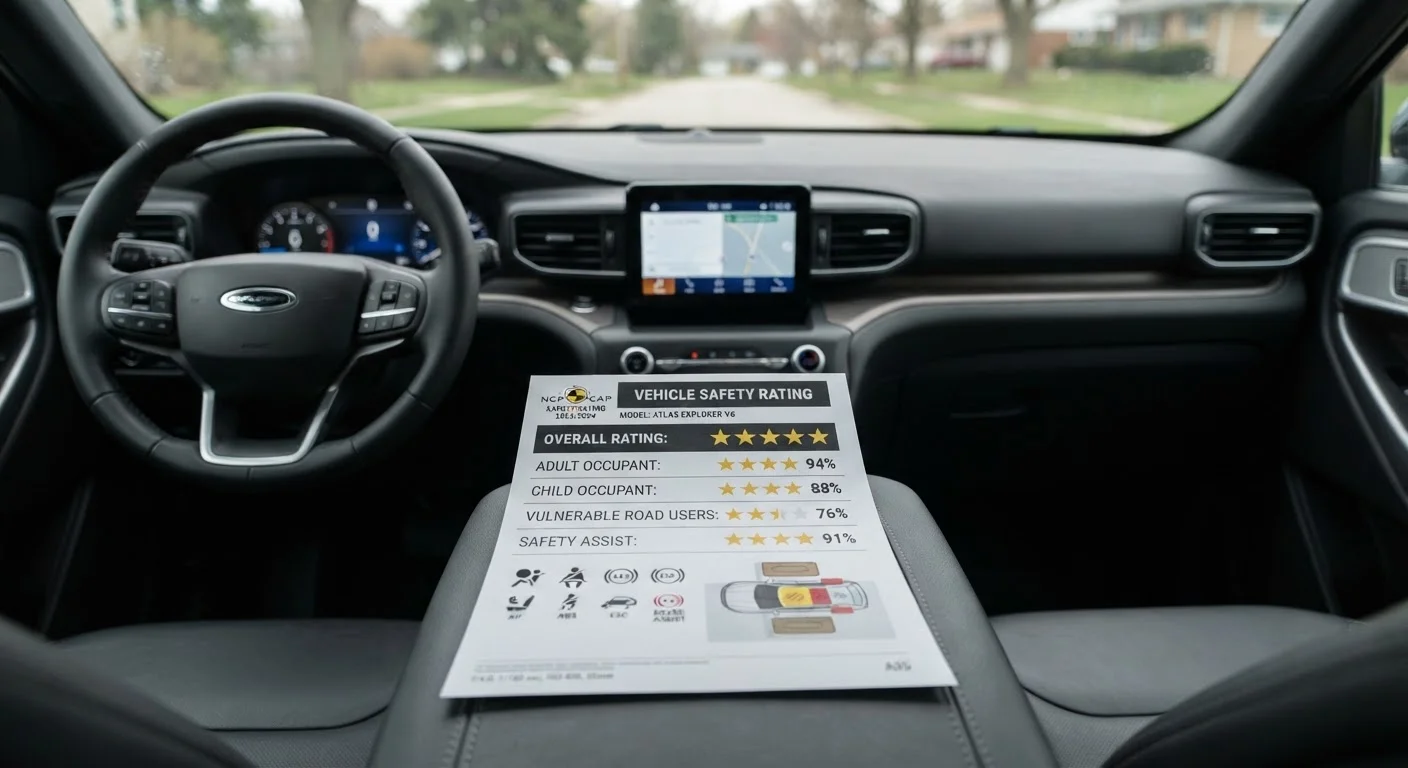
What Safety Ratings Actually Measure
Safety ratings from organizations such as the IIHS and NHTSA give car buyers a structured, evidence-based way to compare vehicles. But understanding what those tests actually measure — and what they deliberately leave out — is essential before relying on them as your primary decision tool.
Both programs conduct controlled crash scenarios at defined speeds and angles, then score how well the vehicle's structure and restraints protect occupants. The IIHS also evaluates headlights and driver-assist systems under its specific protocols. These are genuinely useful data points. However, they do not capture how a vehicle performs in the full range of conditions older drivers encounter daily: backing out of a narrow garage, navigating a poorly lit highway on-ramp, or responding to a sudden obstacle on a wet road at moderate speed.
For a broader understanding of how today's safety systems work together beyond what tests measure, see our complete overview of modern car safety technology.
Ratings Reflect Test Conditions, Not All Roads
Crash-test programs use standardized laboratory conditions. Real-world crashes involve variable speeds, angles, road surfaces, and occupant positions that no single rating system fully replicates. A vehicle's score should inform your evaluation — not substitute for it.
Common Mistakes When Reading Safety Scores
The errors buyers make when interpreting safety ratings tend to follow recognizable patterns. Each one is understandable — rating summaries are designed for quick consumption — but each can lead to a purchase decision based on an incomplete picture.
Treating an overall safety score as a complete assessment of vehicle safety.
Why it happens: Rating organizations publish a single headline score, which naturally draws attention and feels conclusive. Readers often stop there without reviewing the underlying subcategory results.
Assuming a highly rated vehicle includes all tested safety technology as standard equipment.
Why it happens: Test vehicles are frequently equipped with every available safety package, while the base or mid-level trim sold at a lower price may omit several of those systems entirely.
Comparing ratings from different testing programs as if they use the same standards.
Why it happens: IIHS and NHTSA both publish widely cited ratings, but their test methods, scoring criteria, and emphasis differ meaningfully. A five-star NHTSA rating and an IIHS Top Safety Pick designation are not equivalent measures.
Overlooking how well driver-assist features actually function in everyday conditions relevant to older drivers.
Why it happens: Ratings focus on crash outcomes and system presence, not on how intuitive or reliable a technology is during routine driving — factors that matter considerably to seniors navigating busy intersections or low-light roads.
Ignoring reliability data when evaluating a vehicle's overall safety value.
Why it happens: Safety ratings and reliability ratings come from different sources and are rarely presented side by side, so buyers focus on whichever data they encounter first.
Once you have a clearer sense of what ratings cover, a structured approach to evaluating individual features pays dividends. The checklist for evaluating safety features on a new car walks through the specific questions worth asking before committing to a vehicle.
Optional Safety Packages Are Not Always Included
Many vehicles earn their safety ratings on fully loaded test configurations. The trim level you purchase may not include the same advanced driver-assist systems. Always confirm which specific features come standard on the trim and package you are considering — and verify this in writing before purchase.
Building a More Complete Safety Picture
A well-informed evaluation combines crash-test data with several other layers of research. Start with both IIHS and NHTSA scores, then examine subcategory results. Add reliability data, real-world road-test observations, and a personal test drive that puts driver-assist features through practical use.
For senior drivers specifically, features like large, high-contrast displays, intuitive alert systems, and adjustable driver-assist sensitivity often determine whether a technology actually gets used — and unused safety tech offers no protection. Explore what gaps commonly emerge between expectation and reality in our article on why seniors often get less from safety tech than expected.
2
Major U.S. crash-test rating programs
IIHS and NHTSA operate independently, using different methodologies — meaning one vehicle can carry two distinct sets of scores simultaneously.
~40%
New vehicles with standard AEB in tested configurations
Industry data consistently shows that automatic emergency braking is more likely to be standard on higher trim levels than on base models, even within the same model line.
The structured guide to reading standout safety ratings offers additional detail on how to interpret scores when comparing specific new vehicles. Used alongside the guidance in this article, it provides the context needed to move from a score on a page to a confident, well-grounded assessment.
This article is for general informational purposes only. Vehicle safety ratings, trim specifications, and available equipment vary by model year and market. Always verify current specifications with the manufacturer or a licensed dealer, and consult relevant testing organization websites for the most up-to-date rating data.
The content on this site is for informational purposes only and is not a substitute for professional advice. Always consult a qualified professional for guidance specific to your situation.