

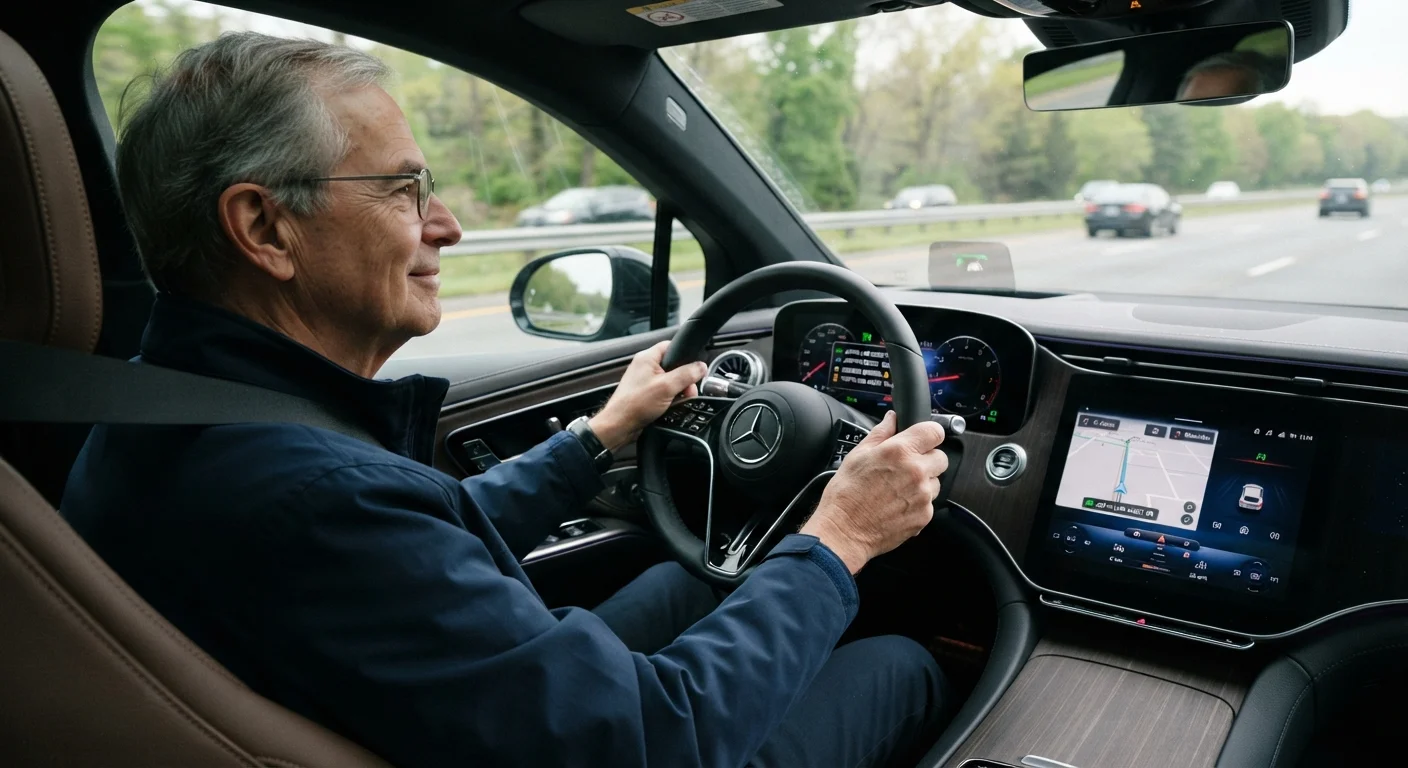
The Gap Between What Technology Promises and What It Delivers
Modern driver-assist systems — automatic emergency braking, lane-keeping assist, adaptive cruise control, and others — represent a genuine step forward in vehicle safety. For older drivers, whose reaction times and physical range of motion may have changed over the years, these features can provide meaningful support. But a pattern emerges consistently across consumer research and crash data: the benefit drivers actually receive is far smaller than the benefit the technology is capable of delivering.
The reason is rarely a flaw in the technology itself. It is a gap in understanding. When drivers — at any age — do not know exactly what a system does, when it activates, and what it cannot handle, they use it incorrectly. For seniors who may have purchased their first vehicle equipped with these features, the learning curve can be steep and the consequences of misuse significant.
Understanding what driver-assist technology actually does is the essential starting point. The mistakes below represent the most common ways that gap shows up in real driving situations — and what to do about each one.
These Systems Are Aids, Not Replacements
No current production vehicle sold in the United States operates as a fully self-driving car. Features such as lane-keeping assist, automatic emergency braking, and adaptive cruise control are designed to support an alert, engaged driver — not to substitute for one. Treating them as autonomous can create dangerous situations. Always remain attentive and in control of the vehicle.
Common Mistakes Seniors Make With Safety Technology
Assuming the system will handle the situation without driver input.
Why it happens: Automakers and media coverage often use language like 'self-braking' or 'self-steering,' which implies more autonomy than these systems actually have. Seniors who upgrade from older vehicles may have no prior frame of reference for what these features actually do.
Skipping hands-on familiarization before driving in complex conditions.
Why it happens: Dealership handovers are often brief, and many buyers feel pressure to leave quickly. Seniors may hesitate to ask for more time or assume they can learn the features as they go.
Ignoring or disabling alerts because they feel overly sensitive.
Why it happens: Early-generation systems occasionally generated false alarms in certain conditions, and that reputation persists. Some drivers also find repeated audible warnings irritating during familiar local driving.
Neglecting sensor cleaning and calibration as part of routine vehicle care.
Why it happens: Safety system sensors are not prominently listed in traditional maintenance schedules, so many drivers are simply unaware they require attention. Windshield replacement after a chip or crack can also knock camera calibration out of alignment.
Relying on blind spot monitoring as a substitute for mirror and shoulder checks.
Why it happens: Blind spot monitoring provides a clear, consistent indicator light, which can feel more reliable than a quick glance — particularly if neck mobility is limited. Over time, some drivers stop performing manual checks entirely.
Dirty or Damaged Sensors Reduce System Reliability
Cameras, radar units, and ultrasonic sensors that power safety features can be obstructed by dirt, ice, heavy rain, or physical damage. When sensors are compromised, warnings may be delayed, missed, or triggered incorrectly. Check sensor areas during routine vehicle cleaning and consult a qualified technician promptly if a system warning light appears on your dashboard.
Correcting these errors does not require technical expertise. In most cases, it requires only a deliberate investment of time — reading the manual, attending a familiarization session, or spending an afternoon in a low-stakes environment learning how each feature responds. For additional context on the range of safety accessories and aids available to older drivers, exploring purpose-built tools alongside vehicle systems can further reduce on-road risk.
It is also worth noting that insurance coverage assumptions can shift when vehicles are equipped with expensive sensor-laden components. A single camera module or radar unit behind a bumper can cost significantly more to repair than older mechanical parts — a factor sometimes overlooked at policy renewal time. For a closer look at where coverage gaps tend to appear, see coverage gaps older drivers often overlook.
~80%
Drivers unaware of safety feature limitations
A survey conducted by the AAA Foundation for Traffic Safety found that a large majority of drivers with vehicles equipped with driver-assist features did not fully understand what those systems could and could not do.
3 in 10
New-car buyers who read the full owner's manual
Research by J.D. Power has consistently found that a minority of vehicle purchasers thoroughly review their owner's manual, leaving many safety system functions undiscovered or misunderstood.
The content on this site is for informational purposes only and is not a substitute for professional advice. Always consult a qualified professional for guidance specific to your situation.