

Why These Misconceptions Matter for Senior Drivers
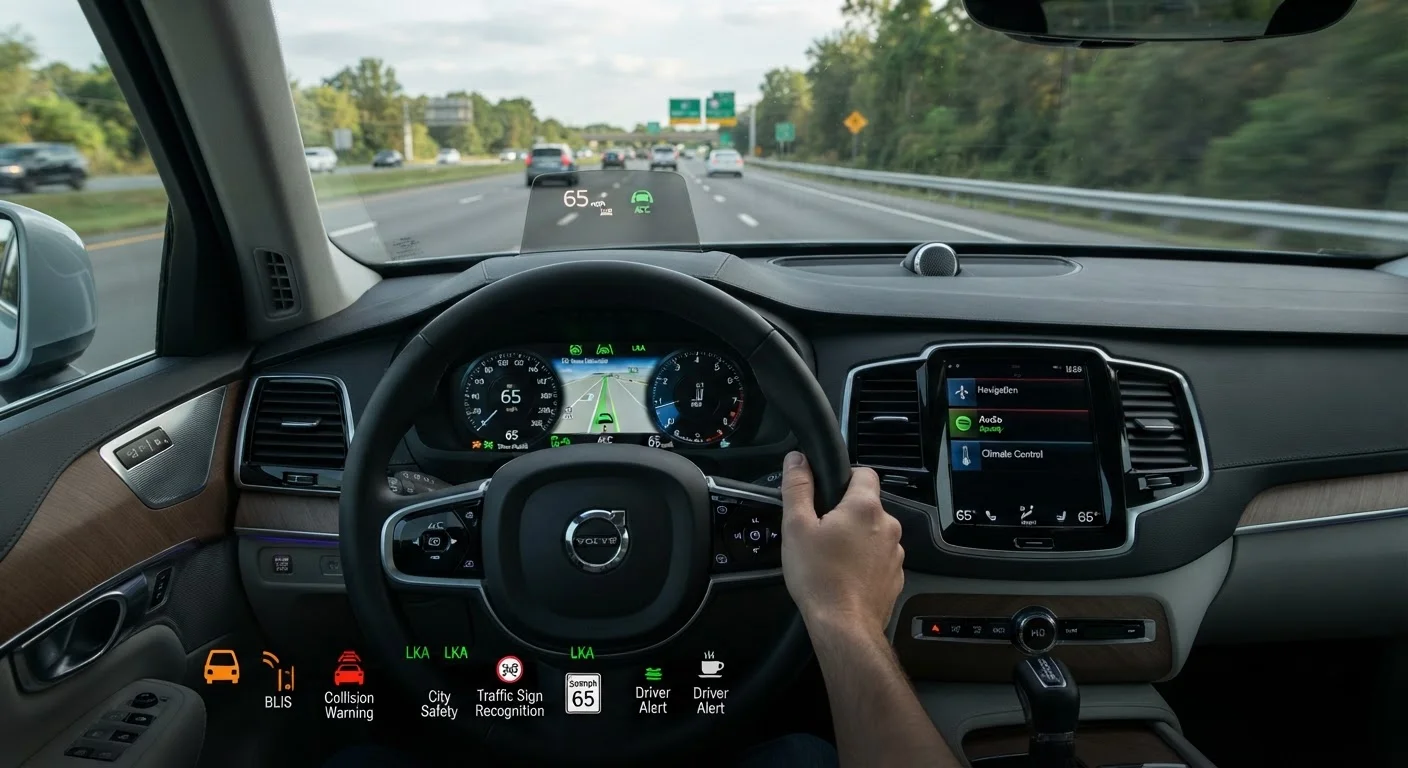
Modern vehicles come equipped with an array of driver-assist and active safety technologies — automatic emergency braking, lane-keeping assist, blind-spot monitoring, and more. For senior drivers, these features can provide meaningful, confidence-building support. But widespread misunderstandings about what these systems can actually do are common, and acting on those misunderstandings can be genuinely dangerous.
Understanding the real capabilities and clear limits of today's safety technology is not a technical exercise — it's a practical safety issue. The myth-and-fact pairs below address the misconceptions most likely to affect seniors evaluating or already driving vehicles with these features. For a broader introduction to how these systems work, see our guide to driver-assist technology for seniors.
Myth
Driver-assist systems mean I can take my attention off the road — the car will handle it.
Fact
All current driver-assist systems require a fully attentive driver ready to take control at any moment.
Terms like "autopilot" or "self-driving mode" are marketing labels, not technical descriptions of autonomous capability. Every driver-assist system available in consumer vehicles today is classified as Level 1 or Level 2 automation — meaning the driver must remain engaged, hands on the wheel, and ready to respond. These systems assist; they do not replace the driver. Overconfidence in automation is a documented contributor to collisions, particularly when drivers disengage mentally during long or uneventful stretches of driving.
Myth
Automatic emergency braking will always stop my car before a collision.
Fact
Automatic emergency braking reduces collision severity in many situations but cannot prevent all crashes.
Automatic emergency braking (AEB) uses radar, cameras, or sensors to detect an imminent collision and apply the brakes. However, its effectiveness depends on vehicle speed, sensor clarity, and the type of obstacle. AEB systems may not reliably detect pedestrians in low light, animals, or stationary objects at highway speeds. Weather conditions such as heavy rain or snow can reduce sensor accuracy. AEB is a valuable supplemental safety layer — not a failsafe substitute for attentive driving.
Myth
Once safety technology is installed, it doesn't need any maintenance or recalibration.
Fact
Sensors and cameras that power safety systems require proper maintenance and professional recalibration after repairs.
Windshield replacement, front-end repairs, even certain tire changes can affect the calibration of the cameras and radar sensors that these systems depend on. A misaligned camera can cause a lane-keeping system to give incorrect alerts — or none at all. Many vehicle owners are unaware that after bodywork or windshield replacement, a qualified technician should recalibrate the affected sensors. Skipping recalibration can mean the system appears to function while operating outside its designed parameters.
Myth
Blind-spot monitoring eliminates the need to check mirrors and physically look before changing lanes.
Fact
Blind-spot monitoring is a supplemental alert — safe lane changes still require mirrors and visual checks.
Blind-spot monitoring systems use sensors to alert drivers when a vehicle enters a difficult-to-see zone alongside the car. However, these systems have detection limits: they may not register fast-approaching motorcycles, cyclists, or vehicles in certain geometries. The alert is a cue to look — not a clearance to move. Relying solely on the indicator light without a mirror check and, where possible, a quick glance over the shoulder remains a meaningful risk.
Myth
Safety technology only benefits younger, tech-savvy drivers — it's too complicated for seniors.
Fact
Many driver-assist features are specifically well-suited to the needs of older drivers when properly understood.
Features like rear cross-traffic alerts, parking assistance, and automatic emergency braking address exactly the kinds of driving scenarios where age-related changes in vision, reaction time, or neck mobility can create challenges. Research from highway safety organizations has consistently noted that older drivers can benefit substantially from these technologies. The key is learning what each system does — ideally through a walk-through with a dealer, an occupational therapist who specializes in driving, or by reading the owner's manual carefully. For more on adaptive aids, see common misconceptions about adaptive car accessories.
What Seniors Should Realistically Expect From Safety Technology
The gap between what safety technology promises and what it reliably delivers depends heavily on how well drivers understand its design. Systems like adaptive cruise control (which automatically adjusts vehicle speed to maintain a set following distance) and lane-centering assist are genuinely useful — but they perform within narrow conditions. Heavy rain, snow, faded lane markings, or unusual road geometry can all reduce their effectiveness.
Overreliance on Safety Tech Is a Real Risk
Drivers who overestimate what their vehicle's safety systems can do are more likely to become inattentive at critical moments. This is sometimes called "automation complacency" — a well-documented phenomenon in transportation safety research. If you're unfamiliar with how a specific feature in your vehicle works, consult the owner's manual or ask a qualified technician before relying on it in demanding driving conditions. See misconceptions about driver-assist systems that could put seniors at risk for a deeper look at this issue.
Seniors who are considering a newer vehicle with advanced safety features can benefit from understanding how those features differ across model years. The safety technology gap between older and newer vehicles is an important consideration in any car-buying decision. Similarly, senior-specific safety features deserve careful attention when comparing options.
Finally, technology works best when paired with good information. If you've heard conflicting things about navigation aids and GPS accuracy, the same fact-checking approach applies — see common myths about GPS and navigation technology for a parallel look at that topic.
~40%
Reduction in rear-end crashes with AEB
Studies by the Insurance Institute for Highway Safety (IIHS) have found that vehicles equipped with automatic emergency braking show meaningful reductions in rear-end crash rates compared to vehicles without the feature.
Level 2
Maximum automation in most consumer vehicles
The SAE International automation scale runs from Level 0 (no automation) to Level 5 (full self-driving). The vast majority of vehicles on U.S. roads today top out at Level 2, requiring continuous driver attention and readiness to take control.
This article is for general informational purposes only. Vehicle safety system performance varies by make, model, trim level, and conditions. Always consult your vehicle owner's manual and a qualified technician for guidance specific to your vehicle.
The content on this site is for informational purposes only and is not a substitute for professional advice. Always consult a qualified professional for guidance specific to your situation.