

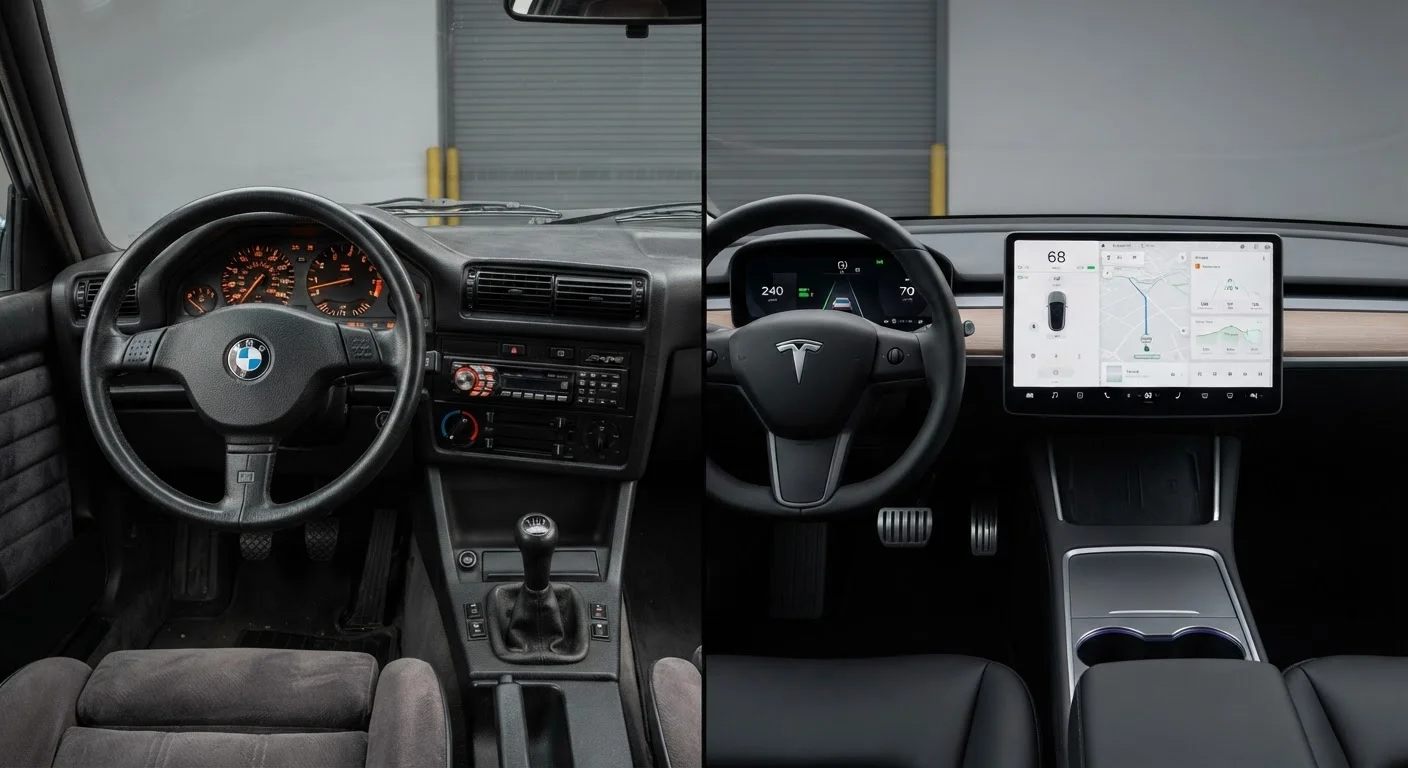
What Changed, and When
For most of the twentieth century, vehicle safety was largely a passive discipline: engineers focused on what happened to occupants during a crash — crumple zones, seatbelts, and airbags. Beginning in the late 2000s and accelerating through the 2010s, a new category emerged: active safety technology, designed to prevent crashes before they happen.
Key milestones in this shift include:
- Rearview cameras — federally mandated on all new US passenger vehicles sold after May 2018, but available as early as 2002 on some models.
- Automatic Emergency Braking (AEB) — voluntary industry commitments in 2016 led most major manufacturers to standardize AEB on new vehicles by the 2022 model year.
- Blind-spot monitoring and rear cross-traffic alert — increasingly common from about 2013 onward, though still optional on many trims.
- Lane-departure warning and lane-keeping assist — began appearing on mainstream vehicles around 2012–2015.
A vehicle purchased new in 2012 and still driven today may be mechanically sound, yet it sits on the wrong side of a significant capability divide. See how active and passive safety features differ for a fuller explanation of each category.
Model Year Is a Starting Point, Not the Full Picture
A vehicle's model year indicates when it was manufactured, but not necessarily which safety features it includes. Trim level, optional packages, and regional specifications all affect the final equipment list. Two vehicles of the same model year and make can differ substantially in their active safety capabilities. Always verify the specific vehicle's features using its VIN before making a purchase decision.
Why the Gap Matters More for Seniors
Age-related changes in vision, reaction time, and neck flexibility are normal — and well-documented. These same changes are precisely what many active safety systems are engineered to compensate for. Blind-spot monitoring addresses reduced neck-rotation range. Automatic emergency braking covers slower reaction times. Rear cross-traffic alerts help when turning to check behind the car becomes physically difficult.
This alignment between senior driving challenges and modern safety technology is not coincidental. Research from organizations such as the Insurance Institute for Highway Safety (IIHS) has consistently found that certain active safety features reduce the frequency of specific crash types — particularly rear-end collisions and low-speed parking incidents — that disproportionately involve older drivers.
For a detailed look at which specific systems offer the most benefit, see safety features that make the biggest difference for older drivers.
50%
Reduction in rear-end crashes with AEB
IIHS research has found that automatic emergency braking with pedestrian detection can reduce rear-end police-reported crashes by approximately 50% compared to vehicles without the system.
~2022
Model year AEB became standard on most new US vehicles
Following a voluntary industry agreement reached in 2016, the majority of new passenger vehicles sold in the US included standard automatic emergency braking by the 2022 model year.
1 in 4
Older drivers involved in intersection crashes
According to NHTSA data, drivers aged 65 and older are disproportionately represented in intersection-related crashes, a category where forward collision warning and AEB systems offer measurable benefit.
Evaluating the Tradeoff: New vs. Used
A newer vehicle with a full suite of active safety features typically costs more upfront than an older used car. That financial reality deserves honest consideration — not dismissal. The question to ask is not simply "can I afford the newer vehicle?" but "what is the full cost of each option, including risk?"
When weighing this tradeoff, consider the following factors:
- Identify which features are present — not assumed. Use the vehicle's VIN and the manufacturer's build-data tool to confirm what was factory-installed. Trim level and optional packages vary enormously within the same model year.
- Compare feature lists, not just prices — a three-year-old certified pre-owned vehicle may offer nearly the same active safety suite as a brand-new model at a meaningfully lower price.
- Factor in insurance costs — some insurers reflect the presence of active safety features in premium calculations, though this varies by provider and policy. This is general information; consult a licensed insurance agent about your specific situation.
- Consider long-term ownership cost — a vehicle with lane-keeping, AEB, and blind-spot monitoring may remain a suitable daily driver longer, potentially deferring a future purchase.
Driver-assist technologies explained in plain language can help clarify which systems are worth prioritizing during your search.
Use the VIN to Confirm Safety Features
Before finalizing any vehicle purchase, run the 17-character Vehicle Identification Number (VIN) through the manufacturer's official build-data tool or a reputable vehicle history service. This confirms exactly which factory-installed packages were included — blind-spot monitoring, AEB, lane assist, and similar systems are often tied to specific option packages, not guaranteed by model year alone. Dealer listings and classified ads frequently omit these details.
Getting the Most from Whichever Vehicle You Choose
Owning a vehicle with advanced safety features is only half the equation. These systems require some familiarity to use effectively — and misunderstanding their limits is a common issue. Why seniors often get less from safety tech than they expect addresses this gap directly.
Practical steps for any buyer:
- Request a walkthrough of all driver-assist systems at the dealership or from a knowledgeable owner before driving the vehicle regularly.
- Read the relevant sections of the owner's manual — these explain system limitations clearly, including conditions under which features may not function (heavy rain, snow, dirty sensors).
- Understand that no current system replaces attentive driving. Active safety technology is a supplement, not a substitute.
This article provides general educational information about vehicle safety technology. It is not personalized financial, insurance, or purchasing advice. Actual vehicle features, costs, and insurance implications vary by make, model, trim level, provider, and individual circumstances. Consult qualified professionals for decisions specific to your situation.
Frequently Asked Questions
Automatic emergency braking, lane-departure warning, and blind-spot monitoring began appearing as optional or standard equipment around 2013–2016 on mainstream vehicles. By the early 2020s, many of these systems became standard across most new cars sold in the US. A vehicle's exact equipment list depends on its trim level and optional packages, not just its model year.
A strong crash-test rating reflects how well a vehicle protects occupants once a collision occurs — that's passive safety. However, older ratings don't account for active systems that help avoid crashes in the first place. A well-rated older vehicle may still lack features that meaningfully reduce crash risk for today's roads.
Some aftermarket devices can add limited functionality, such as rearview cameras or basic collision alerts. However, these generally cannot replicate the integrated performance of factory-installed systems, which are engineered to work with a vehicle's brakes, steering, and sensors as a complete system. Consult a qualified mechanic before adding any aftermarket safety device.
Many drivers, including seniors, initially find driver-assist systems unfamiliar, but most report adapting quickly. Features like automatic emergency braking work in the background and require no action from the driver. Lane-keeping and blind-spot alerts use simple visual or audible cues. A short orientation session at the dealership can make these features feel intuitive.
The vehicle's original window sticker (Monroney label), owner's manual, and the manufacturer's build-data lookup tool (using the VIN) are the most reliable sources. Third-party vehicle history reports may also list factory-installed packages. Never assume a feature is present based solely on the model year — trim level and options vary widely.
The content on this site is for informational purposes only and is not a substitute for professional advice. Always consult a qualified professional for guidance specific to your situation.