

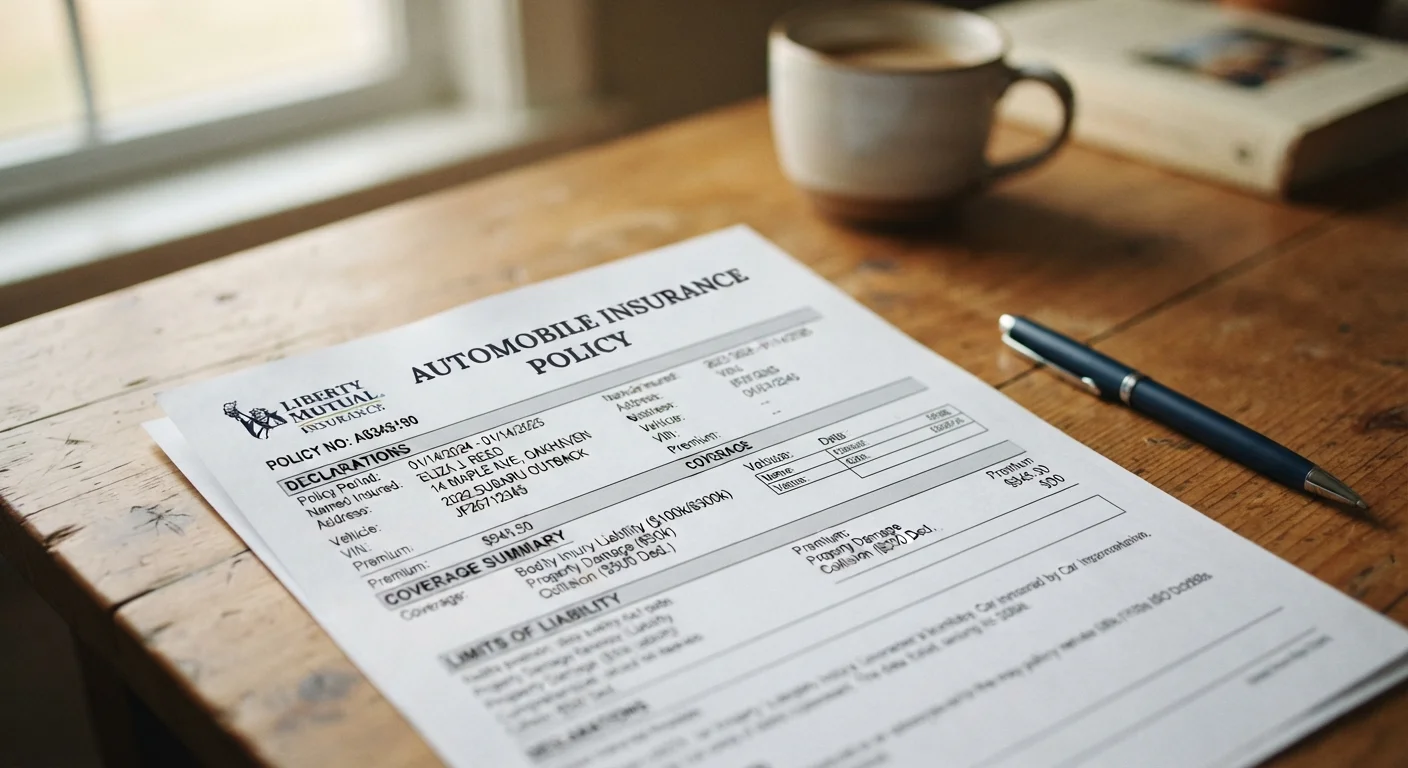
What Liability Coverage Is Designed to Do
Liability insurance exists for one core purpose: to protect other people — and your finances — when you cause an accident. If you rear-end another car, run a red light and strike a pedestrian, or damage someone's fence while backing out of a driveway, liability coverage steps in to pay the resulting bills on your behalf.
It breaks down into two distinct parts:
- Bodily injury liability — covers medical expenses, lost wages, and pain-and-suffering claims for people you injure.
- Property damage liability — covers repairs to vehicles, buildings, fences, or other property you damage.
These are the two coverage types you'll see reflected in the numbers on your declarations page. If you want to understand what those numbers actually mean, see our guide to reading policy limits.
Liability Covers the Other Party, Not You
A common source of confusion: if another driver causes an accident and they carry liability insurance, their policy pays your costs — not yours. Your own liability coverage only activates when you are at fault. Understanding this distinction helps set realistic expectations when filing or responding to a claim.
What Liability Coverage Does Not Pay For
This is where many drivers get caught off guard. Liability coverage has a clear boundary: it only faces outward. It pays for harm you cause to others — it does not pay for harm done to you or your property.
Specifically, liability will not cover:
- Repairs to your own vehicle after an at-fault accident (that requires collision coverage)
- Your own medical bills or lost wages (that requires MedPay or PIP — see our comparison of MedPay and PIP)
- Damage to your car from weather, theft, or animals (that requires comprehensive coverage)
- Injuries or damages if you were using your car for commercial purposes, unless specifically covered
- Intentional acts — insurers do not pay claims arising from deliberate damage
Many drivers assume their policy covers more than it does. Our article on common car insurance misconceptions walks through the most frequent surprises people encounter at claim time.
Review Your Limits Before an Accident Happens
Pull out your declarations page and check your bodily injury and property damage limits. If your limits are at the state minimum, consider whether they reflect your actual financial exposure. Talking through options with a licensed agent costs nothing and can clarify your choices.
When Your Limits Run Out
Liability coverage has a ceiling. If damages from an accident exceed your policy limits, your insurer stops paying — and you may be personally liable for the rest. In a serious accident involving significant injuries or an expensive vehicle, state-minimum coverage limits can be exhausted quickly.
$15,000
Typical state minimum bodily injury limit per person
Many states set minimum bodily injury liability as low as $15,000 per person — an amount that can be consumed by a single emergency room visit.
1 in 6
Drivers estimated to be uninsured in the U.S.
The Insurance Research Council has estimated roughly one in six U.S. drivers carries no insurance, underscoring the value of understanding your own coverage.
This is one reason many insurance professionals recommend carrying higher limits than the state minimum, particularly if you own assets like a home or savings. Higher limits typically cost less than many drivers expect when added to an existing policy.
For a full picture of how liability fits alongside collision and comprehensive, the overview of core coverage types is a useful starting point.
Policy Exclusions You Should Know About
Beyond the built-in limits, liability policies contain exclusions — specific circumstances where coverage simply doesn't apply. Common exclusions include accidents involving unlisted household drivers, incidents that occur while the vehicle is being used for ridesharing without appropriate endorsement, and damage caused while driving under the influence.
Exclusions are where many claim disputes originate. Our article on how policy exclusions work explains the mechanics in plain terms so you know what to look for in your own policy documents.
The clearest way to know exactly what your policy covers is to read your declarations page and policy documents carefully. If something is unclear, a licensed insurance agent can walk you through the language — that's what they're there for.
This article provides general educational information about car insurance and is not personalized insurance or legal advice. Coverage terms, limits, and exclusions vary by insurer and state. Always review your actual policy documents and consult a licensed insurance professional for guidance specific to your situation.
Frequently Asked Questions
No. Liability coverage pays for other people's injuries when you're at fault, not your own. To cover your own medical costs, you'd need Medical Payments (MedPay) or Personal Injury Protection (PIP), depending on your state.
No. Liability coverage only pays for damage you cause to someone else's vehicle or property. Repairs to your own car require collision coverage, which is a separate and optional add-on in most states.
Once your liability limits are exhausted, you may be personally responsible for the remaining costs. A court could potentially garnish wages or pursue other assets. Choosing higher limits offers more financial protection.
Nearly all states require some form of liability insurance, though the minimum amounts vary. A few states have alternative financial responsibility laws. Always check your state's specific requirements.
Generally yes, if you're at fault for damaging another person's vehicle or injuring someone in a parking lot, your liability coverage typically applies. However, specific circumstances and policy language can affect this — review your policy or ask your agent.
The content on this site is for informational purposes only and is not a substitute for professional advice. Always consult a qualified professional for guidance specific to your situation.