

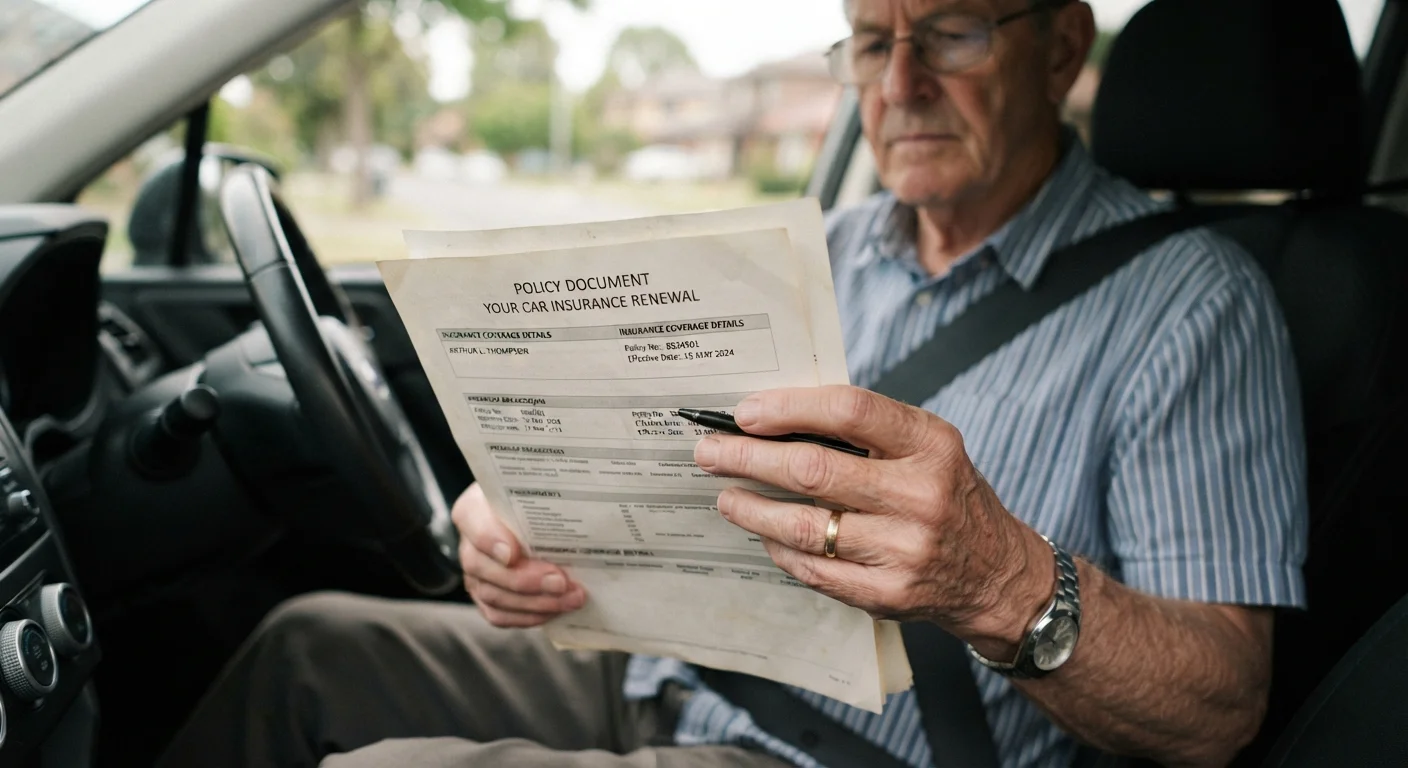
Why Coverage Misunderstandings Are So Common
Car insurance policies are written in legal language, and most people never read them closely until after a claim is filed. That gap between assumption and reality is where costly surprises happen. For older drivers on fixed incomes, discovering that a loss isn't covered can be financially serious.
The misconceptions below come up repeatedly when drivers deal with claims. Understanding the actual boundaries of each coverage type — before an accident happens — puts you in a much stronger position. Choosing a Policy offers additional guidance on matching coverage to your actual needs.
Myth
If I have car insurance, my policy will pay to repair my own car after any accident.
Fact
Liability-only policies do not pay for damage to your own vehicle — that requires collision or comprehensive coverage.
Many drivers assume that simply having insurance means their car is protected in any incident. In reality, a basic liability policy only covers damage or injuries you cause to other people and their property. If your car is damaged in a collision and you only carry liability coverage, repairs to your vehicle come out of your own pocket. To protect your own car from collision damage, you need a separate collision coverage add-on. For a full breakdown of what each coverage type does, see Car Insurance Coverage Types Every Driver Should Understand.
Myth
Comprehensive coverage means my insurance covers everything that could happen to my car.
Fact
"Comprehensive" is a specific coverage type for non-collision events like theft, weather, and falling objects — it does not mean all-inclusive.
The word "comprehensive" sounds like it covers every possible situation, but in insurance terminology it has a precise, limited meaning. Comprehensive coverage typically handles losses from events like theft, vandalism, fire, hail, flooding, and animal strikes — situations where your car is damaged by something other than a traffic collision. It does not cover mechanical breakdowns, normal wear and tear, or collision damage. Misreading this label can leave drivers with unexpected gaps after an incident they assumed was covered.
Myth
My liability insurance will pay my medical bills if I'm hurt in an accident I caused.
Fact
Liability coverage pays for other parties' injuries and damages, not your own. Your medical costs require different coverage.
Liability insurance is designed to protect other drivers and pedestrians from costs arising from your mistake — not to protect you. If you cause a crash and are injured, your liability policy will not cover your hospital bills. Depending on your state, coverage for your own injuries may come from Medical Payments coverage (MedPay), Personal Injury Protection (PIP), or your separate health insurance. Some states require PIP; others do not. It is worth confirming with your agent what coverage, if any, addresses your own medical expenses after an at-fault accident. For more on what liability truly covers, see What Liability Coverage Actually Pays For — and What It Doesn't.
Myth
If the other driver is at fault, their insurance will definitely cover all of my losses.
Fact
The at-fault driver's policy only pays up to their coverage limits, which may be far below your actual costs.
When another driver causes an accident, you file a claim against their liability insurance — but their policy has limits. If their limit is $25,000 for property damage and your vehicle repair costs $40,000, you could be left with a $15,000 shortfall. This is one reason many drivers carry uninsured/underinsured motorist (UM/UIM) coverage, which can help fill the gap when the at-fault driver's policy falls short. Understanding how policy limits work is essential; Car Insurance Coverage Limits: What the Numbers on Your Policy Actually Mean explains what those numbers on your declarations page actually control.
Myth
My car insurance automatically covers a rental car I'm driving on vacation.
Fact
Rental car coverage depends on your specific policy; it is not automatically included in every plan.
Some auto policies do extend collision and comprehensive protections to rental vehicles, but this is not universal. Coverage may also have restrictions — such as applying only to personal use, not business travel. Before declining the rental company's damage waiver, call your insurer and verify exactly what applies and under what conditions. Assuming coverage exists without confirming it can result in large out-of-pocket costs if the rental is damaged or stolen.
What to Do When You're Not Sure What Your Policy Covers
The most reliable way to clarify coverage is to read your declarations page and the full policy document, then call your insurer directly with specific questions. Ask about collision, comprehensive, liability limits, medical payments, and rental coverage — and get answers in writing if possible.
This Is General Information, Not Personal Advice
This article provides general educational information about car insurance coverage. It is not personalized insurance, legal, or financial advice. Coverage terms, exclusions, and limits vary significantly by provider and by state. Always read your actual policy documents and consult a licensed insurance agent for guidance specific to your situation.
It also helps to review your policy once a year. Life changes — a new vehicle, a move to a different state, or changes in how much you drive — can all affect what coverage makes sense. If you're unsure whether your current policy has gaps, a licensed independent insurance agent can review it without any obligation to sell you a specific product.
For more on how common myths can lead to coverage gaps, see Car Insurance Myths That Can Lead Seniors to the Wrong Policy and Common Myths About Senior Car Insurance Discounts.
~1 in 8
Drivers estimated to be uninsured on U.S. roads
According to Insurance Research Council data, a significant share of drivers carry no coverage, increasing the importance of uninsured motorist protection.
$25,000
Minimum property damage liability in many U.S. states
Many states set minimum liability limits well below the real cost of newer vehicles, meaning at-fault drivers' policies can fall short of actual repair bills.
The content on this site is for informational purposes only and is not a substitute for professional advice. Always consult a qualified professional for guidance specific to your situation.