

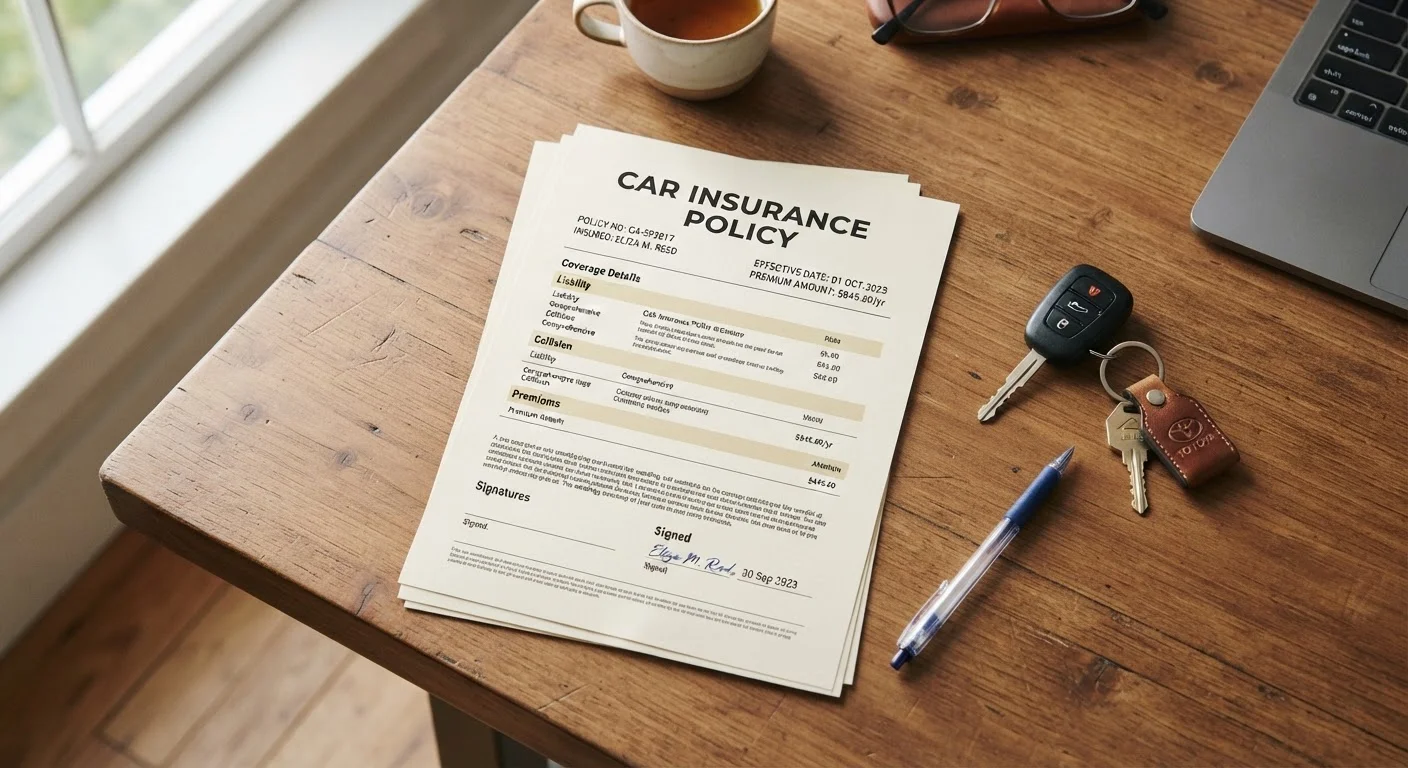
Liability Coverage: What You Owe Others After an Accident
Liability coverage is the foundation of any car insurance policy and is legally required at minimum levels in nearly every state. It pays for damage or injuries you cause to other people — not your own vehicle or your own medical bills.
There are two parts to liability coverage:
- Bodily injury liability — covers medical expenses, lost wages, and legal costs for people injured in an accident you caused.
- Property damage liability — pays to repair or replace another person's vehicle or property that you damaged.
Liability limits are expressed as three numbers — for example, 25/50/25 — meaning $25,000 per injured person, $50,000 per accident, and $25,000 for property damage. State minimums are often lower than what a serious accident actually costs. Carrying only the state minimum can leave you personally responsible for expenses that exceed your policy limits.
For a broader look at how liability fits alongside other coverages, see the Coverage Basics hub which walks through all the core policy types seniors should know.
State Minimums Often Fall Short
Every state sets its own minimum liability limits, but those minimums were established years ago and may not reflect today's medical and repair costs. A serious accident can generate expenses far above a minimum-limit policy. Reviewing whether your limits are adequate for your financial situation is a worthwhile step when renewing your policy.
Collision Coverage: Repairs After a Crash
Collision coverage pays for damage to your own vehicle when it's involved in a crash — whether you hit another car, back into a pole, or roll into a ditch. Importantly, collision pays out regardless of who was at fault.
If another driver is at fault and carries adequate liability coverage, their insurer may cover your vehicle. But in practice, fault is sometimes disputed and other drivers are sometimes uninsured. Collision coverage ensures your repairs move forward without waiting for those issues to resolve.
Every collision policy includes a deductible — the amount you pay before the insurer covers the rest. Common deductibles range from $250 to $1,000. A higher deductible lowers your premium but increases what you pay out of pocket after an accident.
~13%
U.S. drivers estimated to be uninsured
According to the Insurance Research Council, roughly 1 in 8 drivers on U.S. roads carries no insurance, underscoring why relying solely on another driver's liability policy carries risk.
$4,700+
Average collision claim cost
The Insurance Information Institute has reported average collision claim payouts in this range, illustrating the significant out-of-pocket exposure drivers face without this coverage.
If you're financing or leasing your vehicle, your lender will almost certainly require collision coverage. Once a car is paid off and its market value drops, some drivers weigh whether the annual premium cost justifies keeping this coverage — a reasonable question without a universal answer.
Comprehensive Coverage: Protection from the Unexpected
Comprehensive coverage handles damage to your vehicle from events that have nothing to do with a collision. This includes theft, vandalism, flooding, hail, fire, falling objects, and animal strikes. If a deer runs into your car or a storm drops a tree branch on your hood, comprehensive is the coverage that responds.
Like collision, comprehensive requires a deductible. The same logic applies: higher deductibles mean lower premiums but more out-of-pocket cost when you file a claim.
Comprehensive is often misunderstood as covering "everything." It doesn't. Mechanical failure, normal wear, and maintenance issues are excluded. The name refers to the range of non-collision perils covered, not an unlimited scope.
For a side-by-side look at how comprehensive stacks up against more limited coverage options, the comprehensive vs. third-party comparison walks through the practical trade-offs in protection and cost.
Match Your Deductible to Your Emergency Fund
When choosing a deductible for collision or comprehensive coverage, consider what you could realistically pay on short notice. If an unexpected $1,000 expense would strain your budget, a lower deductible — even at a higher premium — may give you more practical protection. The goal is a deductible you could actually cover when you need to file a claim.
Putting It Together: Building a Policy That Makes Sense
Most drivers end up with some combination of these three coverage types. A common structure is a liability policy that meets or exceeds state minimums, plus collision and comprehensive if the vehicle has significant value or is financed.
Beyond these three core types, you can add coverages like medical payments, uninsured motorist protection, or roadside assistance. The full guide to car insurance coverage types explains how these additional options interact with your core policy.
When evaluating coverage levels, two questions are useful anchors:
- What would it cost to replace or repair my vehicle out of pocket if it were totaled or severely damaged?
- Do I have enough liability coverage to protect my assets if I caused a serious accident?
There's no single right answer. Coverage choices involve trade-offs between premium costs and financial exposure. For guidance specific to your situation, consulting a licensed insurance agent is the most reliable step.
This article is for general informational purposes only and is not personalized insurance or financial advice. Coverage terms, limits, exclusions, and requirements vary by insurer and by state. Always read your actual policy documents and speak with a licensed insurance professional before making coverage decisions.
Frequently Asked Questions
Liability-only meets the legal minimum in most states but leaves your own vehicle unprotected. If your car has meaningful value or you couldn't easily replace it out of pocket, adding collision and comprehensive is worth considering. A licensed insurance agent can help you assess what's appropriate for your situation.
Comprehensive covers damage from events other than a collision — including theft, vandalism, flooding, hail, fire, and animal strikes. It does not cover normal wear and tear or mechanical breakdown. Each policy has specific exclusions, so reviewing your policy documents is important.
A deductible is the amount you pay out of pocket before your insurer covers the rest of a claim. Choosing a higher deductible typically lowers your premium, but means more out-of-pocket cost when you file a claim. Select a deductible amount you could comfortably pay after an unexpected loss.
No. Liability coverage only pays for damage or injuries you cause to other people or their property. To cover repairs to your own vehicle after an accident, you need collision coverage.
It's a common question. If your car's market value is low, paying premiums for collision or comprehensive may cost more over time than a potential payout. However, if you depend on the vehicle and couldn't replace it easily, keeping that coverage may still make sense. This is a personal financial decision.
The content on this site is for informational purposes only and is not a substitute for professional advice. Always consult a qualified professional for guidance specific to your situation.