

Our Verdict
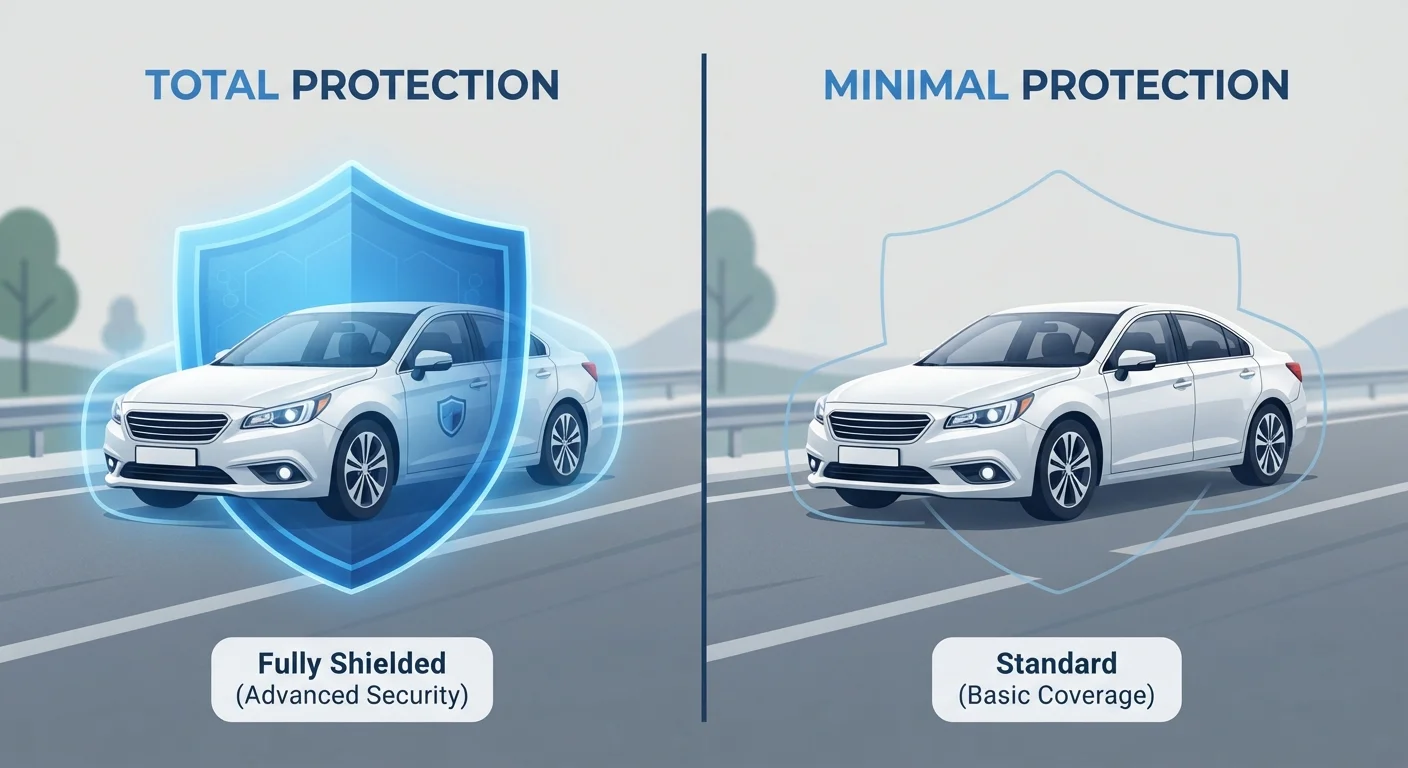
Minimum coverage keeps premiums low but leaves you personally exposed to repair or replacement costs after an at-fault accident or a non-collision event like theft or storm damage. Full coverage addresses that gap, though it costs more each year. The right choice depends on your vehicle's current market value, your savings cushion, and whether you could absorb a large out-of-pocket expense.
| Best for | Recommended |
|---|---|
| Drivers with older vehicles whose market value is low | Minimum or liability-only coverage |
| Drivers with newer or higher-value vehicles or an active loan | Full coverage (liability + collision + comprehensive) |
| Seniors on tight fixed incomes who cannot absorb a large unexpected repair bill | Full coverage with a higher deductible to reduce premium |
| Those who own their vehicle outright and have adequate savings | Evaluate annually based on vehicle value |
What These Terms Actually Mean
Every state requires drivers to carry a minimum level of car insurance, which is almost always liability coverage — meaning it pays for injuries and property damage you cause to someone else. It does not cover your own vehicle or your own medical bills.
"Full coverage" is an informal shorthand, not a policy category insurers formally define. In practice, it means you carry liability plus collision coverage (which pays to repair or replace your car after an accident, regardless of fault) plus comprehensive coverage (which covers non-collision events such as theft, fire, hail, or a deer strike). For a plain-language breakdown of each coverage type, see Car Insurance Coverage Types Every Driver Should Understand.
If you carry a loan or lease on your vehicle, your lender almost certainly requires both collision and comprehensive — so the choice may already be made for you until the loan is paid off.
What Each Option Covers — and What It Leaves Out
| Minimum Coverage | Full Coverage | |
|---|---|---|
| Liability (damage/injury to others) | Included | Included |
| Collision (your vehicle after an accident) | Not included | Included |
| Comprehensive (theft, weather, fire) | Not included | Included |
| Typical annual premium | Lower | Higher |
| Out-of-pocket risk if your car is damaged | High — you pay all repair costs | Limited to your deductible |
| Required by lenders on financed vehicles | Generally no | Generally yes |
| Best suited for | Older, low-value vehicles you own outright | Newer, higher-value, or financed vehicles |
A few points worth underlining. Minimum coverage protects your finances from liability claims against you, but leaves your vehicle unprotected. If you cause an accident and your car is totaled, you absorb that loss entirely. Comprehensive coverage closes a different gap many drivers overlook: it applies when your car is damaged by something other than a collision — weather, vandalism, animals, or theft. Neither minimum nor full coverage automatically includes extras like roadside assistance or rental reimbursement; those are typically separate add-ons. For details on what those add-ons actually provide, see Roadside Assistance and Rental Reimbursement: What These Add-Ons Actually Include.
The Core Trade-Off: Premium Cost vs. Out-of-Pocket Risk
Adding collision and comprehensive to a liability-only policy will increase your annual premium. How much depends on your vehicle's value, your driving history, where you live, and the deductible you choose. A deductible is the amount you pay out of pocket before insurance pays the rest on a covered claim. Choosing a higher deductible — say $1,000 instead of $500 — typically lowers your premium, but raises what you'd owe if something happens.
~$700–$900
Estimated average annual cost of minimum coverage
Industry estimates vary widely by state, driving record, and vehicle; this range reflects a general national approximation for liability-only policies.
~$1,700–$2,000
Estimated average annual cost of full coverage
Full coverage premiums vary significantly based on vehicle value, location, deductible chosen, and driver history — individual quotes will differ.
A practical rule of thumb used by many financial planners: if your annual premium for collision and comprehensive exceeds 10% of your vehicle's current market value, it may be worth reconsidering whether the added cost is proportionate to the protection. You can look up your car's approximate value through resources like the National Automobile Dealers Association (NADA) guides or similar vehicle valuation tools.
For seniors managing household costs carefully, Balancing Coverage and Affordability on a Fixed Income explores this trade-off in more depth.
Review Coverage When Your Car's Value Drops
Vehicle market values decline over time, and the coverage level that made sense when a car was newer may not be cost-effective several years later. A good habit is to check your car's current estimated value each time your policy comes up for renewal. If the cost of collision and comprehensive is a large fraction of what your car is worth, it may be time to reassess. A licensed insurance agent can help you run the numbers.
Key Factors to Weigh When Deciding
- Vehicle age and value: Older vehicles with low market values may not justify the added premium for collision and comprehensive. Insurance Costs for New Cars vs. Used Cars explains how vehicle age affects coverage decisions.
- Loan or lease status: If you still owe money on the car, full coverage is typically required by the lender — not optional.
- Your savings: Could you pay for a significant repair or replacement out of pocket without serious financial strain? If not, full coverage provides a meaningful safety net.
- Where you drive and park: Higher theft rates, severe weather, or heavy traffic in your area can make comprehensive and collision more valuable.
- State minimums vary: Required liability limits differ by state; some states also mandate personal injury protection (PIP) or uninsured motorist coverage. Always verify what your state requires.
For a deeper look at how liability, collision, and comprehensive each function within a full policy, see Liability, Comprehensive, and Collision: Understanding the Core Coverage Types.
This article is for general informational purposes only and is not personalized insurance, financial, or legal advice. Coverage options, terms, exclusions, and premiums vary by insurer, policy, and state. Read your actual policy documents carefully and consult a licensed insurance agent or financial adviser for guidance specific to your situation.
The content on this site is for informational purposes only and is not a substitute for professional advice. Always consult a qualified professional for guidance specific to your situation.