

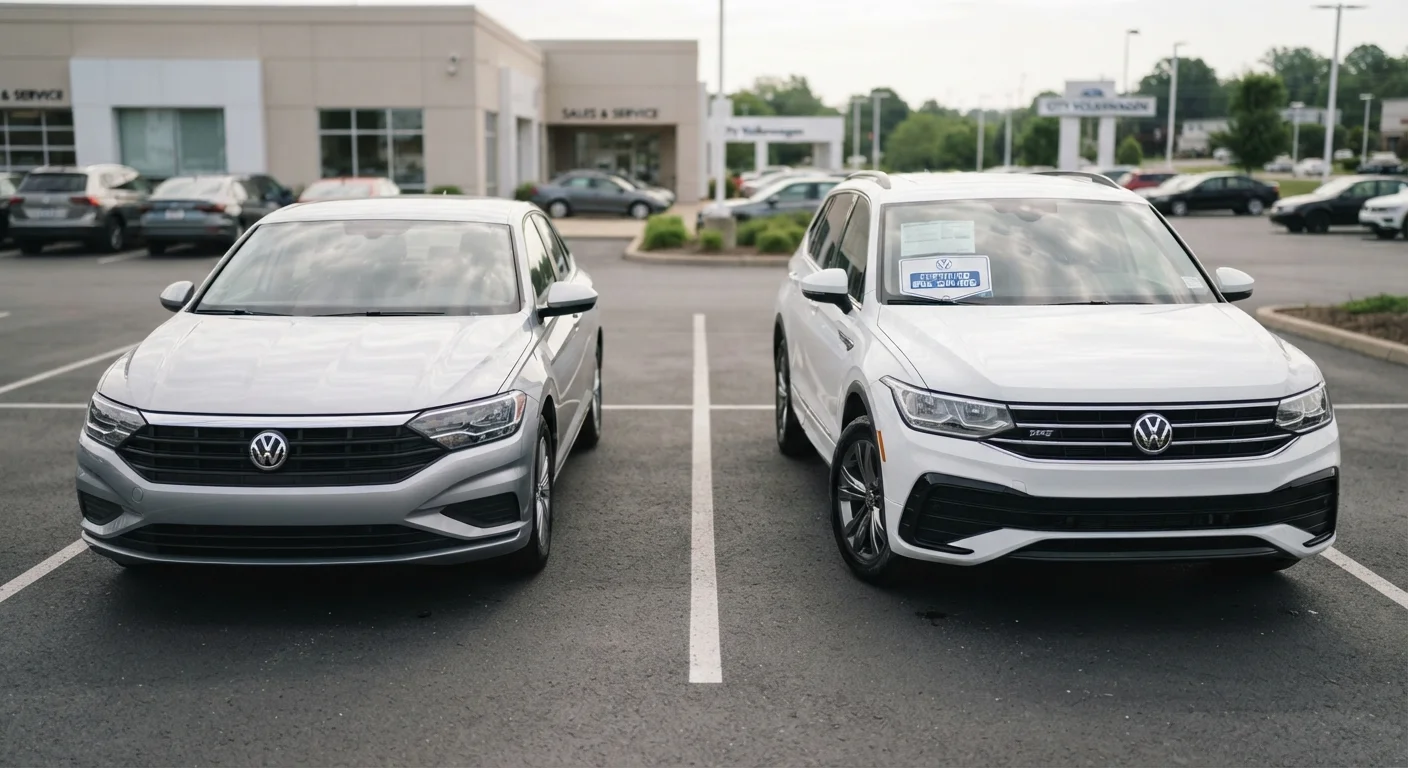
Option A
Certified Pre-Owned (CPO)
The manufacturer-backed, inspection-verified option.
Best for: Buyers who want added peace of mind, documented inspection history, and extended warranty coverage at a higher upfront cost.
Option B
Standard Used
The flexible, lower-cost, buyer-beware alternative.
Best for: Budget-conscious buyers comfortable doing their own due diligence or paying for an independent inspection.
What 'Certified Pre-Owned' Actually Means
The term Certified Pre-Owned (CPO) is not a generic industry standard — it is a program administered by individual vehicle manufacturers through their franchised dealerships. To qualify, a used vehicle must typically meet age and mileage thresholds set by the manufacturer, pass a multi-point inspection (often 100 to 200 checkpoints), and have any identified issues corrected before the sale.
Once certified, the vehicle receives an extended limited warranty that supplements — or replaces — whatever remains of the original factory warranty. The key word is limited: CPO warranties do not cover everything. Wear items like brake pads, tires, and wiper blades are almost never included. Coverage specifics, deductibles, and transferability rules differ from one manufacturer's programme to another.
For a deeper look at how these protections compare to new-car warranties, see our guide to warranty coverage on new vs. used vehicles. And because CPO programmes vary so widely, it is worth reviewing what a CPO label covers and what it doesn't before relying on that badge at the lot.
CPO Programmes Are Not All the Same
Because each manufacturer designs its own CPO programme, the warranty length, deductible amount, covered components, and transferability rules can differ substantially from one brand to another. Before relying on a CPO designation, ask the dealership for the written programme terms — not just a verbal summary — so you know exactly what is and is not covered.
What 'Standard Used' Means — and Doesn't Mean
A standard used vehicle is any pre-owned car sold without a manufacturer-backed certification programme. This covers a wide range of situations: dealership trade-ins that did not qualify for CPO status, cars sold by independent lots, and private-party transactions. There is no uniform inspection requirement, no mandated warranty, and no standardised disclosure process.
Many standard used vehicles are sold as-is, meaning the buyer accepts the car in its current condition with no obligation on the seller's part to repair anything after the sale. Some dealerships offer their own limited warranties on used inventory — but these are not the same as manufacturer-backed CPO coverage, and terms vary considerably.
| Criterion | Certified Pre-Owned (CPO) | Standard Used |
|---|---|---|
| Inspection requirement | Manufacturer-specified multi-point inspection | None required; varies by seller |
| Warranty coverage | Extended limited warranty included | Often none; may be sold as-is |
| Price | Higher — reflects inspection and warranty costs | Lower — no built-in certification premium |
| Where available | Franchised dealerships only | Dealers, independent lots, private sellers |
| Vehicle age/mileage limits | Yes — set by each manufacturer | No limits |
| Roadside assistance | Commonly included | Rarely included |
| Programme consistency | Varies by manufacturer | No standard — entirely seller-dependent |
If any of these terms feel unfamiliar, the glossary of used car terms every senior should know explains them in plain language.
The Real Cost Difference — and How to Think About It
CPO vehicles typically carry a price premium over comparable standard used models. That gap exists because the certification process involves real costs — inspection labour, reconditioning work, and warranty administration. Whether that premium represents good value depends on the specific vehicle, the gap in asking prices, and your own financial situation.
$1,000–$3,500
Typical CPO price premium over comparable standard used
Industry analyses of used vehicle listings have generally found CPO vehicles priced meaningfully higher than non-certified equivalents of the same make, model, and mileage.
100–200
Inspection checkpoints in a typical CPO programme
Most manufacturer CPO programmes specify multi-point inspections ranging from approximately 100 to over 200 individual checkpoints, though what those points cover varies by brand.
One practical way to evaluate the gap: get independent quotes for an extended vehicle service contract (sometimes called a third-party warranty) on the standard used vehicle you are considering. If the cost of that contract plus the standard used price approaches the CPO price, the CPO vehicle's built-in coverage may represent reasonable value. If the gap is substantial, the lower-cost route may make more sense — particularly if you keep a dedicated repair fund.
For a structured way to run this comparison, see whether the CPO price difference makes sense for your situation.
Inspecting Either Option Before You Commit
Regardless of which label is on the windshield, an independent pre-purchase inspection by a qualified mechanic you choose — not the selling dealer — is one of the most cost-effective steps any used car buyer can take. A CPO badge confirms that a manufacturer's inspection was completed; it does not guarantee the car is problem-free from your perspective or that the inspection covered every concern relevant to your driving needs.
For standard used vehicles, an independent inspection is even more critical. Without it, you have no verified baseline of the vehicle's mechanical condition. Our hub on inspecting used cars covers the key checks and red flags to look for before signing anything.
Always request the vehicle history report, review service records where available, and confirm whether any open safety recalls exist — a step that applies equally to CPO and standard used vehicles.
This article provides general educational information about vehicle purchasing categories. It is not personalised financial or legal advice. Terms, coverage, and conditions vary by manufacturer, dealership, and individual vehicle. Consult a licensed professional for guidance specific to your situation.
The content on this site is for informational purposes only and is not a substitute for professional advice. Always consult a qualified professional for guidance specific to your situation.