

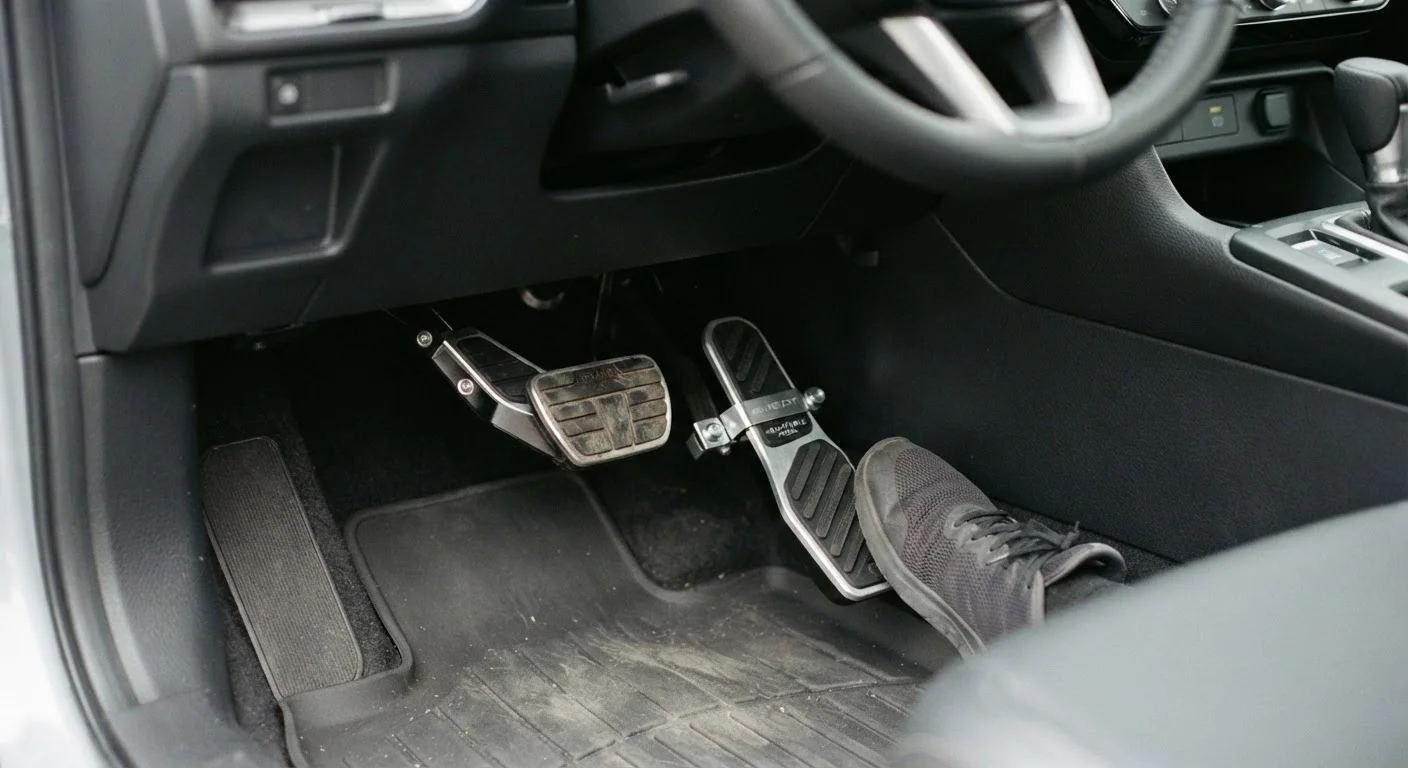
What Pedal Extensions Actually Do
Standard vehicle pedals are positioned for a broad range of drivers, but they don't suit everyone. For older drivers who are shorter in stature, or those whose hip flexibility and leg strength have changed over time, reaching the pedals comfortably from a safe seating position can become genuinely difficult.
Pedal extensions are platform-like attachments that mount onto existing brake and accelerator pedals, effectively moving them a few inches closer to the driver. This allows the seat to remain at a safer distance from the steering wheel and airbag without sacrificing reach or control.
The benefit isn't just comfort — it's control. When a driver has to stretch for pedals, braking force and response time can both suffer. A properly fitted pedal extension eliminates that compromise. They are typically designed to be removable so other drivers can use the car without hindrance.
Start With a Professional Evaluation
Before purchasing any adaptive device, consider scheduling an evaluation with a certified driver rehabilitation specialist. They can identify which controls are appropriate for your specific needs and ensure safe installation. Your physician or occupational therapist may be able to provide a referral.
For a broader look at tools that support safer, more comfortable driving as you age, see our overview of safety accessories for older drivers.
Hand Controls: An Alternative to Foot Pedals
For drivers who have limited strength, sensation, or mobility in their legs — whether from arthritis, neuropathy, or another condition — hand controls offer a way to continue driving safely. These devices connect to the braking and acceleration systems of the car, allowing the driver to control speed and stopping with a lever, push-pull rod, or similar mechanism operated by hand.
Hand controls come in several configurations. Push-pull types require the driver to push forward to brake and pull back to accelerate. Other designs use a twist-grip or rotary motion. The right type depends on the driver's specific strength, coordination, and medical condition.
Adaptive Equipment Is Not One-Size-Fits-All
What works well for one driver may be unsuitable or even unsafe for another. Factors like upper body strength, reaction time, and the specific nature of any physical limitation all affect which adaptive controls are appropriate. A clinical assessment takes these variables into account and leads to a safer outcome than selecting equipment independently.
It's important to understand that hand controls are not a self-service modification. Because they interface directly with braking and acceleration systems, they must be installed by a qualified mobility equipment dealer or certified driver rehabilitation specialist. Improper installation poses serious safety risks.
You may also want to explore adaptive steering aids like spinner knobs and grips, which are often recommended alongside hand controls.
The Role of a Driver Rehabilitation Specialist
One of the most important — and often overlooked — steps when considering adaptive driving equipment is getting a professional evaluation. A certified driver rehabilitation specialist (CDRS) is a trained professional, often with a background in occupational therapy, who assesses a driver's physical and cognitive abilities and recommends appropriate adaptive equipment.
An evaluation typically includes both a clinical assessment (reviewing vision, strength, range of motion, and reaction time) and an on-road assessment in a controlled environment. Based on findings, the specialist can recommend specific devices, refer you to a qualified installer, and provide training to ensure the driver is fully confident using the equipment.
1 in 6
U.S. drivers aged 65 and older
According to the Federal Highway Administration, adults 65 and older represent a growing share of licensed drivers in the United States.
40%+
Older adults with at least one mobility limitation
The CDC reports that a significant proportion of adults over 65 experience some degree of mobility limitation that may affect daily activities, including driving.
This kind of structured evaluation matters particularly when multiple physical changes are happening simultaneously — for example, reduced grip strength alongside limited leg reach. Addressing only one factor without considering the full picture can leave gaps in safety.
For context on how adaptive controls fit into broader vehicle comfort and ergonomics, our article on comfort and easy access in cars for older drivers covers the wider picture.
Common Questions and Misconceptions
Some drivers hesitate to explore adaptive equipment because they assume it signals the end of independent driving — in fact, the opposite is often true. Well-fitted adaptive controls can extend safe driving years by bringing the vehicle's controls into alignment with a driver's current abilities.
Others worry about cost or complexity. While professional fitting does involve an investment, many state vocational rehabilitation programs offer funding assistance for qualifying individuals. The equipment itself varies widely in complexity; some pedal extensions are simple mechanical attachments, while electronic hand controls are more involved.
There are also concerns about insurance and vehicle compatibility. Common misconceptions about adaptive car accessories addresses several of these concerns directly, including questions about warranties and coverage. Always consult your insurer and read your policy documents before making modifications, as requirements vary by provider.
Finally, adaptive controls are not only for people with diagnosed disabilities. Any driver whose physical comfort or control has changed with age may benefit from an evaluation. The goal is simply safe, confident driving.
Frequently Asked Questions
Pedal extensions are attachments that move the brake and accelerator pedals closer to the driver. They are especially useful for shorter drivers or those with limited leg reach who find it difficult to maintain safe pedal pressure from the standard seating position. An assessment by a driver rehabilitation specialist can confirm whether they are appropriate.
Yes, hand controls are legal in all U.S. states when properly installed and used by a licensed driver. Many drivers with disabilities rely on them daily. Requirements around installation standards and licensing vary by state, so it is worth checking with your state's DMV.
Professional installation is strongly recommended. Poorly fitted adaptive equipment can interfere with standard vehicle operation or fail under stress. Certified driver rehabilitation specialists and mobility equipment dealers trained in adaptive technology ensure devices are secure and correctly configured.
Adaptive modifications may need to be disclosed to your insurer. Policies and requirements vary by provider, so contact your insurance company directly to understand how modifications affect your coverage. This article is general information only and not personalised insurance advice.
If you notice increased fatigue, difficulty reaching pedals, or reduced confidence controlling the vehicle, consult a certified driver rehabilitation specialist or occupational therapist. They can conduct a clinical and behind-the-wheel assessment to determine what, if anything, would help.
The content on this site is for informational purposes only and is not a substitute for professional advice. Always consult a qualified professional for guidance specific to your situation.