

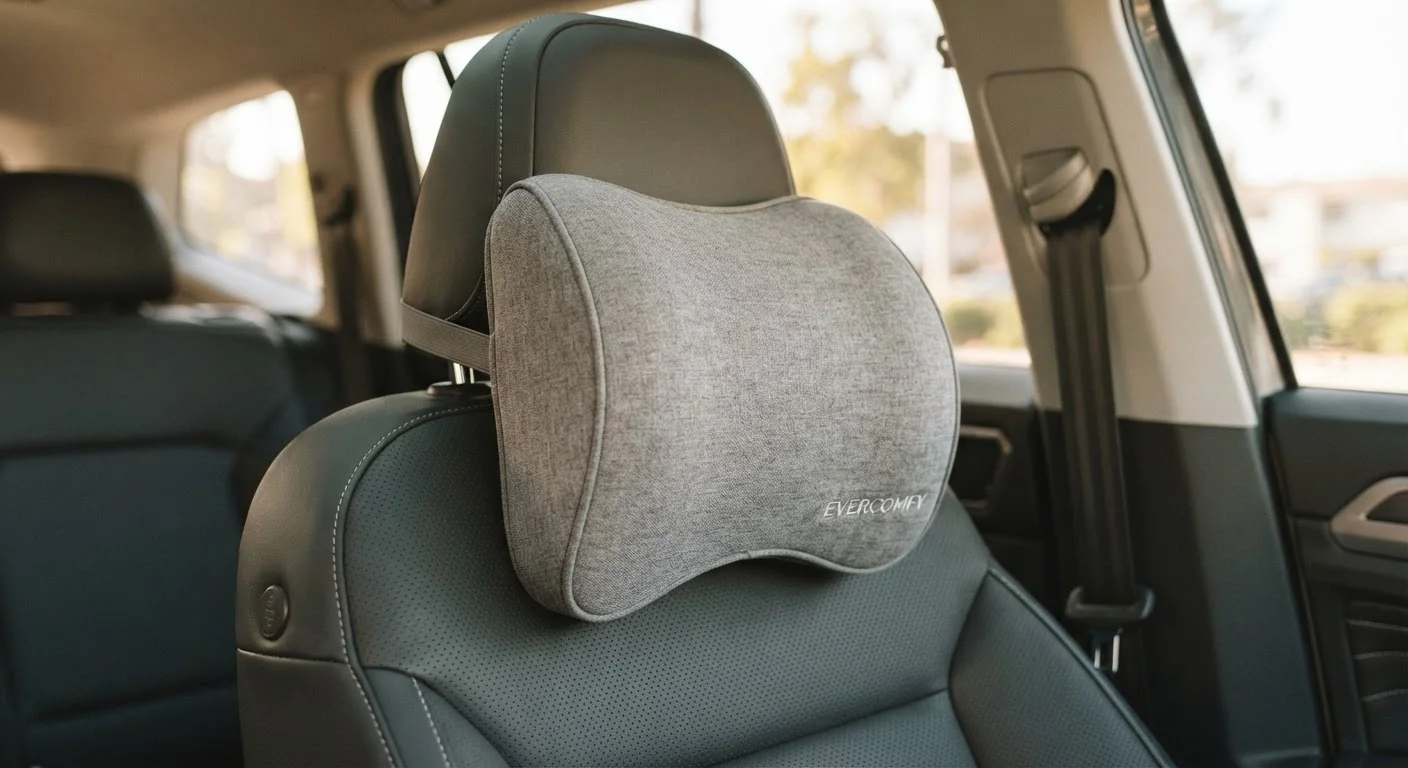
Why Factory Headrests Don't Always Feel Comfortable
The built-in headrest in your vehicle is engineered to a federal safety standard. Its primary job is to limit rearward head movement during a rear-end collision — a function called whiplash restraint. Manufacturers size and position headrests based on crash-test requirements and average population measurements, not individual comfort.
For many older drivers, this creates a noticeable mismatch. Age-related changes — including forward head posture, reduced spinal flexibility, and changes in torso height — can mean that a factory headrest sits too far back, too high, or at an angle that offers little meaningful contact during normal driving. The result is a head floating unsupported, which puts strain on the neck muscles over time.
Understanding seat ergonomics more broadly can help put this in context. What seat ergonomics actually mean explains the terminology behind lumbar support, bolstering, and headrest positioning — useful background before evaluating any accessory.
Factory Headrests Are Safety Equipment
It is important to understand that the built-in headrest is a passive safety restraint — not a comfort feature. It is designed to reduce whiplash injury in rear-end collisions. Aftermarket pillows are comfort accessories layered on top of that system; they do not enhance or replace the restraint function. Never remove or significantly modify a factory headrest in a way that compromises its protective position.
What Aftermarket Headrest Pillows Actually Do
An aftermarket headrest pillow attaches to your existing seat and bridges the physical gap between your head and the built-in restraint. In practical terms, this means your head has something to rest against during normal driving — reducing the muscular effort needed to hold it upright.
There are two main categories to be aware of:
- Neck roll pillows — cylindrical or curved cushions positioned at the lower portion of the headrest to cradle the cervical spine (the neck vertebrae). These are often useful for drivers who experience neck fatigue on longer trips.
- Full headrest pads — larger flat or contoured pads that cover more of the headrest surface, providing broader contact for the back of the head.
Neither type changes the protective function of the built-in restraint — they sit in front of it, not in place of it. The key benefit is reducing muscular fatigue during the sustained, low-intensity effort of everyday driving.
~65%
Adults over 65 reporting chronic neck or back discomfort
General population surveys on musculoskeletal health consistently find a majority of older adults report some degree of neck or spinal discomfort affecting daily activities, including time spent seated.
FMVSS 202a
Federal standard governing factory headrest design
U.S. federal regulation FMVSS 202a sets minimum requirements for headrest height, backset, and strength — parameters focused on crash protection, not driving comfort.
What to Look For — and What to Watch Out For
When evaluating an aftermarket headrest pillow, four factors matter most for senior drivers:
- Firmness: A pillow that's too soft provides little structural support; one that's too hard can create new pressure points. Memory foam that gently conforms to your head shape tends to work well for extended use.
- Adjustability: Some pillows allow height or angle adjustment. This is particularly useful if you share a vehicle, or if your seating position has changed over time.
- Attachment method: Straps looping around headrest posts are the most common and generally reliable. Avoid any accessory that feels unstable or requires constant readjustment — movement during driving is a distraction.
- Rearview clearance: Sit in your normal driving position with the pillow in place and check that your view through the rearview mirror is fully unobstructed. A pillow that's too tall or too wide can create a genuine blind spot.
Test Before Committing to Any Accessory
If possible, bring the accessory to your vehicle before purchasing — or confirm a return policy. Sit in your normal driving position, check mirror clearance, and make sure you can still move your head naturally to check blind spots. A few minutes of testing is far more reliable than relying on packaging descriptions alone.
Pairing a headrest pillow with supportive seat cushions can address comfort more comprehensively. Lumbar support and posture accessories address the lower back, while a headrest pillow works at the upper end of the spine — both areas often need attention for older drivers on longer journeys.
Practical Considerations for Senior Drivers
Beyond selecting the right pillow, a few practical points are worth keeping in mind:
Integrated versus post-style headrests: Some newer vehicles have headrests built directly into the seat back rather than mounted on adjustable posts. These integrated designs may not be compatible with strap-based aftermarket pillows. Check your owner's manual or inspect the seat before buying any accessory.
Health conditions: Drivers managing arthritis, cervical disc issues, or post-surgical neck conditions should consult a physical therapist or occupational therapist before choosing a support product. A general comfort accessory may not provide what a medically informed recommendation would.
Not a replacement for seat adjustment: Before adding any accessory, it's worth ensuring the seat's built-in headrest is correctly positioned. Most adjustable headrests should sit with the rigid portion approximately level with the top of your ears — many drivers leave them in the lowest or a default position without realizing a simple adjustment would help.
If you're also thinking about seat comfort more broadly, swivel and standard seat cushion options offer another layer of consideration for older drivers who want more support and easier entry and exit.
This article provides general information about vehicle accessories for educational purposes. It is not medical advice. If you experience ongoing neck pain or discomfort while driving, consult a qualified healthcare professional.
Frequently Asked Questions
Most are safe when properly fitted and securely attached, but placement matters. A pillow that obstructs your rear view or pushes your head too far forward can compromise both comfort and safety. Always confirm the accessory does not interfere with normal head movement or the built-in restraint's protective position.
It can reduce fatigue and discomfort for many drivers by filling gaps and improving postural alignment. However, if you have a diagnosed cervical condition, speak with a healthcare professional before choosing an accessory — a pillow that doesn't match your specific needs may do little or even worsen discomfort.
Most use elastic straps, hooks, or ties that loop around the headrest posts. Some use non-slip backing designed to grip the seat fabric. A secure fit is important — any accessory that slides or shifts during a drive can become a distraction or hazard.
Memory foam and standard polyurethane foam are the most common fillings. Memory foam conforms to the contours of your head and neck, which many drivers find comfortable on longer trips. Covers are typically fabric, mesh, or leatherette — mesh is cooler, which some seniors prefer.
Most are designed to fit standard post-style headrests, but not all car seats are the same. Integrated headrests — built flush into the seat back — may not accommodate strap-based pillows at all. Check your seat type before purchasing any accessory.
The content on this site is for informational purposes only and is not a substitute for professional advice. Always consult a qualified professional for guidance specific to your situation.