

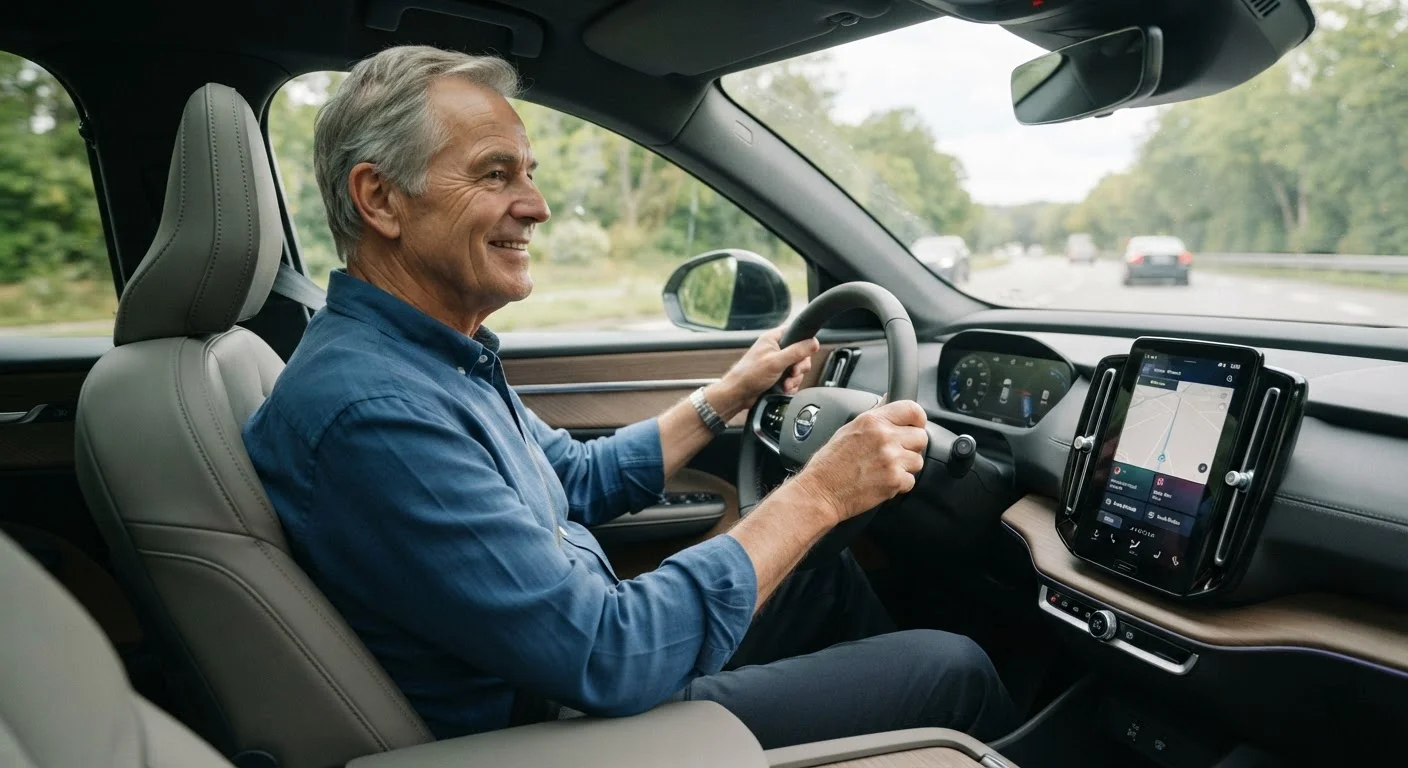
Why Ergonomic Vehicle Design Matters for Older Drivers
Physical changes that come with age — reduced flexibility, joint discomfort, decreased grip strength, and slower recovery from fatigue — directly affect how comfortable and safe driving feels. Yet these challenges are often underestimated when choosing a vehicle. A car that feels manageable during a 10-minute test drive may become exhausting over a 45-minute commute or grocery run.
The good news is that modern vehicles increasingly incorporate design features that address exactly these concerns. Some are standard across many models; others are optional upgrades worth prioritizing. Understanding what to look for puts you in a stronger position to choose a vehicle that supports your independence long-term. For a structured framework to apply during the shopping process, see how to evaluate comfort and access features before committing to a purchase.
Below, we walk through the specific features that have the most meaningful impact on reducing physical strain for older drivers.
Telescoping and Tilt Steering Columns
A steering column that adjusts both in angle (tilt) and in-and-out distance (telescoping) allows drivers to position the wheel without overreaching or hunching. This matters especially for shorter drivers or those with reduced shoulder mobility. Proper steering wheel placement also helps keep airbag deployment geometry safer in the event of a collision.
When evaluating this feature, check that the adjustment range is wide enough for your proportions and that the locking mechanism holds firmly without requiring significant hand strength to operate.
Telescoping steering columns let you reduce reach without compromising posture or safety.
Power-Adjustable Seats with Memory Settings
Manual seat adjustment requires pushing levers and physically shifting your weight — something that can be genuinely painful for drivers with hip, knee, or lower back issues. Power-adjustable seats move at the press of a button and often include lumbar support controls that fine-tune spinal alignment.
Memory settings store your preferred position so the seat returns to your configuration automatically. This is particularly useful when a vehicle is shared with another driver, eliminating repeated adjustment. Look for multi-way adjustment (8-way or more) for the greatest range of positioning options.
Memory seat settings eliminate repetitive manual repositioning that strains aging joints.
Wide Door Openings and Low Step-In Heights
Entry and exit are among the most physically demanding moments of any drive. Narrow door openings force the body into awkward angles; high step-in heights stress knees and hips; low-slung vehicles require deep bending that many older adults find painful or unsafe.
A wide door opening — ideally one that swings past 90 degrees — combined with a seat height that places the thighs roughly parallel to the ground makes transition significantly easier. Some manufacturers also offer grab handles positioned to provide a secure, natural pulling point without requiring a twisting motion. For those considering accessories to assist with high-riding vehicles, the trade-offs of portable car steps and running boards are worth reviewing.
Wide doors paired with the right seat height can make vehicle entry far less demanding on joints.
Electronic Parking Brakes and Push-Button Gear Selectors
Traditional handbrakes and column-mounted gear shifters can require sustained grip strength and wrist rotation — movements that become difficult with arthritis or hand weakness. Electronic parking brakes, operated by a small button or switch, eliminate that demand entirely. Similarly, push-button or rotary gear selectors replace the physical effort of a conventional shifter with a simple press or turn.
These may seem like minor conveniences, but for drivers managing chronic hand or wrist conditions, they can make the difference between comfortable daily driving and avoidable strain accumulating over time.
Electronic controls replace high-grip mechanical demands, easing strain for drivers with hand or wrist conditions.
Rearview Cameras and Surround-View Sensors
Checking mirrors and blind spots involves rotating the neck and upper body — movements that many older drivers find increasingly uncomfortable or range-limited. Rearview cameras, which have been federally mandated on new U.S. vehicles since 2018, display a clear live image of the area behind the car on the infotainment screen, significantly reducing the need to turn around.
Surround-view (360-degree) camera systems extend this coverage to all sides of the vehicle, and parking sensors add an audible alert layer. Together, these features reduce the physical effort of maneuvering in tight spaces. They also connect to broader senior safety features that support confident, lower-stress driving.
Rearview cameras reduce the neck rotation required for safe reversing — a meaningful physical relief.
Heated and Ventilated Seats
Temperature sensitivity increases with age, and stiff muscles in cold weather can make driving more physically taxing than it would otherwise be. Heated seats warm the lower back and hips directly, which many drivers report helps ease muscle tension before and during drives in cooler conditions. Ventilated seats serve a parallel function in summer, reducing the discomfort and fatigue associated with overheating.
Neither feature is a medical treatment, but both can contribute to a more relaxed driving posture — which in turn reduces the compensatory muscular tension that contributes to end-of-trip soreness.
Heated seats can ease cold-weather muscle stiffness, supporting a more relaxed and natural driving posture.
Large, High-Contrast Controls and Infotainment Displays
Squinting at small labels or reaching for hard-to-distinguish buttons while driving divides attention and introduces unnecessary physical stress — neck craning, arm extension, and postural disruption. Vehicles with clearly labeled, generously sized physical controls and high-contrast infotainment displays reduce these demands substantially.
Look for climate and audio controls that can be operated by touch without looking away from the road, and infotainment systems with text large enough to read at a glance. Voice control features further reduce the need for manual interaction. For more on how technology design supports low-stress driving, navigation tech features that reduce driving stress covers relevant ground.
Clearly labeled, reachable controls reduce the postural strain of fumbling for settings while driving.
Making the Most of These Features
No single feature eliminates physical strain entirely — the real benefit comes from combinations. A vehicle with a low step-in height but a stiff, fixed steering column may still be difficult to enter comfortably. Look for models where multiple ergonomic elements work together rather than treating any one feature as a complete solution.
Always Test Features Before You Buy
Reading about ergonomic features is valuable, but nothing replaces a thorough test drive in conditions that reflect your actual daily use. Bring a list of features to check — entry and exit, seat adjustment range, steering column reach, and control accessibility — and take the time to evaluate each one deliberately. A 10-minute dealership loop rarely surfaces the issues a longer, real-world drive will reveal.
It's also worth noting that body style plays a role independent of individual features. The debate between sedans and SUVs, for instance, involves tradeoffs that go beyond seat height alone — explore how body style affects aging joints for a fuller picture. And if cabin size is on your mind, wider cabins aren't always easier to manage — an important counterintuitive point worth understanding.
For drivers managing arthritis specifically, knowing which features to test for arthritis comfort can sharpen your evaluation considerably. And if you're exploring what the latest models offer across all these dimensions, what makes a new car model senior-friendly is a useful companion read.
This article provides general educational information about vehicle design features and is not a substitute for a personalized assessment by a certified driver rehabilitation specialist or healthcare professional. Individual needs vary; consult qualified professionals before making vehicle or mobility decisions.
The content on this site is for informational purposes only and is not a substitute for professional advice. Always consult a qualified professional for guidance specific to your situation.