

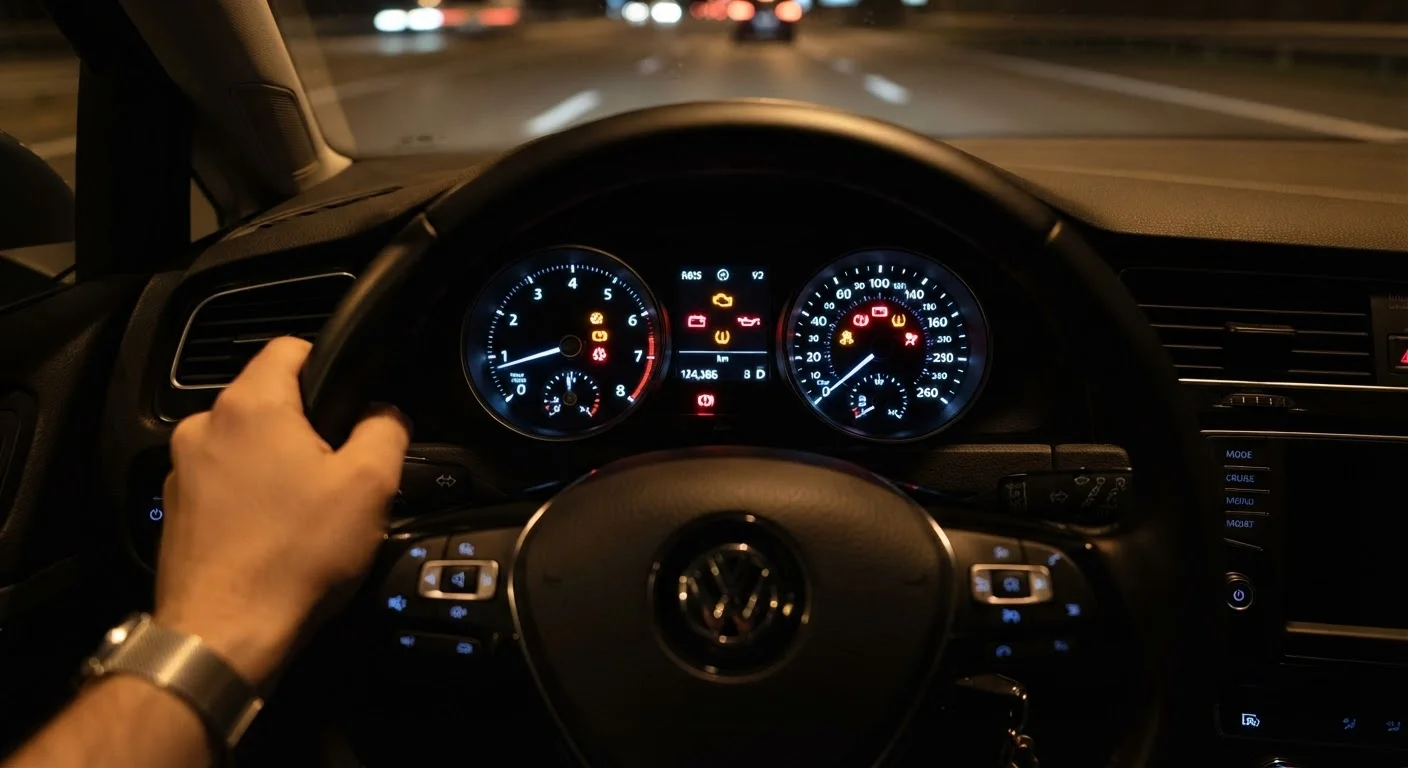
What Dashboard Warning Lights Are Telling You
Your car's dashboard is a communication system, not a cause for alarm. Warning lights are designed to alert you to conditions that range from routine reminders to genuine emergencies — and knowing the difference is what matters most. Before assuming the worst, take a breath and read the light.
Most warning lights fall into three color categories:
- Red: Requires immediate attention. Stop driving as soon as it is safe to do so.
- Amber or Yellow: Caution warranted. The vehicle can usually still be driven, but have it inspected promptly.
- Green or Blue: Informational only — a system is active, not malfunctioning.
Your owner's manual remains the definitive reference for your specific vehicle, since symbols can vary between manufacturers. Keep it in the glove compartment and refer to it any time an unfamiliar light appears.
| Red light color meaning | Stop or seek immediate help (Standard automotive dashboard indicator convention) |
| Amber/yellow light meaning | Caution — inspect soon (Standard automotive dashboard indicator convention) |
| Flashing check engine light | More urgent than a steady light — reduce speed and seek service the same day (General automotive guidance) |
| Owner's manual location | Keep it in the glove compartment for quick reference |
| TPMS trigger threshold | Typically 25% below recommended tire pressure (U.S. NHTSA TPMS regulation standard) |
Common Warning Lights: What Each One Means
The following lights appear on most vehicles sold in the United States. Understanding them reduces uncertainty and helps you make a safe, informed decision about what to do next.
TPMS
Tire Pressure Monitoring System. A sensor-based system that alerts you when one or more tires falls below the recommended inflation level. It does not replace manual pressure checks.
ABS
Anti-lock Braking System. A safety feature that prevents wheels from locking up during hard braking, helping the driver maintain steering control. An ABS warning light means this system may not be functioning normally.
Catalytic Converter
An emissions control device in the exhaust system that converts harmful gases into less harmful ones. A flashing check engine light can indicate engine misfires that overheat and damage this component.
Coolant
A liquid (also called antifreeze) that circulates through the engine and radiator to regulate engine temperature. Low coolant levels can contribute to overheating.
Oil Pressure
The force at which engine oil is circulated through the engine. Insufficient oil pressure means critical engine parts are not being lubricated, which can cause rapid and severe damage.
Stability Control
An electronic safety system that detects and reduces loss of traction or skidding. It works by selectively applying brakes and adjusting engine output to help keep the vehicle on its intended path.
Lights That Need Immediate Action (Red)
- Oil Pressure Warning: Pull over safely and turn off the engine. Low oil pressure can cause rapid, severe engine damage within minutes. Do not continue driving until the cause is diagnosed.
- Engine Temperature (Overheating): Stop driving. An overheated engine can warp internal components. Allow the engine to cool before checking coolant levels — never open a hot radiator cap.
- Battery / Charging System: Your vehicle's electrical system is not charging properly. You may have limited driving time before the car loses power. Head to a safe location and seek service.
- Brake System Warning: This light can indicate low brake fluid or a brake system fault. If your brakes feel different than normal, treat this as an emergency. See also: Brake Warning Sounds and What Each One Means for related auditory clues.
Lights That Need Prompt Attention (Amber)
- Check Engine (Service Engine Soon): This light covers a wide range of issues, from a loose gas cap to sensor faults. A steady light is less urgent than a flashing one. A flashing check engine light indicates a misfire that can damage the catalytic converter — reduce speed and seek service that day.
- Tire Pressure (TPMS): One or more tires is significantly under- or over-inflated. Check pressures at a gas station and inflate to the levels shown on the sticker inside the driver's door jamb. This is part of the broader Tires & Brakes checks every driver should know.
- Traction Control / Stability Control: If this light flashes while driving, the system is actively working to correct a skid — ease off the accelerator. A solid light may mean the system is disabled or has a fault.
- ABS Warning: Your anti-lock braking system has detected a fault. Standard braking still works, but ABS assistance during emergency stops may not. Schedule inspection soon.
Building a Habit That Keeps You Ahead of Problems
The most effective way to manage warning lights is to prevent surprises altogether. A consistent routine of simple vehicle checks — fluid levels, tire condition, and exterior lighting — means you're less likely to be caught off guard. Our weekly walk-around guide outlines a practical pre-drive inspection that takes only a few minutes.
When In Doubt, Don't Drive On
If a warning light appears and you are unsure whether it is safe to continue, it is always better to pull over and investigate than to keep driving. Roadside assistance services can help if you need support. Carrying your owner's manual in the glove compartment means you can look up any unfamiliar symbol on the spot.
If a warning light comes on while driving:
- Stay calm and note the light's color and symbol.
- Assess whether the vehicle feels or sounds different from normal. Unusual sounds often accompany dashboard warnings — learn what brake noises indicate alongside the lights.
- If the light is red or the car feels unsafe, find a safe place to stop as soon as possible.
- If amber and the car drives normally, proceed carefully and have it inspected within a day or two.
- Consult your owner's manual or contact a trusted mechanic if you are uncertain.
Modern vehicles — including many with advanced driver-assistance features — may display additional warning icons related to cameras and sensors. If your car has blind-spot monitoring, for example, a flashing indicator in your mirror is a safety alert, not a fault. Learn more in our guide to blind-spot monitoring warnings.
This article provides general vehicle information for educational purposes only. For diagnosis and repair guidance specific to your vehicle, consult a qualified, licensed mechanic.
The content on this site is for informational purposes only and is not a substitute for professional advice. Always consult a qualified professional for guidance specific to your situation.