

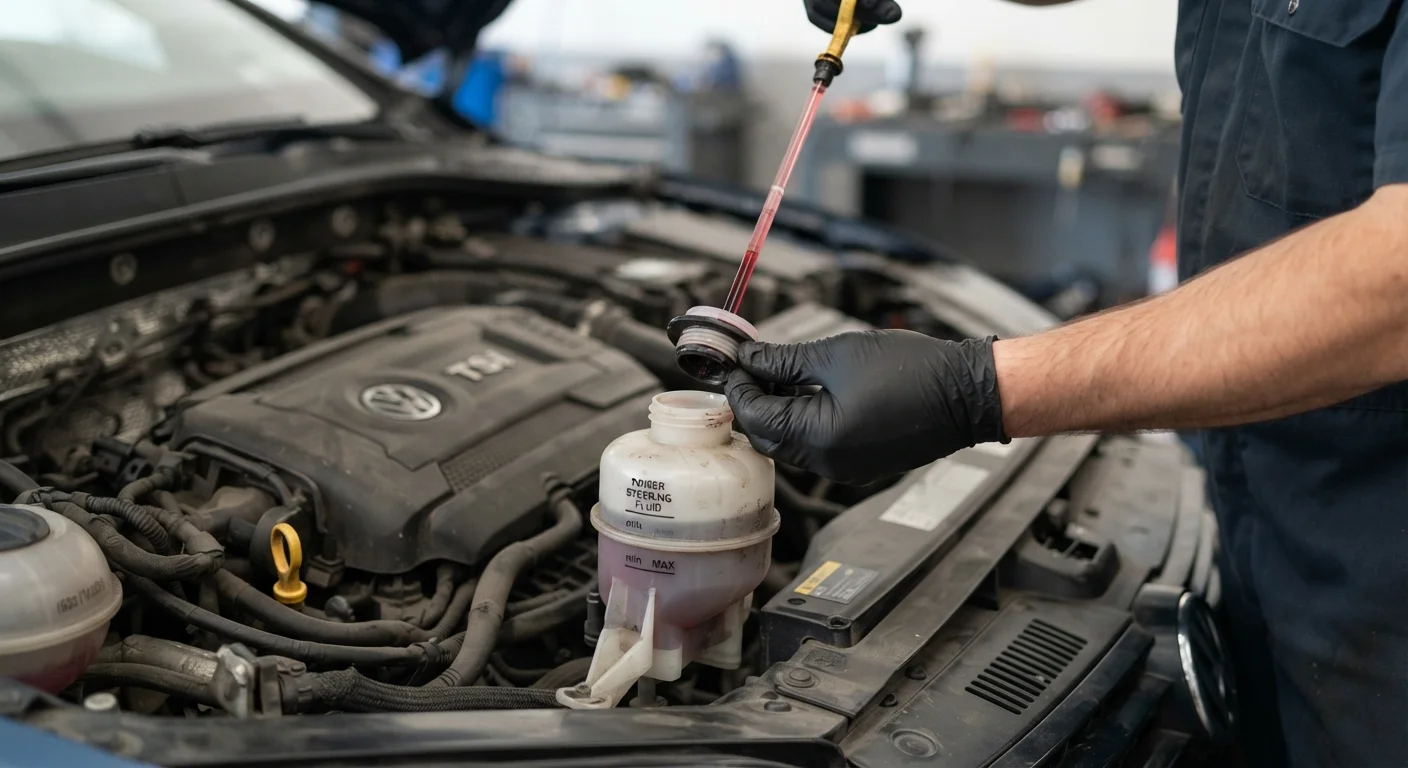
How Power Steering Fluid Actually Works
On vehicles with hydraulic power steering, a belt-driven pump pressurizes the power steering fluid and pushes it through a system of hoses to the steering gear. That pressurized fluid is what reduces the physical effort needed to turn the wheel — especially useful when maneuvering at parking-lot speeds or making tight turns.
The fluid does two jobs simultaneously: it transmits force and it lubricates the pump and other moving parts. Over time, the fluid breaks down, absorbs small amounts of moisture, and picks up metal particles from the pump. Degraded fluid is less effective at both tasks, which is why it needs periodic attention — not just occasional top-offs.
For a deeper look at how this system compares to other overlooked fluids under the hood, see The Fluids and Filters Drivers Forget Until Something Goes Wrong.
~$300–$800
Typical power steering pump replacement cost
Repair cost estimates from multiple U.S. automotive service sources; running dry on fluid is a leading cause of pump failure.
30,000 miles
General fluid inspection interval
A commonly cited guideline among automotive maintenance resources; always defer to your vehicle's owner's manual for the specific recommendation.
Warning Signs Worth Taking Seriously
Power steering problems tend to announce themselves gradually, which is actually helpful — you have a window to act before a small issue becomes a costly one.
- Whining or groaning on turns: This is the most recognizable symptom. The pump is working without enough fluid to lubricate it properly.
- Stiff or heavy steering wheel: If turning feels like more effort than it used to, low fluid pressure is a common cause.
- Fluid puddles under the car: Power steering fluid is typically reddish or light brown. A spot under the front of the vehicle after parking is worth investigating.
- Fluid level that keeps dropping: A reservoir that needs repeated refills almost always signals a leak somewhere in the system.
Any of these signs warrants a mechanic's inspection — particularly if you notice a leak or the steering feels unpredictable. Power Steering Fluid: What It Does and When to Check It walks through the reservoir location and what normal fluid looks like.
Check Fluid at Every Oil Change
Make power steering fluid part of your routine oil-change inspection. A quick glance at the reservoir takes under a minute and can flag a developing leak before it causes pump damage. Many service shops will check it at no extra charge if you ask.
What You Can Check at Home — and What to Leave to a Mechanic
Checking the fluid level is a simple task most drivers can do safely. With the engine off and cooled down, open the hood and locate the power steering reservoir — usually a small, capped container with a steering wheel icon on the lid. The level should fall between the MIN and MAX lines on the side of the tank or on the dipstick attached to the cap.
If the fluid looks dark brown or black rather than clear or pinkish, that's a sign it has degraded and may need flushing — a job best done by a qualified mechanic. Topping off with the correct fluid type (listed in your owner's manual) is appropriate for a minor shortfall, but it is not a substitute for finding out why the level dropped.
Not All Cars Use This Fluid
If your vehicle was built with an electric power steering system — common in models from roughly 2010 onward — there is no hydraulic fluid reservoir to check. Consult your owner's manual to confirm which system your car uses before looking for a reservoir that may not exist.
Repairs involving hoses, seals, or the pump itself should be handled by a professional. Improper repairs to a pressurized hydraulic system can cause fluid sprays or loss of steering control. When in doubt, have a licensed mechanic assess the system before driving further.
It's also worth separating fact from fiction when it comes to fluid maintenance in general — Fluid Maintenance Myths That Could Cost You Money covers several misconceptions that lead drivers to either over-service or neglect their vehicles.
Frequently Asked Questions
The most common sign is a whining or groaning noise when you turn the wheel, especially at low speeds. The steering may also feel noticeably stiffer than usual. You can confirm by checking the fluid reservoir under the hood — most have a translucent tank with MIN and MAX markings.
Many manufacturers don't specify a fixed interval, but a general guideline is to inspect the fluid every 30,000 miles or every two years — whichever comes first. Dark, dirty-looking fluid is a sign it's time for a flush. Always check your owner's manual for your vehicle's specific recommendation.
Topping off is straightforward if your fluid is simply low — locate the reservoir, confirm the correct fluid type in your owner's manual, and add small amounts until it reaches the MAX line. However, if the level drops again soon after, that signals a leak that requires a mechanic's attention.
Driving with little or no fluid causes the power steering pump to run dry, which generates excessive heat and wear. This can destroy the pump and damage related components, turning what was a minor fluid issue into a repair costing several hundred dollars or more.
If your vehicle was manufactured before roughly 2010, it most likely has a hydraulic system that uses power steering fluid. Many vehicles made after that date use electric power steering, which requires no fluid. Check your owner's manual or look for a power steering reservoir under the hood to confirm.
The content on this site is for informational purposes only and is not a substitute for professional advice. Always consult a qualified professional for guidance specific to your situation.