

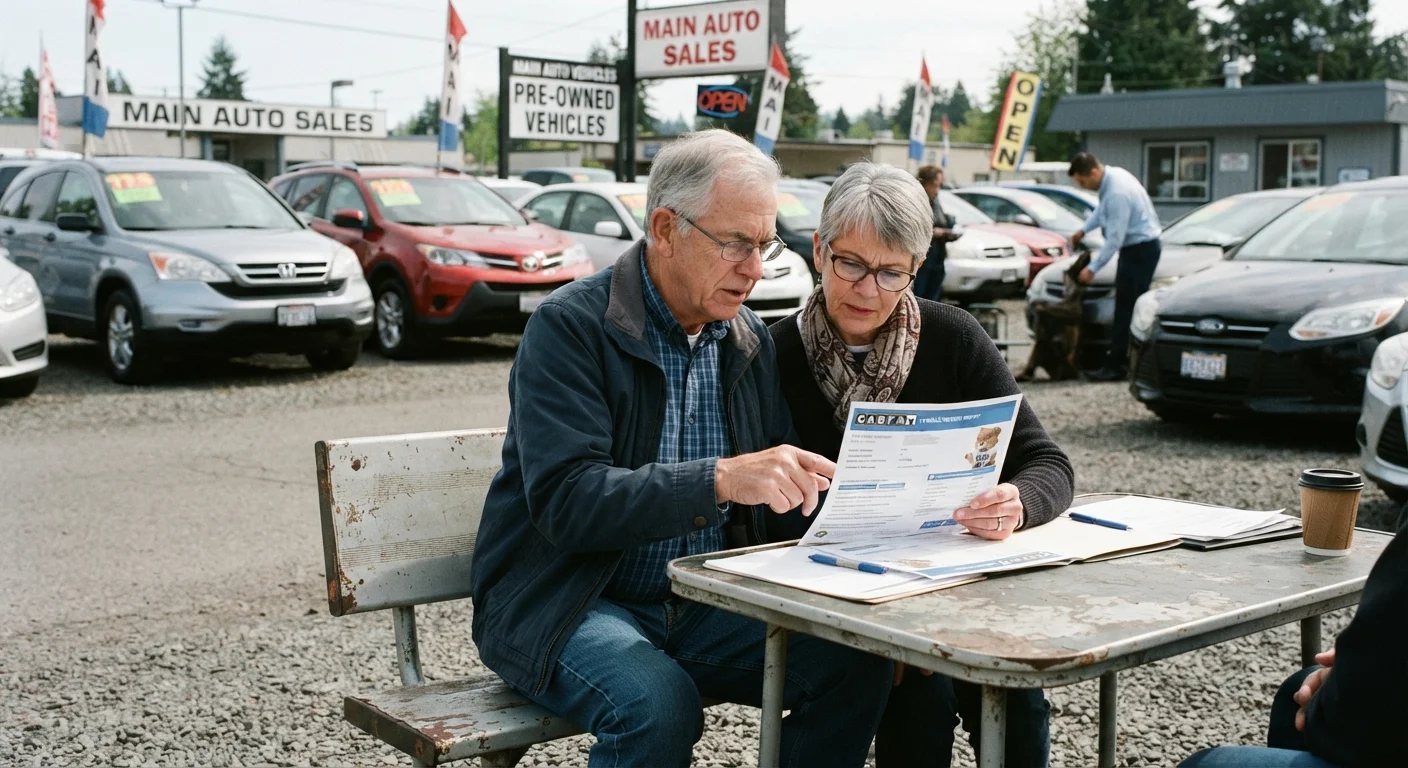
What a Vehicle History Report Actually Contains
When you look at a used car, you see what it looks like today. A vehicle history report tells you what it's been through to get there. Compiled using the car's unique 17-digit VIN, a report typically covers:
- Title records — whether the title is clean, or branded as salvage, flood, or rebuilt
- Accident and damage history — reported collisions, airbag deployments, and structural damage
- Odometer readings — recorded at registration renewals, inspections, and dealer visits
- Number of previous owners — and whether it was ever a rental, lease, or fleet vehicle
- Lien status — whether an outstanding loan is still attached to the vehicle
Not every event ends up in a report. Minor fender-benders paid out of pocket, or damage repaired without insurance involvement, often go unrecorded. That limitation is worth keeping in mind — a clean report reduces risk but doesn't eliminate it entirely. See the guide to inspecting used cars for what to look for beyond the paperwork.
State Reporting Practices Vary
Not all states report vehicle events to central databases at the same rate or speed. A car that spent most of its life in a state with lower reporting compliance may have a thinner history file than its actual past warrants. This is one reason a physical inspection remains essential alongside any report.
Why the Report Often Matters More Than the Price Tag
A low sticker price can feel like good news — but it may simply reflect problems the seller isn't volunteering. An asking price that sits well below market value is frequently explained by a branded title, flood damage, or a high accident count. Without a history report, a buyer has no way to know which situation they're in.
Consider the relationship between price and history this way: a vehicle priced attractively but carrying a salvage title will likely cost more in the long run — through higher insurance premiums, reduced resale value, and potential safety concerns from incomplete repairs. A car priced closer to market with a clean title and a single-owner history may represent far better long-term value. The factors behind a used car's asking price article explains more about how accident history feeds into pricing.
1 in 4
Used vehicles with a potentially problematic history
According to vehicle history data published by industry researchers, roughly one in four used vehicles in the U.S. carries some form of reported issue such as an accident, title brand, or odometer discrepancy.
$4,000+
Estimated value reduction for a salvage title vehicle
Industry appraisers and used car pricing guides generally estimate salvage or rebuilt title vehicles sell for significantly less than clean-title equivalents, often $4,000 or more depending on the vehicle.
Odometer fraud is a specific area where the history report pays clear dividends. Federal law requires sellers to disclose accurate mileage, but violations do occur. A report that shows declining odometer readings across entries is a documented warning sign — and a legal issue worth walking away from.
Using the Report as Part of a Bigger Picture
A history report is a starting point, not a final answer. Think of it as background research before you go deeper. Once you've reviewed the report, you're in a much stronger position to ask informed questions and spot inconsistencies. The right questions to ask a seller become more targeted when you already know the car had two owners and a minor collision in year three.
Pair the history report with the car's service records when available. Service history documents can confirm whether scheduled maintenance was kept up — something a VIN report won't show in detail. Together, the two sources give you a much fuller picture of how the car was actually treated.
Run the VIN Before You Visit
You don't need to be standing next to the car to pull a history report. Most online listing platforms display the VIN in the vehicle details. Running a report before you make the trip saves time and helps you arrive with informed questions rather than starting from zero.
Finally, no amount of paperwork substitutes for a hands-on inspection. Before finalizing any purchase, have a qualified, independent mechanic look the car over. A report tells you about the car's recorded past; a mechanic can assess its actual present condition. For a checklist of what that inspection should cover, see Inspecting Used Cars.
This article is for general informational purposes only. It does not constitute financial, legal, or professional advice. Vehicle history reports vary in completeness depending on the provider and the data sources available for a given vehicle. Always consult appropriate professionals for decisions involving significant financial commitments.
Frequently Asked Questions
You'll need the car's 17-character VIN, which appears on the dashboard near the windshield or on the driver's-side door jamb. Several commercial services provide reports for a fee. Some dealers also provide them at no charge as part of the sales process.
Not necessarily. Reports only include events that were officially reported — minor accidents settled privately or unreported damage won't appear. A clean report is a positive sign but should always be paired with a physical inspection by a qualified mechanic.
A salvage title means an insurance company declared the vehicle a total loss at some point. The car may have been repaired and returned to the road, but it typically carries lower resale value and may be harder to insure. Some lenders will not finance salvage-title vehicles.
Yes. Reports compile odometer readings from DMV transactions, inspections, and service records over time. If a car's mileage appears to decrease between entries, that's a red flag for rollback fraud.
Different services draw from overlapping but not identical data sources, so completeness can vary. Running a report through more than one provider on a car you're seriously considering is a reasonable precaution.
The content on this site is for informational purposes only and is not a substitute for professional advice. Always consult a qualified professional for guidance specific to your situation.