

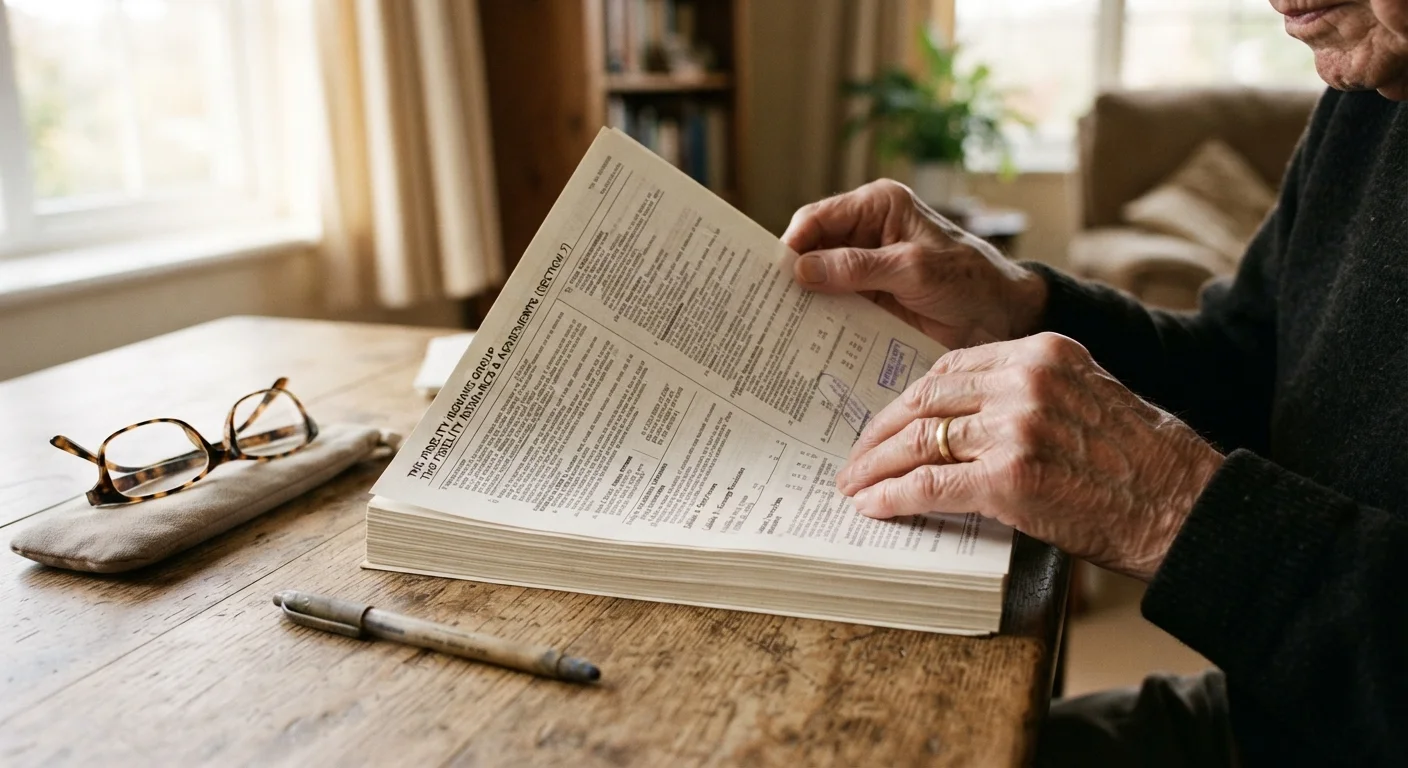
Why Policy Language Trips Up Even Careful Readers
Car insurance policies are legal contracts, and they're written to be precise — not necessarily readable. For seniors who haven't shopped for coverage in years, or who are switching policies for the first time, unfamiliar terminology and document length can make it genuinely hard to spot the details that matter most.
The consequences aren't minor. Missing a critical exclusion or condition before you sign can mean a denied claim exactly when you need the coverage most. Understanding where these problem areas tend to hide is a practical first step. For a broader look at how policy documents are structured, see Car Insurance Policies Explained: What Every Senior Driver Should Know.
Relying only on the declarations page instead of reading the full policy.
Why it happens: The declarations page summarizes your coverage types and limits in plain terms, so it can feel like the complete picture — but the full policy document contains the exclusions, definitions, and conditions that actually govern claims.
Overlooking named-driver or permissive-use restrictions that limit who is covered behind the wheel.
Why it happens: Many seniors assume that any licensed driver who uses their car with permission is automatically covered. Some policies, however, restrict coverage to specifically listed drivers or impose conditions on occasional users.
Assuming comprehensive coverage protects against all physical damage scenarios.
Why it happens: The word 'comprehensive' sounds all-inclusive, but it's a defined term with specific covered perils — typically theft, weather events, and animal strikes — and it does not cover collision damage.
Ignoring sub-limits on personal property or medical payment coverages.
Why it happens: Overall coverage limits look adequate on the declarations page, but specific sub-limits can cap payouts on particular loss categories at much lower amounts, a distinction that isn't always obvious in marketing materials.
Skipping the renewal review and letting coverage auto-renew without checking for changes.
Why it happens: Once a policy is in place, it's easy to treat renewal as a formality. But insurers can adjust terms, exclusions, or premium rates at renewal, and your own coverage needs may have changed as well.
What to Read Carefully Before You Commit
Once you know what to look for, reviewing a policy becomes more manageable. Most problems fall into a handful of predictable categories.
1 in 3
Policyholders who say they don't fully read their policy
Industry surveys consistently find that a substantial share of insured drivers have not read their full policy document, leaving exclusions and conditions unreviewed.
~30%
Of claim denials linked to policy conditions or exclusions
Insurance industry data indicates that a significant portion of disputed or denied claims involve situations where a policy condition or exclusion was not met, rather than coverage fraud.
Exclusions section: Every policy lists situations and losses it will not cover. These can include using your vehicle for rideshare driving, damage from flooding if you don't carry comprehensive, or mechanical breakdown. Read this section completely — not just the summary on the declarations page. How Policy Exclusions Work — and Why They Matter More Than You Think walks through this in detail.
Conditions and duties after a loss: Most policies require you to report an accident within a specific timeframe and cooperate fully with the insurer's investigation. Failing to meet these conditions — even unintentionally — can jeopardize a legitimate claim.
Add-on coverage limits: Optional coverages like roadside assistance or rental reimbursement often carry their own daily or per-incident dollar caps. Before assuming they'll cover your actual costs, check the limits. Roadside Assistance and Rental Reimbursement: What These Add-Ons Actually Include explains what these typically do and don't cover.
Don't Assume Verbal Explanations Override the Written Policy
If an agent describes coverage verbally but the written policy says something different, the written document is what governs your claim. Always verify that what you were told matches what the policy actually states. If there's a discrepancy, ask for a written clarification or endorsement before you sign.
For a structured review before choosing a policy, the Policy Comparison Checklist for Senior Drivers covers the key items side by side. And if you're evaluating multiple quotes right now, Questions to Ask Before Accepting a Car Insurance Quote gives you specific language to use with agents.
This article provides general insurance information for educational purposes only. It is not personalized insurance, legal, or financial advice. Coverage terms, exclusions, and regulations vary by insurer and by state. Always read your actual policy documents carefully and consult a licensed insurance agent or adviser for guidance specific to your situation.
The content on this site is for informational purposes only and is not a substitute for professional advice. Always consult a qualified professional for guidance specific to your situation.