

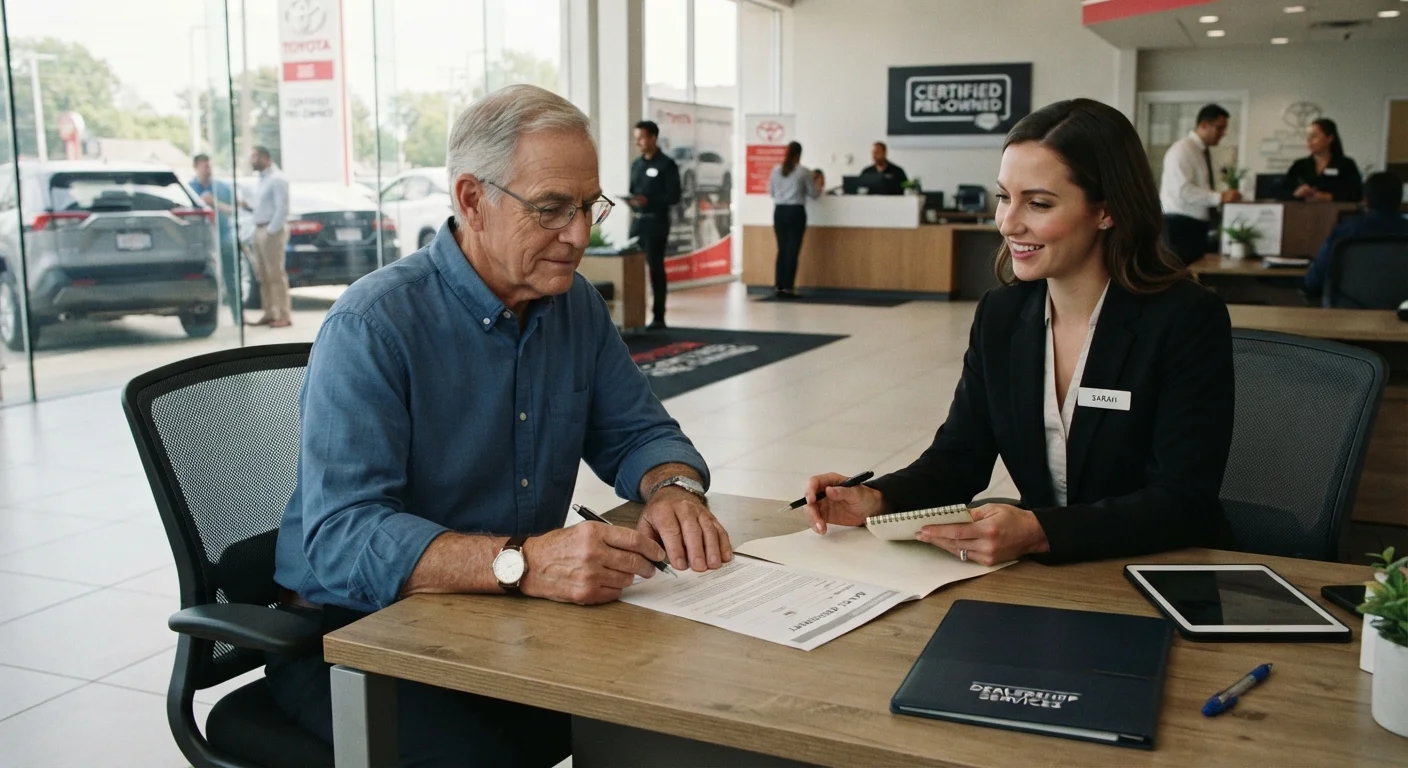
Why Your Questions Matter More Than the Salesperson's Pitch
Dealership sales floors are designed to move quickly. The pace, the paperwork, and the back-and-forth with a manager can make it hard to think clearly — especially when you're being asked to make a major financial decision. Slowing that process down starts with you, and the most effective tool you have is a prepared list of specific questions.
This isn't about being confrontational. It's about making sure you fully understand what you're agreeing to before you sign anything. Before your visit, it helps to research a fair price for the vehicle so you have a baseline to compare against whatever you're quoted. The questions below are designed to surface the real terms of any deal — and to give you a moment to think before pressure builds.
You Are Not Obligated to Decide Today
Many buyers feel an implicit expectation to close a deal during the same visit they test-drive a vehicle. There is no obligation to do so. Taking a day or two to review your notes, compare pricing, and think through the terms is a reasonable and financially sound approach. Urgency created by a salesperson is a sales tactic — it is not a reflection of the actual market.
Questions to Ask Before You Agree to Anything
What is the out-the-door price?
The sticker price and the amount you'll actually pay are rarely the same number. The out-the-door price is the total you'll owe once taxes, title fees, registration, documentation fees, and any dealer-added charges are included. Always ask for this figure in writing before any negotiation begins. If the salesperson only quotes you a monthly payment, ask them to convert it to a full purchase price — monthly payment figures can obscure the actual cost of the vehicle.
The out-the-door price reveals every charge before you're locked in.
Which add-ons are optional, and can they be removed?
Dealerships often bundle extras into a vehicle's price — paint protection, fabric coating, extended warranties, GPS tracking, or tire and wheel coverage. Some of these are added before you even arrive on the lot. Ask specifically: Which of these items were added by the dealership, and can any of them be removed from the price? Many are negotiable or removable. If a salesperson says an add-on is mandatory, ask to see that requirement in writing.
Many dealer add-ons are optional and removable — always ask which ones.
What is the annual percentage rate on the financing?
If you're financing through the dealership, the interest rate you're offered — expressed as the annual percentage rate (APR) — has a direct effect on how much you'll pay over the life of the loan. Ask for the APR clearly stated, not just a monthly payment amount. Compare this against rates from your bank or credit union before the visit. Dealers can sometimes offer competitive financing, but they may also mark up the rate above what the lender originally approved — a practice sometimes called a dealer reserve. Knowing your APR lets you make an informed comparison.
Always ask for the APR in writing before comparing it to outside loan offers.
Can we negotiate the trade-in separately?
If you have a vehicle to trade in, request that the trade-in value and the purchase price of the new vehicle be negotiated as two separate transactions. Combining them makes it easier for a salesperson to adjust numbers in ways that are hard to track — for example, offering more on the trade-in while quietly raising the purchase price. Keeping them separate means you can evaluate each deal on its own terms. You can also get trade-in estimates from third-party appraisal services beforehand so you know what range is reasonable.
Separate trade-in negotiations prevent bundled math from obscuring the real deal.
Can I take this contract home before signing?
You are entitled to read any contract thoroughly before committing to it. Ask: Can I take a copy of this agreement to review before I sign? A reputable dealership should not object. If you're being pressured to sign before you've had adequate time to read the document, consider stepping away from the deal entirely. Pay particular attention to the financing terms, cancellation clauses, and any arbitration agreements, which limit your legal options if a dispute arises later. For questions specific to used car sellers, a slightly different set of disclosures matters.
You can always ask to take a contract home — never let urgency replace careful review.
What does this warranty actually cover?
Whether you're considering a manufacturer's warranty, a certified pre-owned program, or an aftermarket extended service contract, ask the salesperson to explain — in plain terms — what is and isn't covered. Key questions include: What repairs are excluded? Is there a deductible per visit? Can I use any licensed repair shop, or must I return to this dealership? Warranty terms vary considerably, and the gaps in coverage are often just as important as what's included. Get the full written warranty document, not just a summary from the salesperson.
Warranty exclusions matter as much as what's covered — always ask what's left out.
Write Your Questions Down Before You Go
Print out or save your questions on your phone before visiting the dealership. Having them in front of you prevents the conversation from moving faster than you're comfortable with. It also signals to the salesperson that you are an informed, prepared buyer — which can itself shift the dynamic in your favor.
If you're also weighing whether to buy new or used, the New vs. Used Cars hub covers the core trade-offs worth understanding before you get to the negotiating table. And once you're close to a decision, walk through the used car cost checklist to make sure no expense has been overlooked.
Taking Your Time Is Your Right
No legitimate dealership requires you to decide on the spot. If a salesperson implies that a price or vehicle will disappear if you leave to think it over, treat that as a reason to pause — not to rush. You are allowed to take documents home, sleep on an offer, or consult a trusted family member before signing.
For a broader look at staying calm and in control throughout the negotiation process, see our article on negotiating without feeling pressured. If financing is part of your purchase, review the Financing and Budgeting hub before agreeing to any loan terms at the dealership.
This article provides general educational information about car buying practices. It is not financial, legal, or professional advice. Terms, fees, and financing options vary by dealership and lender. Consult a qualified financial adviser or attorney before making significant financial commitments.
The content on this site is for informational purposes only and is not a substitute for professional advice. Always consult a qualified professional for guidance specific to your situation.