

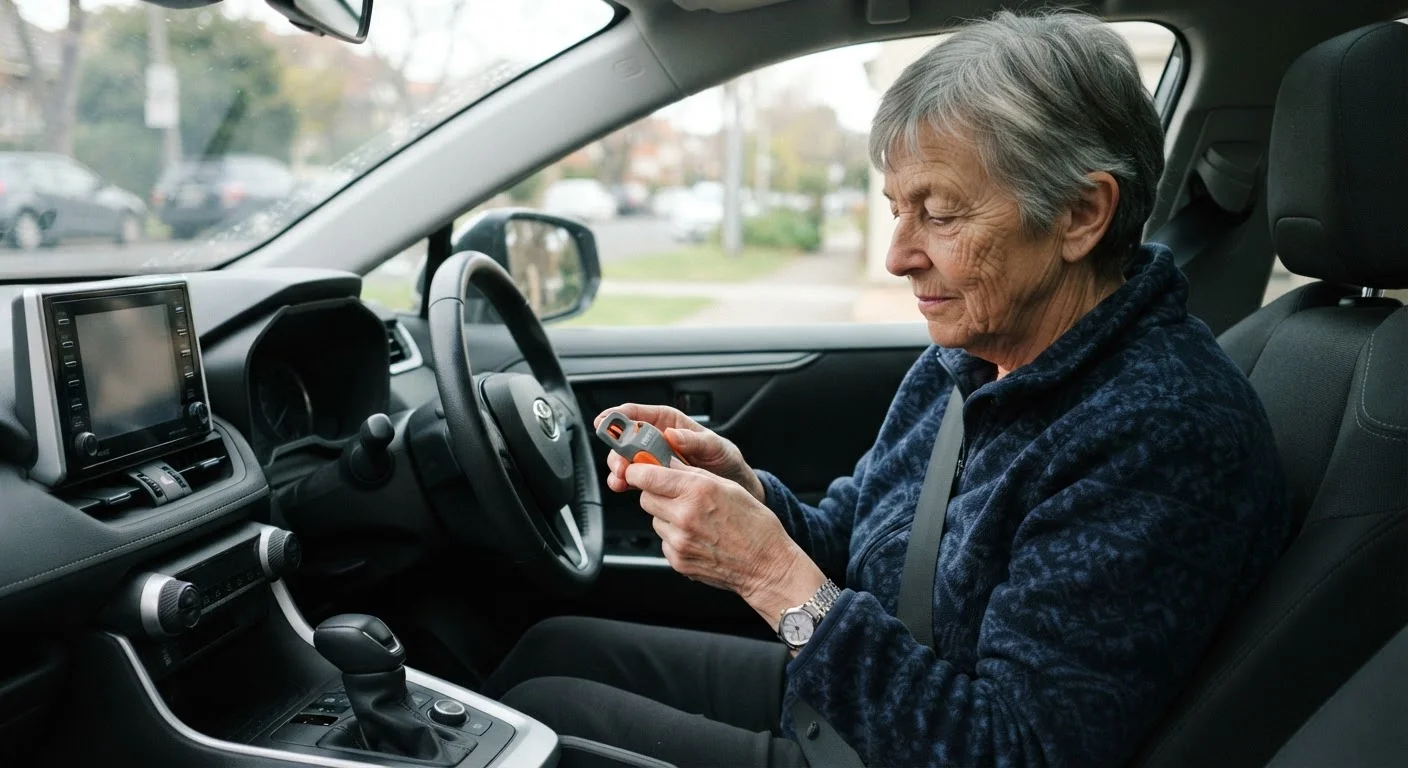
Why Seniors Often Choose the Wrong Safety Accessories
Picking up a safety accessory from a store shelf can feel like a straightforward solution to a driving concern. But for older drivers, selecting the wrong tool — or the right tool used in the wrong way — can quietly create a false sense of security rather than genuine protection. Understanding where these misjudgments come from is the first step toward making smarter choices.
Many seniors approach accessory shopping based on what they've seen advertised, what a friend recommended, or what seemed like common sense. The problem is that age-related driving challenges are highly individual. Reduced peripheral vision, joint stiffness, slower reaction times, and hearing changes all affect drivers differently — and each calls for different solutions. Our overview of safety accessories for older drivers explains how these categories map to real physical needs.
Choosing accessories based on what's popular rather than what addresses a personal driving challenge.
Why it happens: Marketing language and word-of-mouth recommendations are often generic, making widely sold products feel universally appropriate regardless of individual need.
Assuming a single accessory will compensate for multiple age-related physical changes at once.
Why it happens: Seniors often hope one purchase will simplify several concerns, especially when living on a fixed income or when shopping feels overwhelming.
Skipping professional guidance and relying solely on self-diagnosis of driving difficulties.
Why it happens: Many older drivers are reluctant to involve a third party in driving decisions, viewing it as an admission of decline rather than a practical step toward safer driving.
Installing accessories without following manufacturer guidelines or verifying compatibility with the vehicle.
Why it happens: Instructions can seem overly technical, leading drivers or family members to improvise during installation.
Purchasing technology-based aids without practicing using them in a low-pressure setting first.
Why it happens: Seniors may assume that because a device is designed to be simple, it requires no learning period — leading to distracting fumbling while driving.
How to Build a More Accurate Picture of What You Need
The most reliable way to identify the right accessories is to start with an honest assessment of your specific driving challenges rather than a product category. A driving rehabilitation specialist — a credentialed professional trained to evaluate older drivers — can perform a structured assessment and recommend aids matched to your physical profile. Many occupational therapists hold this specialization and work through hospitals or rehabilitation centers.
Don't Confuse Comfort With Safety
An accessory that makes driving feel more comfortable is not automatically one that makes it safer. Purchasing seat cushions or grip aids can address real comfort needs, but they should not substitute for tools that address documented safety risks. Be honest with yourself about which category each product falls into before spending money on it.
It also helps to distinguish between comfort accessories and safety accessories. Lumbar cushions and steering wheel covers improve comfort; wide-angle mirrors and backup cameras address genuine blind spots. Conflating the two can lead seniors to invest in feel-good products while underinvesting in tools that address real risk. For a closer look at where this confusion commonly arises, see our article on mobility aids and car safety accessories.
Once you've identified the right accessory, installation matters just as much as selection. An incorrectly fitted wide-angle mirror, for example, can introduce new blind spots rather than eliminate them. Our guidance on fitting safety accessories without causing damage walks through the key steps for getting installation right.
1 in 5
Older drivers with an unaddressed vision-related driving challenge
Research from the AAA Foundation for Traffic Safety has indicated that a significant proportion of older drivers experience visual difficulties that affect their driving but have not adapted their vehicle accordingly.
Over 40%
Seniors who report difficulty turning their head while reversing
Studies on age-related musculoskeletal changes suggest that reduced cervical spine flexibility is among the most common physical barriers to safe reversing for drivers over 65.
Finally, technology-based aids — such as GPS devices and collision-warning systems — only deliver their benefit when drivers use them consistently and correctly. If an accessory feels confusing or distracting, it won't improve safety. Practical accessories that address real age-related challenges can help you evaluate whether a tech aid is genuinely suited to your current driving habits.
The content on this site is for informational purposes only and is not a substitute for professional advice. Always consult a qualified professional for guidance specific to your situation.