

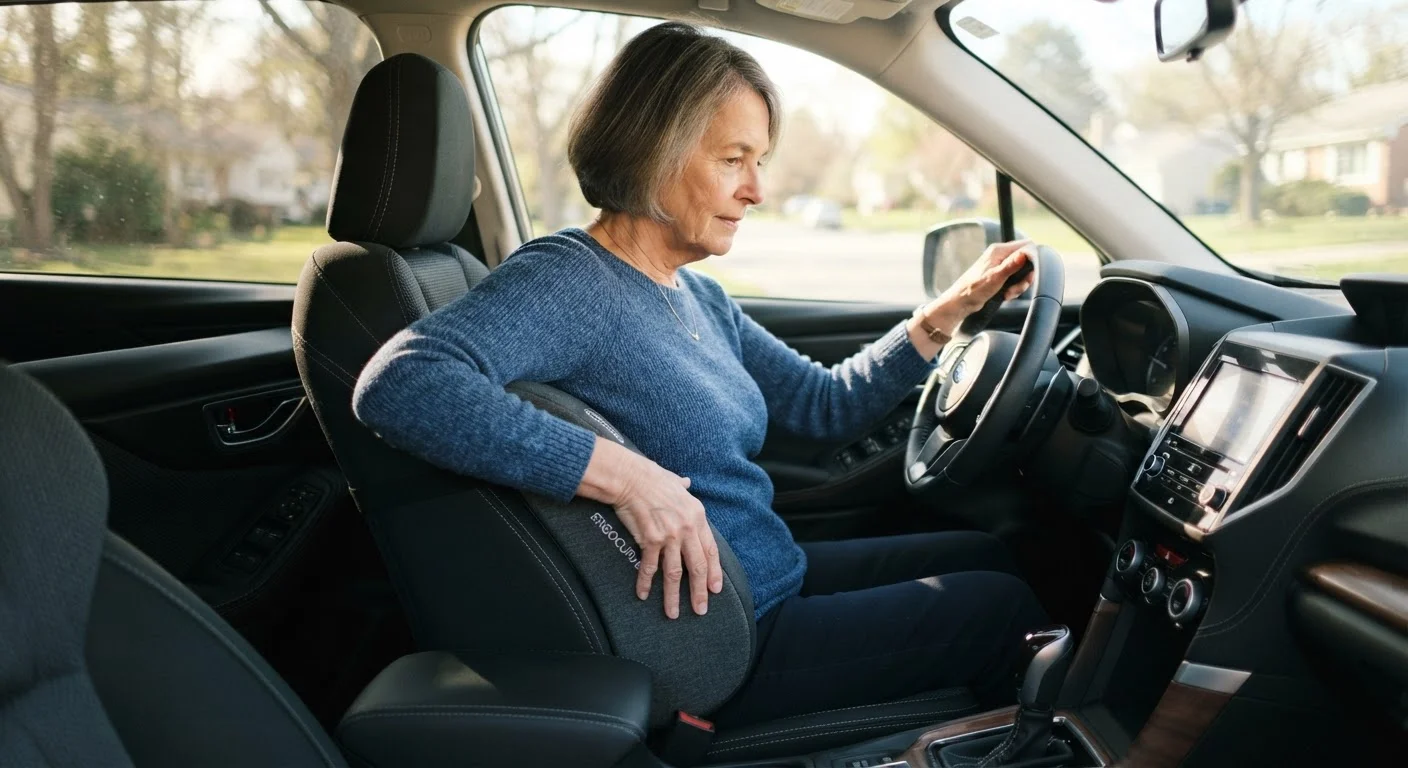
Why Even Well-Intentioned Accessories Fall Short
Adaptive comfort accessories — cushions, swivel seats, grab handles, back supports — are designed to make driving easier and less physically demanding for older adults. Yet many seniors find that these tools underdeliver, often because of avoidable setup and selection errors.
The problem rarely lies with the accessory itself. More often, it's how the item is chosen, positioned, or maintained. Understanding where things go wrong is the first step toward getting genuine benefit from these tools. For a broader introduction to what these accessories do and why they matter, see our guide to comfort and mobility aids for senior drivers.
Positioning a seat cushion too far forward, shifting the driver away from the pedals and steering wheel.
Why it happens: Seniors often place cushions for comfort without considering how the change affects their reach and control. The focus is on softness rather than posture.
Selecting a lumbar support that doesn't match the natural curve of the individual's spine.
Why it happens: Many supports are marketed as universal fits, and buyers assume any product in this category will help. Spinal curvature varies considerably between individuals.
Using a swivel seat cushion on a seat that hasn't been adjusted to the correct height for entry and exit.
Why it happens: Swivel aids are often bought to ease the rotation needed when getting in or out, but if the seat is too low or too high, the rotation still places stress on hips and knees.
Attaching a grab handle to a door frame or window channel that isn't structurally designed to bear weight.
Why it happens: Portable grab handles look secure once clipped on, and users may not realise that some attachment points are cosmetic trim rather than load-bearing structure.
Failing to reassess accessories after a change in physical condition or a new vehicle.
Why it happens: Once an accessory is set up, many users treat it as permanent. But mobility needs shift over time, and accessories sized or positioned for a previous vehicle may not translate correctly.
Buying accessories based on general popularity rather than a specific, identified physical need.
Why it happens: Word-of-mouth recommendations and broad product descriptions make it easy to assume that what worked for a friend will work equally well for you.
The Compounding Effect of Multiple Small Errors
One misplaced accessory may cause only minor discomfort. But seniors often use several adaptive aids simultaneously — a seat cushion, a lumbar roll, a steering wheel cover, and a grab handle — and errors in each compound quickly. A cushion that raises the seating position slightly, combined with mirrors that were never readjusted, can meaningfully reduce rearward visibility.
Comfort Changes Can Affect Safety Systems
Adding thickness under or behind the driver alters their distance from the steering wheel and airbag. If a cushion raises or repositions you significantly, the steering wheel's tilt and telescoping adjustments should be revisited. Sitting too close to an airbag deployment zone can increase injury risk in a collision. If you're uncertain whether your new seating position is safe, consider seeking a vehicle fit assessment from a certified driver rehabilitation specialist.
If you use more than one comfort accessory, treat them as a system. Adjusting one element frequently requires revisiting others. Our article on adjusting your car seat and mirrors to fit your body explains how each adjustment interacts with overall driving ergonomics.
If you're unsure whether your current setup is working as intended, a certified driver rehabilitation specialist (CDRS) can assess your in-vehicle positioning. This is especially worthwhile when managing conditions such as arthritis, back pain, or reduced hip flexibility. You can also review safety accessories every older driver should know about to ensure comfort aids are complemented by the right safety tools.
~600,000
Certified Driver Rehabilitation Specialists globally
The Association for Driver Rehabilitation Specialists (ADED) represents professionals trained to assess and fit adaptive driving equipment for individuals with disabilities or age-related challenges.
1 in 3
Adults over 65 experience back pain affecting daily activity
According to general public health data, chronic musculoskeletal conditions — including lower back pain — are among the most common physical complaints among older adults in the US.
The content on this site is for informational purposes only and is not a substitute for professional advice. Always consult a qualified professional for guidance specific to your situation.