

Why Listing Red Flags Matter Before You Do Anything Else
Most used car searches start online, and that means your first filter is the listing itself. A few minutes spent reading a listing carefully can save hours of travel, hundreds of dollars in inspection fees, and — in the worst cases — thousands of dollars lost to fraud or a deeply flawed vehicle.
Scammers and sellers with problem vehicles have learned to write listings that look legitimate at a glance. But certain patterns repeat themselves, and once you know what to look for, they become easier to spot. The mistakes below are the ones buyers most commonly overlook — and the ones that cause the most damage.
For a deeper look at what to verify once you've found a listing that passes this first test, see our guide to checking a used car listing online.
Ignoring a listing that has no VIN or refuses to provide one on request.
Why it happens: Buyers assume the VIN will come up later during the purchase process and don't think to ask for it upfront. Some sellers count on this delay.
Accepting vague descriptions and low-quality or mismatched photos as normal.
Why it happens: Online listings vary a lot in presentation quality, so buyers often give sellers the benefit of the doubt on poor photos or thin descriptions.
Overlooking a price that is significantly below comparable vehicles in the same market.
Why it happens: A low price feels like a good deal, and most buyers want to believe they've found one. It's easy to rationalize away the discount.
Responding to pressure to decide quickly or send payment before seeing the vehicle.
Why it happens: Urgency is a well-documented sales and scam tactic. Phrases like "I have three other people interested" or "I'm moving overseas and need to sell this week" are designed to bypass careful thinking.
Trusting a seller's claim of a recent service or repair without documentation.
Why it happens: Buyers naturally want to believe the car is in good shape, and a confident claim from the seller can feel reassuring enough.
What to Do After Spotting Red Flags
If a listing triggers even one of the warning signs above, treat it as a reason to slow down — not necessarily to walk away, but to ask more questions before investing any time or money.
~$1,000+
Typical loss per online auto fraud incident
The Federal Trade Commission has consistently reported vehicle-related fraud among the costliest categories of marketplace scams reported by US consumers.
1 in 5
Used vehicles with undisclosed prior damage
Industry estimates from vehicle history data providers suggest a meaningful share of used vehicles on the market carry accident or damage history not mentioned in the seller's listing.
Contact the seller and ask directly for the VIN (Vehicle Identification Number), a full set of photos, and documentation of any claimed service history. A legitimate private seller or dealer will provide these without resistance. If the response is evasive, deflecting, or paired with renewed pressure to act fast, that tells you what you need to know.
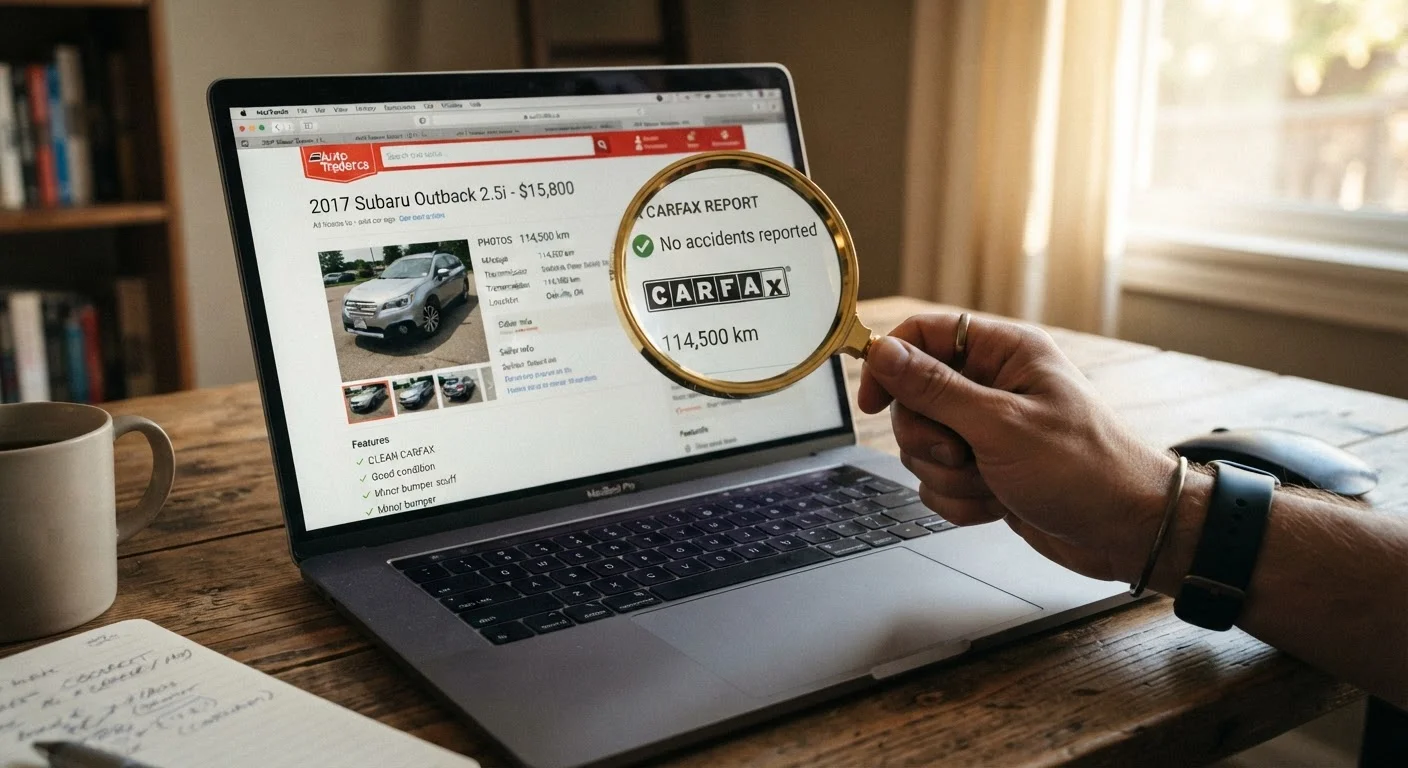
Run any VIN you receive through a reputable vehicle history service before scheduling an in-person visit. History reports can surface previous accidents, title problems, odometer discrepancies, and whether the car was ever declared a total loss — facts that no seller description can substitute for.
Once a listing passes your initial screen, the work continues in person. Our guide to test drive red flags covers what to watch for once you're behind the wheel. And before you sign anything, work through our pre-purchase checklist for seniors to make sure nothing critical has been missed.
If you're also considering financing, be aware that listing red flags sometimes go hand in hand with high-pressure financing tactics. Our article on car loan pitfalls for senior buyers explains the financing missteps that are easiest to miss.
This article is for general informational and educational purposes only. It does not constitute financial, legal, or professional advice. Vehicle pricing, listing practices, and fraud risks vary by region and change over time. Always consult qualified professionals before making significant purchasing decisions.
The content on this site is for informational purposes only and is not a substitute for professional advice. Always consult a qualified professional for guidance specific to your situation.