

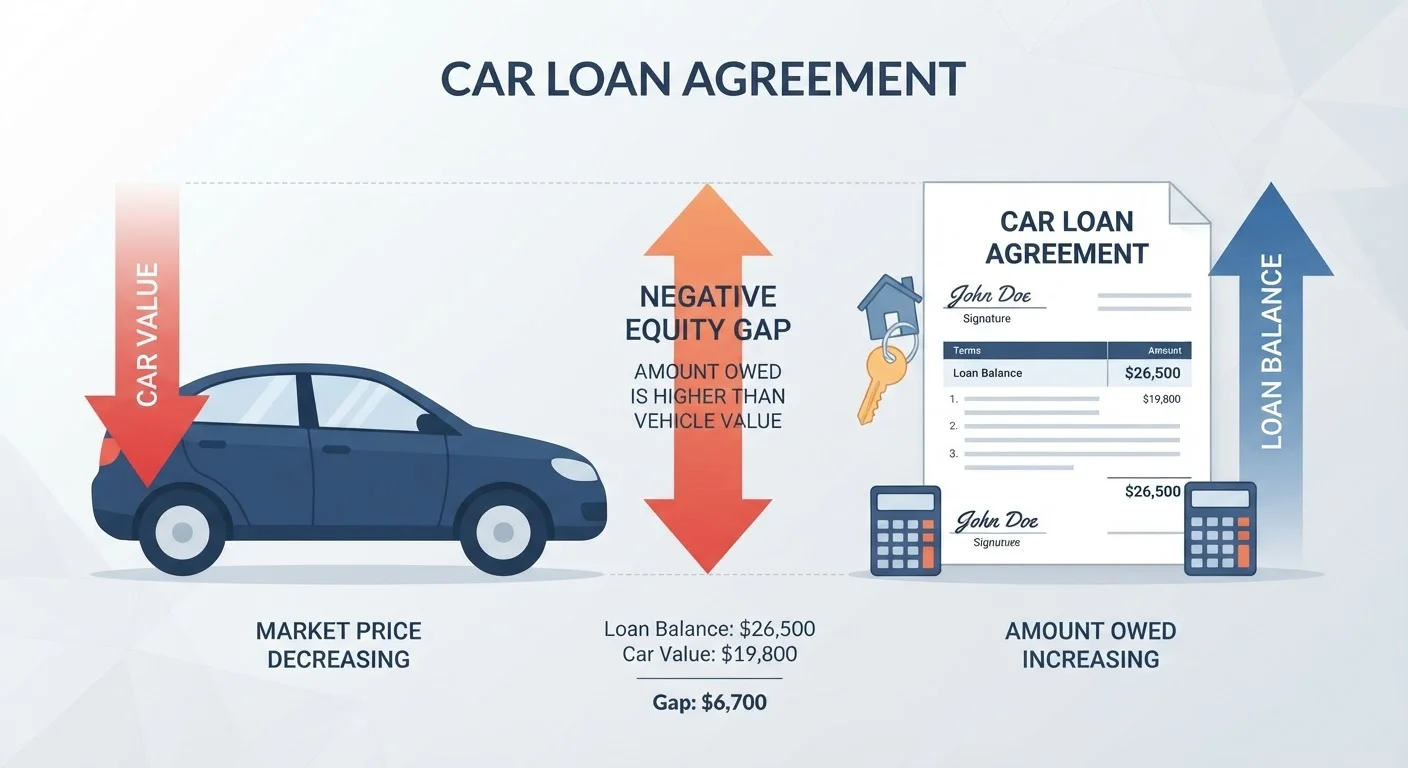
What Gap Insurance Actually Does
When a car is totaled or stolen, your standard auto insurance pays out the vehicle's actual cash value — what the car is worth on the market at that moment, accounting for depreciation. The problem is that cars lose value quickly, especially in the first few years. If you financed your purchase, your loan balance may still be higher than what the insurer pays out.
That leftover amount — the gap — becomes your responsibility. Gap insurance is designed specifically to cover it, so you aren't stuck paying monthly installments on a vehicle that no longer exists.
For a broader overview of how different coverage types fit together, see Car Insurance Coverage Types Every Driver Should Understand.
20%+
New car depreciation in year one
Industry estimates commonly cited by automotive valuation sources suggest new vehicles can lose more than 20% of their value within the first 12 months of ownership.
~70%
New car loans with terms over 60 months
According to Experian's State of the Automotive Finance Market reports, a large majority of new vehicle loans in recent years have carried terms of 60 months or longer.
When Gap Coverage Is Worth Considering
Gap insurance is most relevant in a few specific circumstances:
- Low down payment: Putting less than 20% down on a new car often means you're immediately underwater — you owe more than the car is worth from day one due to depreciation.
- Long loan terms: Loans stretched over 60, 72, or 84 months keep your balance high for longer, giving depreciation more time to outpace what you owe.
- Leased vehicles: Lease agreements frequently require gap coverage because the leasing company wants protection if the car is totaled before the lease ends.
- High-depreciation vehicles: Some makes and models lose value faster than average, widening the potential gap.
If any of these apply to your situation, it's worth asking a licensed agent whether gap coverage makes sense for your policy. Keep in mind that terms, eligibility, and costs vary — there's no universal answer.
Compare Gap Coverage Sources Before Deciding
Dealership-offered gap coverage and insurer-offered gap coverage can differ significantly in price and terms. If you're considering gap insurance, get information from at least two sources — your auto insurer and any financing source — and compare what each actually covers. A licensed agent can walk you through the differences without obligation.
When Gap Insurance Probably Isn't Needed
Gap coverage isn't a blanket necessity. In several common situations, it adds little value:
- You own the car outright. No loan, no gap. If your vehicle is paid off, there's nothing to bridge.
- You owe less than the car's market value. If your loan balance is lower than what the car would sell for, a standard payout from your insurer would cover the loan in full.
- The car is older and heavily depreciated. On a vehicle with a low market value and a small remaining loan, the potential gap is minimal — the cost of coverage may not be justified.
Before deciding, it helps to know roughly what your car is worth versus what you owe. Public valuation resources can give you a general ballpark. Insurance costs for new and used cars differ in ways that can also influence whether gap coverage is a practical consideration.
Reading the Fine Print Before You Commit
Gap insurance policies are not all the same. Some come bundled with auto loans at the dealership; others are available as add-ons through your auto insurer. The pricing and terms can differ meaningfully between sources.
A few things worth looking for in any gap coverage agreement:
- Whether there's a cap on the payout amount
- What triggers a payout — most require the vehicle to be declared a total loss by your primary insurer
- Whether deductibles are included or excluded from what gap covers
- Cancellation and refund policies if you pay off your loan early
Understanding policy exclusions in general is important across all coverage types. How policy exclusions work is a useful reference for thinking through what any coverage does and doesn't protect against.
This article is for general informational purposes only and does not constitute personalized financial, insurance, or legal advice. Coverage terms, costs, and eligibility vary by provider and by state. Consult a licensed insurance agent or financial adviser for guidance specific to your situation.
Frequently Asked Questions
No. Gap insurance only applies when your vehicle is declared a total loss — typically after a serious accident or theft. It has no bearing on repairs, mechanical failures, or routine maintenance.
Drivers who financed a vehicle with a small down payment, chose a long loan term, or leased a car are most likely to find themselves owing more than the vehicle is worth. These are the situations where gap coverage is most relevant.
In many cases, yes. Some insurers allow you to add gap coverage to an existing policy, though there may be time limits or eligibility restrictions. Check with a licensed agent for the specifics of your situation.
Not exactly. New car replacement coverage pays to replace your totaled vehicle with a comparable new one, while gap insurance only covers the difference between the car's value and your loan balance. They serve related but distinct purposes.
Once you no longer owe money on the vehicle, gap insurance is no longer relevant and can typically be canceled. At that point, you own the car outright, so there is no loan balance to bridge.
The content on this site is for informational purposes only and is not a substitute for professional advice. Always consult a qualified professional for guidance specific to your situation.