

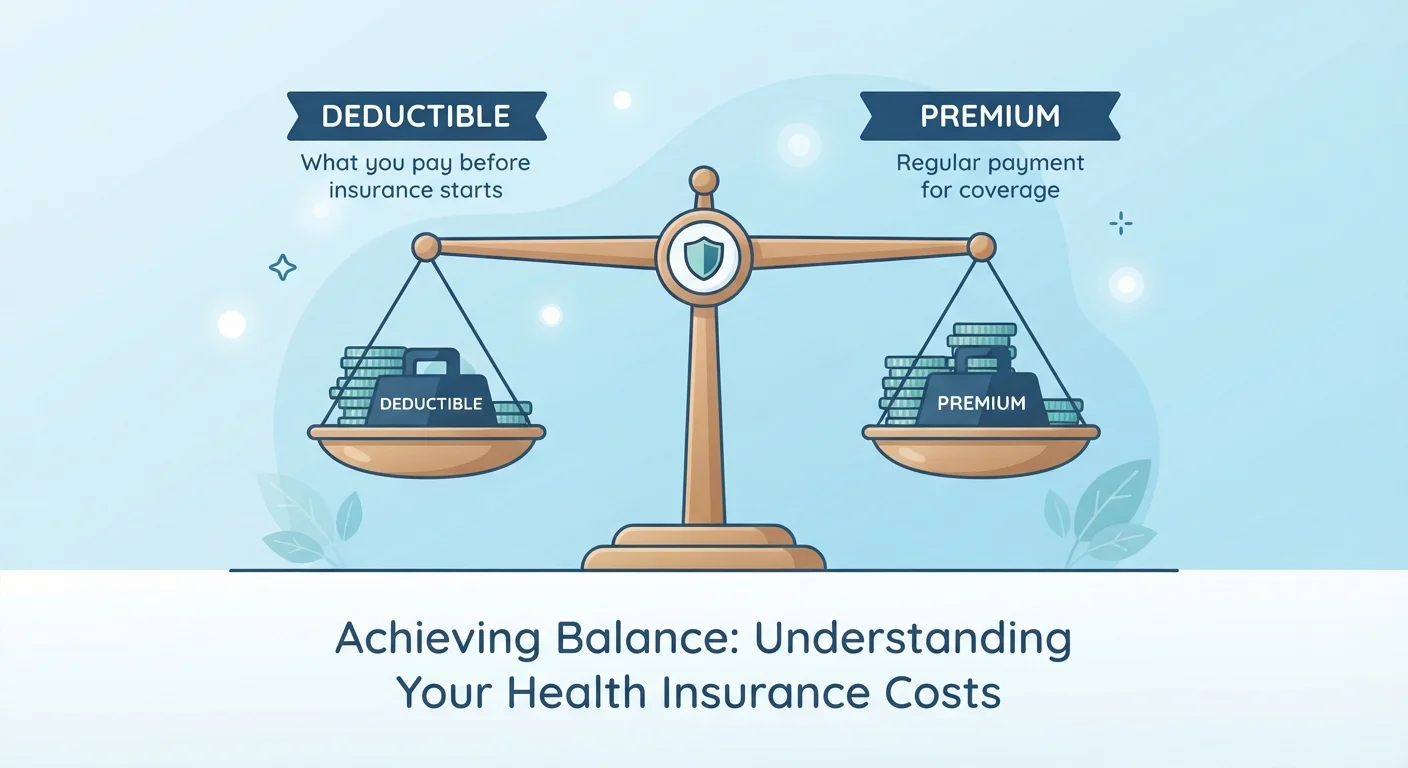
The Basic Trade-Off Explained
Think of your deductible and your premium as opposite ends of a seesaw. When one goes up, the other comes down. Insurers set premiums based on how much risk they are absorbing. When you agree to cover a larger share of any claim through a higher deductible, the insurer's exposure shrinks — and so does what they charge you each month or year.
For example, raising a collision deductible from $250 to $1,000 means you absorb the first $1,000 of any covered repair rather than $250. Because the insurer pays out less in a typical claim, they price the policy lower. The reverse is also true: a $100 or $250 deductible signals that the insurer will be writing checks for even small incidents, so the premium rises accordingly.
This relationship applies specifically to collision coverage (damage from accidents) and comprehensive coverage (theft, weather, falling objects, and similar events). It does not apply to liability coverage, which has no deductible in standard US policies. For a broader look at what these coverage types mean, see our coverage basics guide.
How Driving Habits Shift the Calculation
The deductible trade-off is not just arithmetic — it is also a question of probability. If you rarely drive, your chances of being involved in a collision in any given year are lower than someone commuting daily. That changes how you should weigh a higher deductible against a lower premium.
~5,000
Average annual miles driven by retired seniors
Federal Highway Administration data consistently shows drivers aged 65 and older log significantly fewer miles per year than younger age groups.
$500
Most common auto insurance deductible in the US
Industry surveys and insurer data commonly cite $500 as the most frequently selected deductible level for collision and comprehensive coverage.
Many seniors in retirement drive primarily for errands, medical appointments, and occasional trips rather than daily commutes. Driving fewer miles generally means fewer opportunities for a claim to occur. If you are in that situation, paying a lower premium in exchange for a higher deductible you may never need to use can make financial sense — provided you could comfortably cover that deductible from savings if a claim did arise.
That said, driving frequency is only one piece. The value of your vehicle matters too. If you drive an older car worth $4,000, carrying a $1,000 deductible on comprehensive and collision coverage means the insurer's maximum meaningful payout is already limited. In that case, you may want to revisit whether those coverages are worth carrying at all. How deductibles work in car insurance walks through that decision in more detail.
The Savings Cushion Question
A higher deductible only makes financial sense if you can actually pay it when needed. A claim can happen at any time, and if a $1,000 deductible would create a serious hardship — especially for someone on a fixed retirement income — then the premium savings may not be worth it.
Build a Simple Break-Even Check
Before raising your deductible, subtract your current deductible from the new, higher one to find your added exposure. Then divide that number by your monthly premium savings. The result tells you how many claim-free months you need to come out ahead. This calculation is a starting framework — not a guarantee — but it keeps the decision grounded in real numbers rather than guesswork.
A practical way to think about it: calculate how many months of premium savings it would take to recover the difference between your current deductible and a higher one. If switching from $500 to $1,000 saves $15 a month, you would recover that $500 gap in about 33 months. If you went those 33 months without a claim, you would break even — every month after that is a net saving. But if a claim occurred in month six, you would be out more than you saved.
There is no guarantee of how often you will file a claim, so this kind of break-even thinking is a tool for framing the decision, not a prediction. For more on factors that affect what you pay overall, see why your current premium may be higher than it needs to be.
This article provides general insurance information for educational purposes only and is not personalized financial or insurance advice. Coverage terms, deductible options, and premiums vary by insurer, policy, and state. Consult a licensed insurance agent to understand the options available in your specific situation.
Frequently Asked Questions
No. Deductibles apply only to collision and comprehensive coverage, which pay for damage to your own vehicle. Liability coverage — which pays for damage or injury you cause to others — does not carry a deductible in standard US auto policies.
The savings vary by insurer, vehicle, and location, so no universal figure applies. Generally, moving from a $250 deductible to a $1,000 deductible can meaningfully reduce a comprehensive or collision premium, but always compare actual quotes to know the real difference for your policy.
Common deductible amounts in the US range from $250 to $1,000, with $500 being a widely used starting point. Some policies allow amounts outside this range. The right level is personal and depends on your finances and driving habits.
There is no one-size answer. Seniors on fixed incomes who could not easily cover a large out-of-pocket expense often benefit from a lower deductible despite a higher premium. Those who drive rarely and have accessible savings may find a higher deductible saves money over time. A licensed insurance agent can help you work through the specifics.
It generally makes sense when the repair cost clearly exceeds your deductible and the premium increase from filing a claim would not outweigh the payout. For minor damage close to your deductible amount, paying out of pocket is often the more cost-effective choice.
The content on this site is for informational purposes only and is not a substitute for professional advice. Always consult a qualified professional for guidance specific to your situation.