

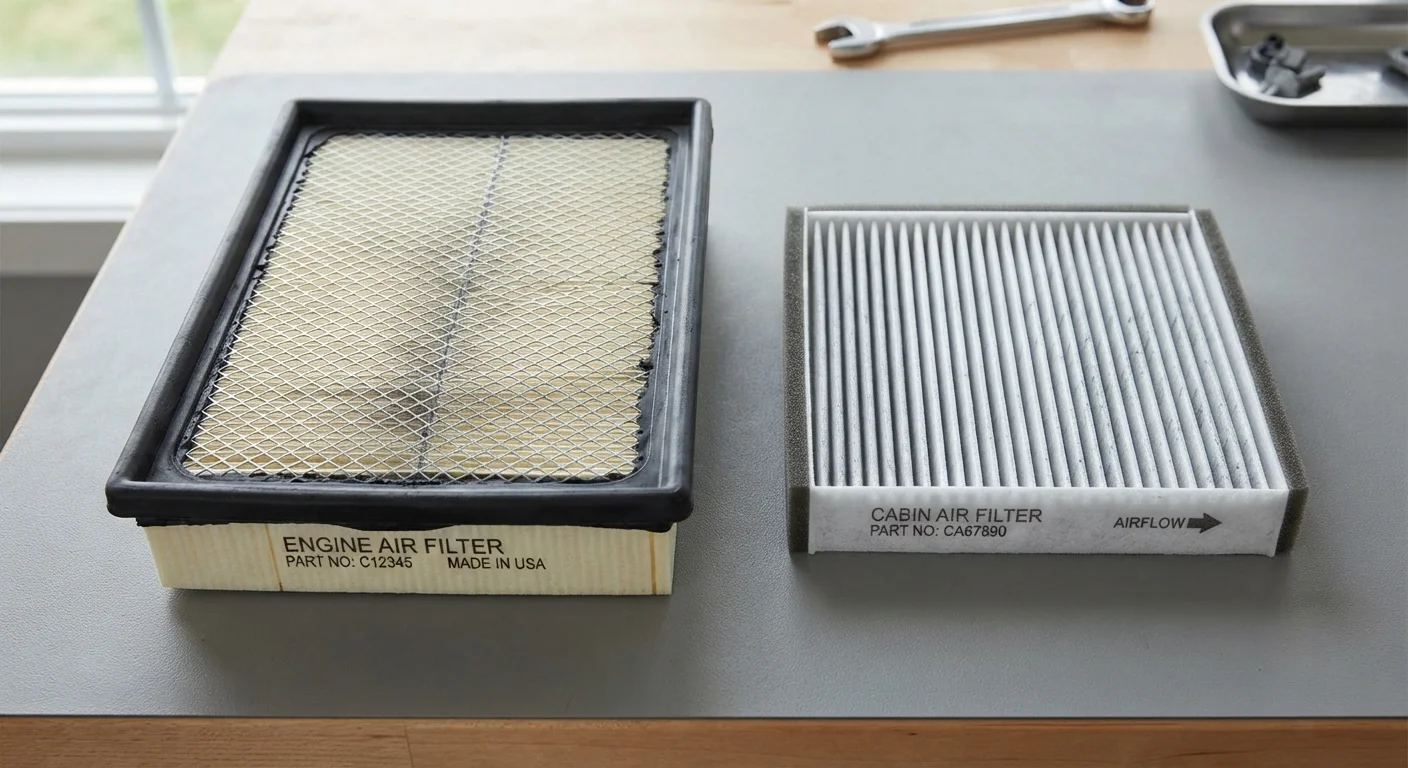
Option A
Engine Air Filter
The filter that keeps your engine running cleanly.
Best for: Protecting the engine from dust, debris, and particles that enter through the outside air intake.
Option B
Cabin Air Filter
The filter that keeps the air inside your car cleaner.
Best for: Improving the air quality inside the passenger compartment by trapping pollen, dust, and pollutants.
What Each Filter Actually Does
Most drivers are surprised to learn their vehicle contains not one, but two separate air filters — and that confusing them can lead to overlooked maintenance. Understanding the distinct role each plays makes it much easier to keep up with both.
The engine air filter sits in the engine compartment, usually inside a black plastic housing connected to the air intake system. Its job is to prevent airborne contaminants — dust, pollen, insects, and debris — from entering the engine as it draws in outside air for combustion. Without this filter, abrasive particles would wear down internal engine parts over time.
The cabin air filter, by contrast, is located inside the ventilation system — most commonly behind the glove compartment or under the dashboard. It filters the air that flows through your car's heating, ventilation, and air conditioning (HVAC) system before it reaches you and your passengers. It captures pollen, dust, mold spores, and other fine particles.
In short: one protects your engine, the other protects your lungs.
| Criterion | Engine Air Filter | Cabin Air Filter |
|---|---|---|
| Primary Purpose | Protects engine from debris | Improves passenger air quality |
| Location | Engine compartment air intake | Behind glove box or under dashboard |
| What It Filters | Dust, debris, insects | Pollen, mold spores, fine particles |
| Typical Replacement Interval | 15,000–30,000 miles | 12,000–15,000 miles |
| Symptom When Clogged | Reduced power, lower fuel economy | Weak airflow, odors, poor HVAC output |
| Who It Directly Affects | Engine performance and longevity | Driver and passenger health and comfort |
Signs That Each Filter Needs Attention
Both filters give warning signs when they're overdue for replacement, though the symptoms feel quite different.
Engine Air Filter Warning Signs
- Noticeable drop in fuel efficiency
- Sluggish acceleration or reduced engine responsiveness
- Engine misfires or rough idling in severe cases
- Visible dirt or gray-black discoloration when you inspect the filter
Cabin Air Filter Warning Signs
- Weak airflow from the vents even at high fan settings
- Musty or unpleasant odors when you run the heat or air conditioning
- Increased dust accumulation on the dashboard
- Allergy-like symptoms that seem worse inside the car
A visual inspection can help with both filters. A clean engine air filter is typically white or light gray. A cabin air filter that looks dark, compressed, or filled with debris is ready to be replaced.
When in Doubt, Ask Your Mechanic to Check Both
Many drivers get one filter replaced during routine service but forget to ask about the other. It's a simple habit to ask your mechanic to inspect both the engine air filter and the cabin air filter at the same visit. Since they're in different locations, one can be dirty while the other is still in good condition. A quick visual check takes only a few minutes and helps you make an informed decision without guesswork.
How Often Should You Replace Them?
Replacement intervals vary depending on the vehicle, the manufacturer's recommendations, and where and how you drive. As a general guideline, most engine air filters are replaced every 15,000 to 30,000 miles, while cabin air filters are typically replaced every 12,000 to 15,000 miles.
15,000–30,000 mi
Typical engine air filter replacement interval
Most vehicle manufacturers recommend inspecting or replacing the engine air filter within this range, though dusty conditions shorten the interval.
12,000–15,000 mi
Typical cabin air filter replacement interval
Cabin air filters may need more frequent replacement in high-pollen areas or for drivers with respiratory sensitivities, according to general automotive guidance.
Drivers in areas with heavy traffic, high pollution, or frequent dusty or rural roads may need to replace both filters more frequently. Your owner's manual is the most reliable reference for your specific vehicle's schedule. If you're unsure when your filters were last changed, a qualified mechanic can inspect both during a routine service visit.
Replacing either filter is generally an affordable maintenance task. The cost of a new filter is almost always far less than the repair costs that can result from neglecting one. That said, if you're not comfortable locating or removing the filters yourself, asking a professional is always the right call — particularly for the engine air filter, where an improper reinstallation could allow unfiltered air into the engine.
This article provides general vehicle maintenance information for educational purposes. Always consult your vehicle's owner's manual and a qualified mechanic for guidance specific to your car and driving conditions.
The content on this site is for informational purposes only and is not a substitute for professional advice. Always consult a qualified professional for guidance specific to your situation.